
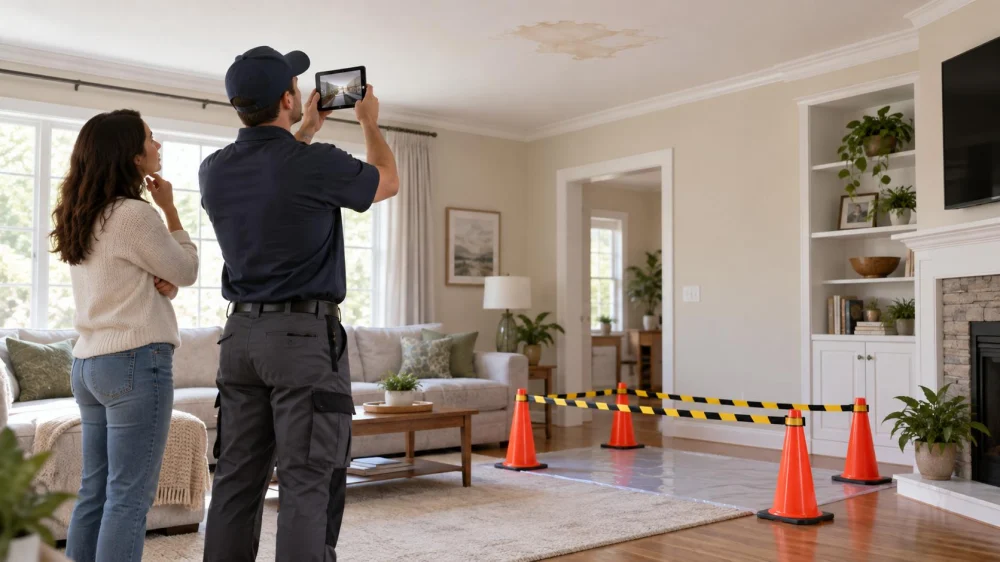
Ceiling Water Stain: Map, Photograph, and Trace Safely
On this page
Quick answer
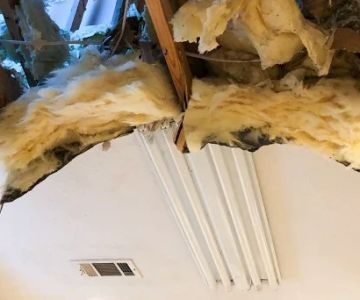
Keep people away from a sagging, dripping, or soft ceiling, especially near lights or wiring. If you can do so safely, stop the water at a normal shutoff and call the appropriate plumber, roofer, or restoration professional. Photograph the stain, mark its edge and time, protect belongings without touching the ceiling, and report electrical or structural concerns immediately.

Kustom US Restoration / kustom restoration
1215 W Houston Ave Suite A, Gilbert, AZ 85233, USA
Immediate danger checks
A bulge can hold water and damaged material may fall without warning. Do not stand underneath it, puncture it, operate a wet fixture, or touch a switch in the affected area. Leave and call emergency services or the utility when there is sparking, smoke, a burning smell, collapse, or another immediate hazard. Ask a qualified electrician how power should be isolated.

Wizard Restorations Inc / puroclean of san fernando
Rancho CucamongaSan Bernardino CountyCalifornia
10245 8th St, Rancho Cucamonga, CA 91730, USA
Document the pattern
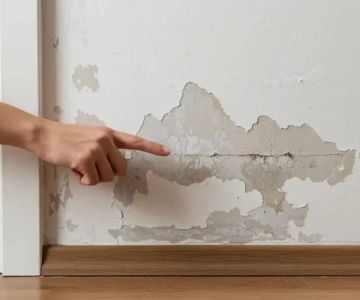
Take wide room photos and close views from a safe position. Note the first observation time, weather, plumbing or appliance use, stain size, drip rate, colour, odour, and rooms above. Put a removable piece of painter's tape near—never on—a sound edge and write measurements in a separate log. Save invoices and emergency mitigation receipts.
Trace the source without guessing
Water can travel along framing, pipes, and surfaces, so the stain may not sit below the source. A professional may compare roof exposure, supply and drain lines, HVAC condensate, bathrooms, and appliances. Do not open the ceiling, climb onto a wet roof, or assume a dry surface means the cavity is dry.
Plan drying and material decisions
Fix the water source first, then define how the ceiling cavity and adjacent insulation will be inspected and dried. CDC and EPA guidance emphasizes drying wet materials promptly, generally within 24–48 hours when possible, to limit mold growth. Ceiling tile, swollen wallboard, contaminated insulation, and other porous materials may need removal rather than surface drying.
Ask the restoration team to document moisture readings, affected layers, containment, equipment placement, daily progress, and a completion criterion. Large areas, sewage, floodwater, visible mold, or vulnerable occupants call for professional planning.
What to avoid
- Painting over a stain before the source and moisture are resolved
- Drilling or puncturing a bulge
- Using household fans when contamination or visible mold is present
- Turning on wet ceiling fixtures
- Discarding damaged materials before necessary documentation
Frequently asked questions
Can a small stain wait?
A small mark can reflect a larger hidden path. Document it and arrange source and moisture assessment promptly.
Should I test the stain for mold?
Fixing moisture and inspecting conditions usually matters more than a consumer surface test. Ask a qualified professional when visible growth or health concerns are present.
Can I paint once the ceiling feels dry?
Only after the source is repaired and the assembly is verified dry and sound. Surface feel alone does not confirm hidden layers.
Who should I call first?
Match the likely source and hazard: emergency service, electrician, plumber, roofer, HVAC technician, or restoration professional.
Sources
See the EPA flooded-home guidance and CDC disaster cleanup guidance for hazard, contamination, and drying principles.
Next steps
Isolate the area, stop the source only if safe, photograph the damage, notify the responsible professional or property manager, and get a written plan for source repair, drying, and verification.
 Reliable Basement Finishing5.0 (60 reviews)
 PuroClean of Placentia0.0 (0 reviews)
 Coast Abatement Services4.0 (60 reviews)
 The Renovators4.0 (40 reviews)
 Orange Restoration Labs4.0 (46 reviews)
 CRACK-X of Merrimack Valley4.0 (49 reviews)
 Appliance Supply Hose Leak: Stop Water and Document Damage
 Ceiling Water Stain: Map, Photograph, and Trace Safely
 Water Damage Contractor Credentials: Insurance and Scope
 Restoration Daily Drying Log: Readings, Equipment, and Changes
 Restoration Equipment Power: Plan Safe Connections
 Restoration Crew Access: Protect Keys and Privacy