
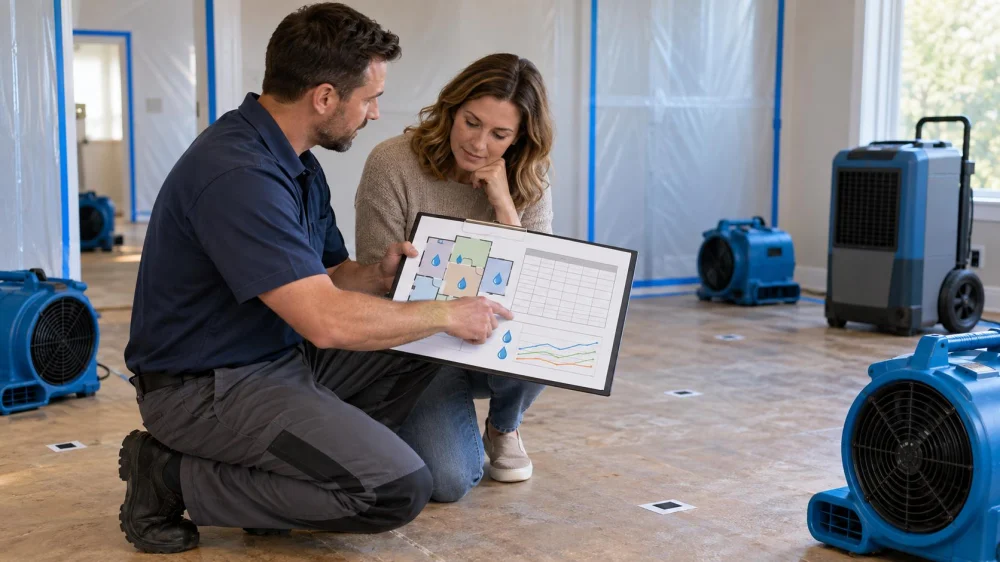
Restoration Daily Drying Log: Readings, Equipment, and Changes
On this page
- Quick answer
- Know what the log should prove
- Start with a clear baseline
- Use repeatable measurement points
- Track environmental conditions
- Record equipment and placement changes
- Review trends each day
- Add access and occupant notes
- Ask how completion is determined
- Limits and important notes
- Frequently asked questions
- Sources and evidence notes
- Conclusion and next steps
Quick answer
A restoration drying log should identify the loss, rooms and materials affected, source and water category assessment, safety controls, drying goals, equipment type and location, daily moisture and environmental readings, meter and measurement methods, material changes, access interruptions, and completion basis. Ask the contractor to use consistent reference points and explain trends, not just isolated numbers. Photograph equipment placement and visible conditions without moving anything, and keep each signed or dated version with the claim and repair file.
Kustom US Restoration / kustom restoration
1215 W Houston Ave Suite A, Gilbert, AZ 85233, USA
Know what the log should prove
The log should show what was assessed, how the drying plan responded, whether conditions improved, and why equipment was changed or removed. It supports communication among the property owner, restorer, insurer, adjuster, hygienist, and repair trades.
A log is not merely an equipment rental tally. It should connect readings and observations to specific materials, locations, goals, limitations, and decisions.

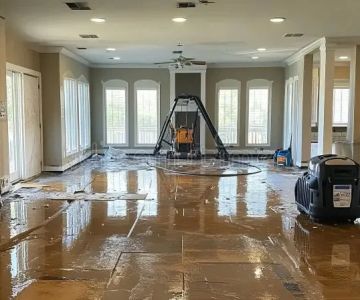
Wizard Restorations Inc / puroclean of san fernando
Rancho CucamongaSan Bernardino CountyCalifornia
10245 8th St, Rancho Cucamonga, CA 91730, USA
Start with a clear baseline
- Date and estimated time of loss and source control.
- Affected rooms, assemblies, and contents.
- Water source and contamination assessment.
- Safety hazards, containment, and restricted areas.
- Initial moisture and environmental conditions.
- Unaffected comparison materials when appropriate.
- Planned drying method, goals, and expected monitoring interval.
Use repeatable measurement points
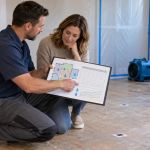
Ask the technician to map where each reading was taken, what material was tested, which meter or method was used, and whether the reading is relative or material-specific. A number without context cannot be compared reliably.
Future readings should use the same or clearly documented points when possible. Building assemblies vary, and surface readings may not represent moisture behind finishes or inside cavities.
Track environmental conditions
Temperature, relative humidity, and other calculated air conditions help professionals judge how air movement and dehumidification are performing. Outdoor air, HVAC operation, open windows, weather, and occupied activities can affect the pattern.
Do not change thermostats, open containment, turn off equipment, or ventilate the space without the restorer's instructions. If equipment causes heat, noise, odour, or electrical concerns, report them promptly.
Record equipment and placement changes
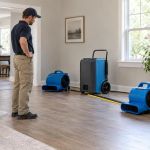
- Identify each air mover, dehumidifier, air scrubber, heater, or other device.
- Record the room and placement.
- Note installation, relocation, and removal times.
- Document power source and approved electrical plan.
- Explain why quantity or settings changed.
- Record shutdowns, faults, access problems, and maintenance.
Review trends each day
Look for a consistent decline toward the defined dry goal, while recognizing that materials dry at different rates. Ask about stalled areas, new wet locations, unexpected odour, swelling, delamination, staining, or signs the source is not fully controlled.
A professional may revise containment, expose a cavity, remove unsalvageable material, or change equipment based on findings. Require scope and cost authorization as the contract provides.
Add access and occupant notes
Record when rooms were unavailable, doors or windows were opened, power was interrupted, equipment was moved or turned off, pets or occupants entered a restricted area, or weather affected the building. These details explain gaps without assigning blame.
Report symptoms or comfort concerns to the appropriate professional. Do not use the log to diagnose illness or declare an environment safe.
Ask how completion is determined
Equipment removal should be supported by readings, comparison conditions, material response, and the agreed dry standard, not simply the number of elapsed days. Ask which areas could not be tested and whether hidden moisture remains a concern.
Collect the final log, moisture map, equipment record, photos, removal notes, clearance or specialist reports when applicable, and the next repair or monitoring steps.
Limits and important notes
Moisture meters have material, depth, calibration, and interpretation limits. A dry surface does not guarantee that every layer or cavity is dry, and one high reading does not identify its cause.
This is general US documentation guidance, not restoration, mould, electrical, structural, insurance, or health advice. Qualified professionals, applicable standards, equipment instructions, the contract, and actual building conditions govern the project.
Frequently asked questions
Should homeowners take their own readings?
Photographs and observations can help, but professional instruments and interpretation are needed for restoration decisions. Do not enter unsafe or contained areas.
Why do readings differ between devices?
Meters, scales, depths, materials, and locations vary. Ask the technician to document method and compare like with like.
Can equipment be removed when the room feels dry?
Comfort and surface feel are not enough. Request documented completion criteria for the affected assemblies.
Sources and evidence notes
This article applies general water-restoration monitoring, moisture-mapping, equipment-record, contract, and claim-documentation principles. The qualified restorer's assessment, applicable standards, insurer requirements, specialist reports, equipment instructions, and building conditions control a specific loss.
Conclusion and next steps
Ask for the baseline map and drying goals when work starts. Review the same locations, materials, methods, and equipment changes each day. Before equipment leaves, collect the final trend and completion basis so repairs begin from a documented condition.
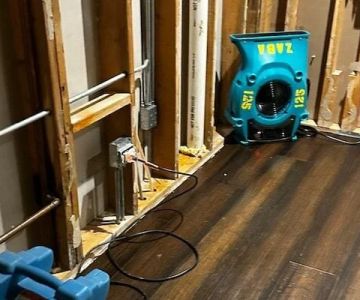
 Reliable Basement Finishing5.0 (60 reviews)
 PuroClean of Placentia0.0 (0 reviews)
 Coast Abatement Services4.0 (60 reviews)
 The Renovators4.0 (40 reviews)
 Orange Restoration Labs4.0 (46 reviews)
 CRACK-X of Merrimack Valley4.0 (49 reviews)
 Water Damage Contractor Credentials: Insurance and Scope
 Restoration Daily Drying Log: Readings, Equipment, and Changes
 Restoration Equipment Power: Plan Safe Connections
 Restoration Crew Access: Protect Keys and Privacy
 Property Damage Repair Estimate: Compare Scope, Not Price Alone
 Property Damage Recurrence Log: Track Weather, Timing, and Clues