
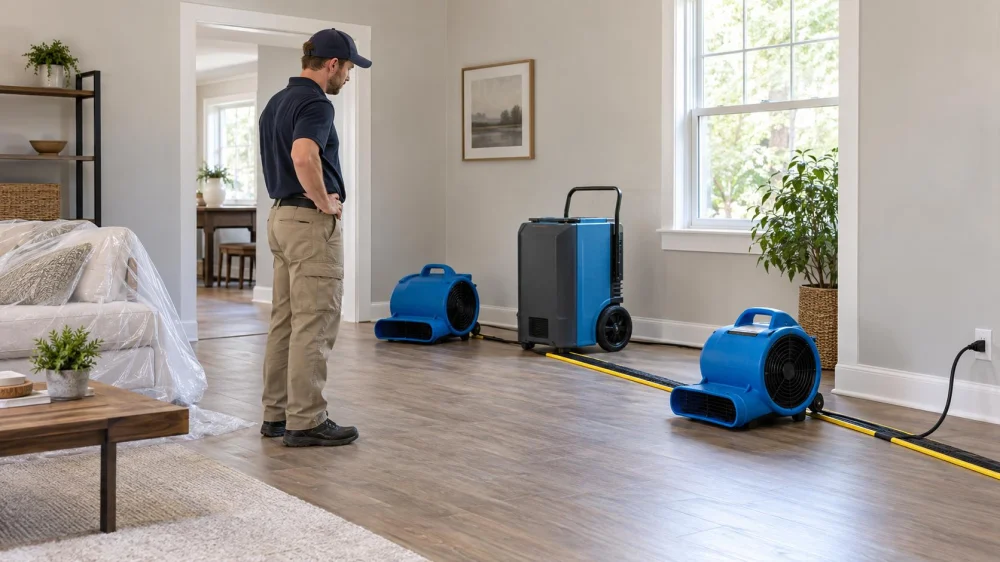
Restoration Equipment Power: Plan Safe Connections
On this page
Quick answer
Before air movers, dehumidifiers, pumps, or other restoration equipment are energized, have the restoration team identify each device, required circuit, cord route, moisture boundary, and monitoring plan. Do not use wet outlets, improvised adapters, damaged cords, or repeated breaker resets. A qualified electrician should evaluate any water-exposed electrical component or connection the restoration team cannot confirm is safe.
SERVPRO of Pompano Beach / servpro fort lauderdale south
Pompano BeachBroward CountyFlorida
2101 NW 33rd St #200a, Pompano Beach, FL 33069, USA
Power planning is a safety and drying requirement
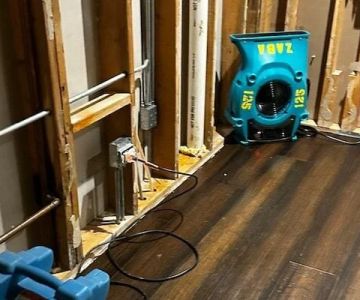
Restoration equipment power planning means matching each device to a verified supply while protecting people from water, damaged wiring, overloaded circuits, trip hazards, and unintended shutdowns. Equipment quantity alone does not prove a drying plan is safe or effective.
This article is for US property occupants and owners coordinating professional water damage restoration. It does not teach electrical repair or equipment sizing. The restoration contractor, electrician, equipment manufacturer, utility, and authority having jurisdiction control technical decisions.
Drip Restoration / valleywide restoration mesa az
932 S Stapley Dr, Mesa, AZ 85204, USA
Practical checklist
- Equipment inventory with device identifier, location, purpose, rating, and responsible company.
- Electrical assessment for wet panels, outlets, wiring, appliances, cords, and affected building materials.
- Assigned circuits, protective devices, approved cords, plugs, connectors, and generator arrangements.
- Cord routing away from standing water, doors, stairs, sharp edges, heat, children, and pets.
- Daily moisture, temperature, equipment-operation, filter, noise, and condensate checks.
- After-hours contact, alarm response, authorized shutdown reasons, and restart approval.
- Removal sequence, outlet inspection, energy record, and final condition photographs.
Step-by-step plan
- Keep everyone out of water near energized equipment and report water-exposed electrical components before setup.
- Ask the restoration supervisor to provide the equipment map and power requirements, then identify where electrical approval is needed.
- Have qualified personnel establish circuits, protection, connections, cord routes, condensate drainage, ventilation, and any generator placement.
- Photograph each device and cable route without touching connections, and keep access paths and exits clear.
- Follow the assigned monitoring schedule and report heat, odor, noise, leakage, stopped equipment, or a tripped device without repeatedly resetting it.
- Before removal, confirm who de-energizes and disconnects equipment, then inspect the area and record remaining electrical or moisture work.
Maintain a daily log of device identifiers, meter or circuit assignment, operating status, room conditions, moisture readings taken by the contractor, condensate handling, visits, alarms, and changes. Do not unplug equipment for convenience without the restoration team's safety instructions.
Limits and important notes
Do not open a panel, splice a cord, defeat a grounding pin, daisy-chain power strips, run an indoor generator, cover equipment, or route cords through standing water. Noise or heat concerns deserve review, but improvised shutdown can interrupt drying and create another hazard.
Leave the area and call emergency services for smoke, fire, arcing, shock, or immediate danger. Contact the restoration supervisor and a qualified electrician promptly for hot plugs, burning odor, damaged insulation, water near connections, repeated trips, unusual equipment cycling, or unauthorized changes.
Frequently asked questions
Can drying equipment use an ordinary outlet?
Only when qualified personnel confirm the device, outlet, circuit, protection, and environment are suitable.
Should I reset a breaker that trips?
Do not repeatedly reset it. Stop, preserve the condition, and contact the responsible restoration and electrical professionals.
May cords run under rugs or through doorways?
Avoid routes that trap heat, hide damage, create trip points, or expose cords to crushing. Use the approved route.
Can equipment be turned off at night for noise?
Not without the restoration plan. Ask about safer placement, schedule, and alternatives before interrupting drying.
Who pays for added electricity?
The contract and insurance decision control reimbursement. Record equipment and dates, and ask for the calculation process.
Sources and evidence
Evidence note: this guide reflects common electrical-safety, equipment-control, and professional drying documentation principles. Manufacturer instructions, qualified electrical evaluation, restoration standards, and applicable codes determine the actual installation and monitoring plan.
Conclusion and next steps
Obtain the equipment and power map, keep wet electrical areas restricted, and let qualified personnel make every connection. Monitor the plan without improvised resets or shutdowns, report warning signs immediately, and preserve the final equipment, energy, moisture, and electrical records.
 ServiceMaster of Roanoke4.0 (109 reviews)
 Merit Restorations4.0 (14 reviews)
 Extreme Supplies East Coast5.0 (12 reviews)
 Blue Collar Painting & Drywall Repair5.0 (36 reviews)
 Heights Drain Cleaning4.0 (12 reviews)
 Moldman St. Louis5.0 (288 reviews)
 Water Damage Restoration for Multi-Family Homes
 Water Damage Restoration Safety Tips You Should Never Ignore
 How to Restore Water-Damaged Laminate Countertops Effectively
 Water Stain Returns After Paint: Check Moisture First
 How to Handle Water Damage From Burst Water Heaters – Cleanup, Repair & Prevention
 How to Dry Out Water-Damaged Rugs Quickly: Expert Guide