
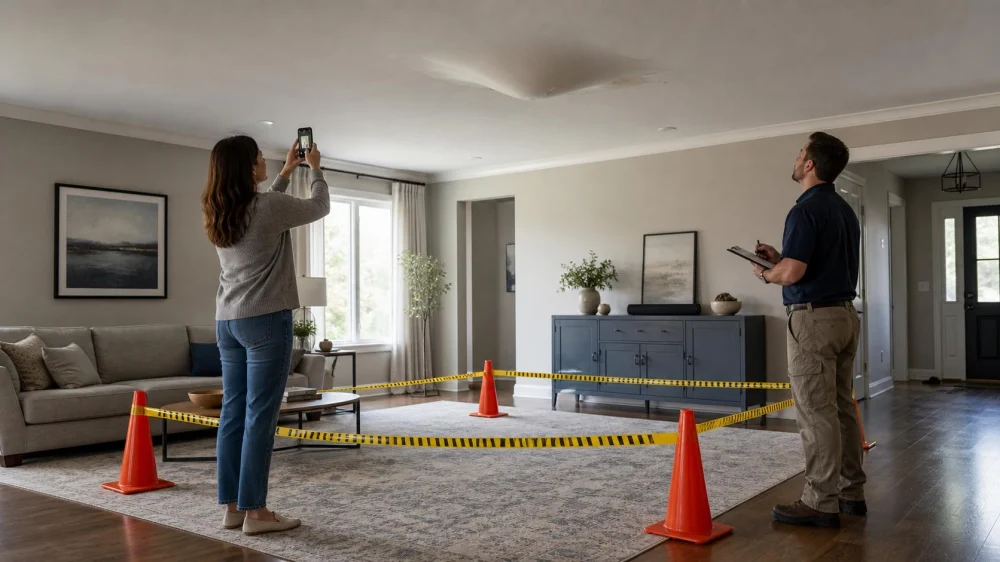
Ceiling Bubble After a Leak: Why You Should Not Puncture It
Table of contents
Quick answer
A paint bubble, sag, or bulge after a leak can hold water and conceal weakened drywall, wet insulation, electrical hazards, or broader ceiling damage. Keep people and pets out from underneath, do not puncture or press it, and stop the water source only if that can be done safely. Contact water-damage and building professionals promptly; use emergency help for rapid sagging, cracking, falling material, or water near electricity.
SERVPRO of Pompano Beach / servpro fort lauderdale south
Pompano BeachBroward CountyFlorida
2101 NW 33rd St #200a, Pompano Beach, FL 33069, USA
What a ceiling bubble may mean
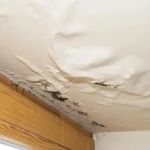
Water can collect above paint, drywall paper, a gypsum panel, or another finish and create a visible blister or hanging area. The apparent size does not show the full wet area because water can travel along framing, pipes, fasteners, or insulation. A small mark may be old staining, while a growing bulge can indicate active accumulation. The source may be plumbing, roofing, HVAC condensate, an appliance, or an upper-floor fixture.
Kustom US Restoration / kustom restoration
1215 W Houston Ave Suite A, Gilbert, AZ 85233, USA
Safe first actions
- Move everyone out from below and establish a clear no-entry area.
- Do not touch switches, fixtures, fans, cords, or devices in or near the wet area.
- Stop using the suspected fixture or appliance if doing so requires no contact with water.
- Call building management, a plumber, roofer, or restoration professional as appropriate.
- Photograph from a safe distance and note whether the bulge is changing.
- Contact the insurer or property owner before non-emergency demolition when practical.
Why not to puncture it
Puncturing can release an unpredictable volume of contaminated water, bring down wet drywall or insulation, spread debris, and place a person directly under weakened material. It can also expose electrical components or disturb mould and older hazardous materials. A professional can first control the source, isolate power where needed, assess structural stability, set containment, and choose a controlled drainage and removal method.
Document the likely source
Record the first-seen time, weather, nearby rooms and fixtures, appliance cycles, plumbing use, roof or exterior work, water color and odor without touching it, and changes in size. Take wide photos showing room location and closer photos using camera zoom. Do not assume the fixture directly above is the source; water may travel. Preserve receipts, maintenance records, and communications for the owner or insurer.
When help is urgent
Leave the area and seek emergency assistance for sudden expansion, cracking or popping sounds, falling material, visible structural movement, a ceiling fixture filling with water, sparking, smoke, burning odor, a gas concern, or water entering an electrical panel. Do not walk through standing water to reach a breaker. If sewage, stormwater, or chemical contamination is possible, avoid contact and request qualified cleanup.
Restoration checklist
Ask the restoration team to document the water source and category, electrical and structural clearance, affected ceiling and insulation area, moisture readings, containment, controlled removal, drying plan, target conditions, mould or hazardous-material considerations, and final verification. Photograph conditions before work when safe. Keep equipment logs, daily moisture records, repair estimates, disposal records, and completion reports.
Limits and safety notes
This general U.S. guidance cannot determine ceiling strength, contamination, electrical safety, or whether mould or regulated materials are present. Do not puncture, cut, drill, press, climb, or stand beneath the damaged area. Do not energize wet equipment or enter water to switch power. Renters should notify property management promptly, while every occupant should follow emergency services, utility, insurer, local code, and qualified professional instructions.
Evidence notes
The U.S. Environmental Protection Agency emphasizes correcting the water source and drying wet materials quickly, generally within 24–48 hours, to limit mould growth. The Centers for Disease Control and Prevention warns against operating electrical controls or equipment while standing in water and advises professional electrical review after flooding. These principles support early isolation, source control, safe documentation, and professional evaluation rather than unplanned puncturing.
Frequently asked questions
Should I place a bucket under the bulge?
Only from outside the collapse zone and without entering a wet electrical area. Do not stand beneath the ceiling.
Can I turn off the breaker?
Only if it can be reached from a completely dry, safe location and authorities advise it. Otherwise call an electrician or utility.
Does a small bubble need attention?
Yes. Size alone does not reveal the moisture path or condition above the finish.
Can a fan dry the ceiling?
Air movement should not begin until electrical, structural, contamination, and mould-spread risks are assessed.
Will the ceiling need replacement?
That depends on material, contamination, saturation, strength, drying success, and local repair requirements.
Next steps
Clear the area below, avoid electrical contact, stop using the suspected source when safe, document changes from a distance, and call appropriate building and restoration professionals. Arrange rapid moisture assessment and drying. Use emergency help for fast deformation, falling material, structural sounds, electrical signs, gas odor, or any situation that cannot be isolated safely.
 CaliPro Restoration & Development5.0 (6 reviews)
 Steamatic of SW Phoenix4.0 (7 reviews)
 Alabama Restoration and Remediation3.0 (3 reviews)
 PureOne Services4.0 (33 reviews)
 Anytime Restoration Fire & Water Damage Blaine5.0 (113 reviews)
 24/7 Water Damage Restoration Los Angeles5.0 (31 reviews)
 DIY Water Damage Repair: When to Tackle It Yourself and When to Call Professionals
 How to Handle Water Damage From Storm Flooding: A Comprehensive Guide
 How to Protect Your Home from Water Damage in a Flood Zone – Key Tips for Homeowners
 How to Spot Water Damage in Your Home’s Plumbing System
 How to Document Water Damage Before Restoration
 What Happens During Water Damage Restoration: A Detailed Overview