
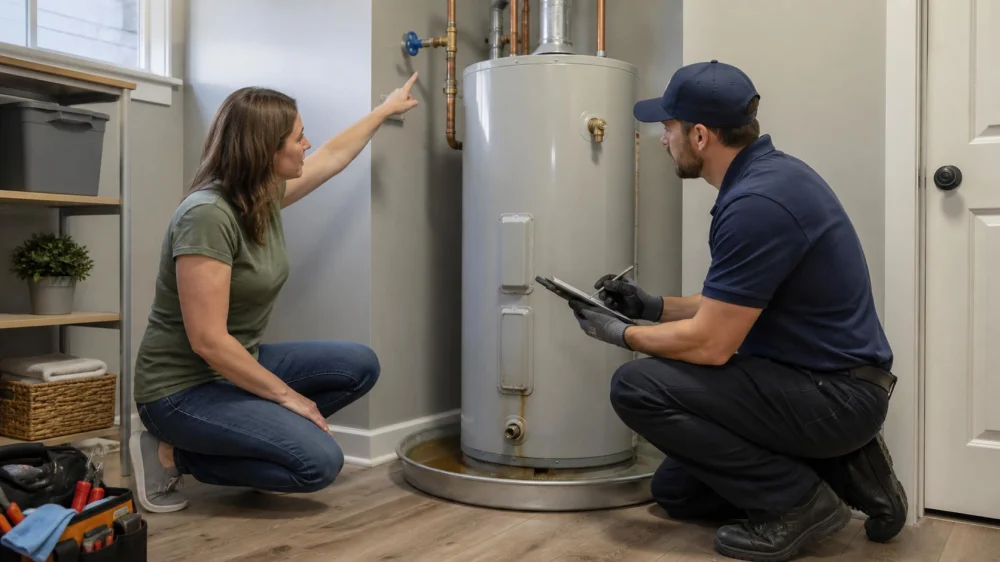
Water Heater Leak: Shut Off Utilities and Limit Damage
On this page
Quick answer
For a leaking water heater, keep away from hot water, gas, and wet electrical equipment. Close the cold-water supply only if the valve is safe to reach, and shut off energy according to the unit's emergency instructions. Call a qualified plumber. Document the leak, protect dry belongings, and have walls, floors, and insulation checked when water has spread.
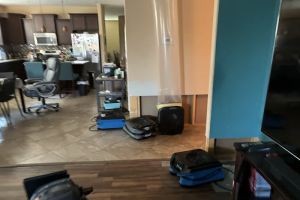
Drip Restoration / valleywide restoration mesa az
932 S Stapley Dr, Mesa, AZ 85204, USA
Recognize immediate hazards
A water-heater leak can involve scalding water, electricity, fuel gas, combustion gases, pressure, and structural water damage. Do not enter standing water around an electric appliance or touch wet wiring. Do not approach a hissing, bulging, or violently leaking tank.
If you smell gas, leave without using switches, phones, flames, or vehicles near the building. Call the gas utility or emergency services from a safe location. For smoke, fire, carbon monoxide alarms, breathing symptoms, or a suspected tank rupture, evacuate and call emergency services.

Wizard Restorations Inc / puroclean of san fernando
Rancho CucamongaSan Bernardino CountyCalifornia
10245 8th St, Rancho Cucamonga, CA 91730, USA
First actions
- Keep children and pets away.
- Do not touch the water until you know it is not dangerously hot or energized.
- Identify the unit as electric, gas, propane, oil, heat-pump, or indirect without opening it.
- Follow the manufacturer emergency label if it is visible and safe.
- Call a licensed or otherwise qualified plumber.
- Notify building management when the equipment or shutoff is shared.
Shut off utilities safely
Close the cold-water inlet valve gently if it is dry, clearly identified, and accessible without reaching over hot water or electrical equipment. Do not force a corroded valve. If water continues and the main shutoff is safe, use it.
Electric units generally require the correct breaker to be turned off from a dry panel. Fuel-burning units have model-specific gas controls and shutoff procedures. If you cannot identify the correct control confidently, leave it to emergency responders, the utility, or a professional.
Never close or cap a temperature-and-pressure relief valve or its discharge pipe.
Note the apparent source
From a safe distance, water may appear near a supply connection, drain valve, relief discharge, tank seam, corrosion spot, venting component, or nearby plumbing. Condensation can also collect around high-efficiency or heat-pump systems.
Do not disassemble fittings to prove the source. A leaking relief valve may signal temperature, pressure, expansion, valve, or installation problems that require testing.
Limit and document damage
- Photograph the water path, unit label, valves, and affected materials.
- Record when the leak was discovered and when supplies were shut off.
- Move dry belongings from adjacent areas.
- Use towels or extraction equipment only after electrical and temperature hazards are controlled.
- Keep damaged parts and invoices when an insurer requests them.
Do not delay emergency action for photographs.
Assess hidden moisture
Water can move beneath flooring, behind baseboards, into wall cavities, and through ceilings. A concrete floor may look dry while adjacent drywall or insulation remains wet. A restoration professional can map moisture and establish drying goals.
Open building assemblies only with a planned approach that accounts for electricity, pipes, lead paint, asbestos-containing materials, contamination, and structural stability.
Repair or replacement questions
Ask the plumber to document the failure, tank age, corrosion, pressure readings, venting, drain pan, expansion control, and code-related requirements. A replaceable valve or connection differs from a leaking tank body, which often requires replacement.
For a new unit, compare capacity, fuel type, efficiency, installation scope, permits, disposal, warranty, drain pan, shutoff, and leak-detection options. Never restart until the appliance is filled, vented, connected, and tested according to manufacturer instructions.
Prevention checklist
- Know the cold-water and main shutoff locations.
- Keep the area visible and free of stored items.
- Arrange maintenance at the manufacturer-recommended interval.
- Report corrosion, rumbling, drips, or relief discharge promptly.
- Use a suitable drain pan where required and possible.
- Consider a professionally installed leak alarm or automatic shutoff.
- Keep carbon monoxide alarms working near fuel-burning equipment as required.
Important limitations
This is general emergency information, not plumbing, gas, electrical, remediation, or code instruction. Water-heater designs and local licensing and permit rules differ. Only qualified professionals should diagnose pressure, combustion, electrical, tank, or relief-valve failures.
Sources and evidence notes
- U.S. Department of Energy: water-heater operation, efficiency, and maintenance information.
- Consumer Product Safety Commission: scald, carbon monoxide, and appliance-safety resources.
- U.S. Environmental Protection Agency: prompt moisture control and drying principles.
- Manufacturer instructions and local authorities: model-specific shutdown, installation, relief discharge, and permit requirements.
Frequently asked questions
Can I keep using hot water from a leaking tank?
No. Shut the system down safely and have it assessed. Continued heating and pressurization can worsen a failure.
Should I plug the relief valve because it drips?
Never. It is a critical safety device. Keep away from hot discharge and call a qualified plumber.
Does water at the base mean the tank failed?
Not always; connections, valves, condensation, and nearby piping can leak. A professional must identify the source.
Can I turn an electric heater back on after draining?
Do not energize it until a professional confirms the tank is completely filled and the system is safe. Dry-firing elements can damage them.
Conclusion
A water-heater leak combines water damage with potential scald, electrical, gas, and pressure hazards. Keep clear, stop water and energy only from safe locations, and use qualified help. Once the emergency is controlled, document the source, measure hidden moisture, and verify repair or replacement before returning the system to service.
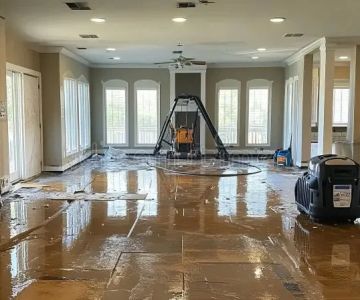
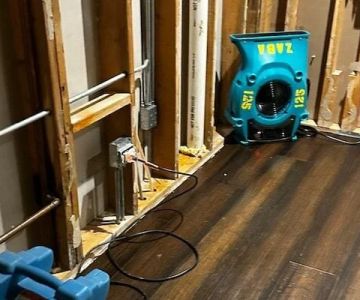
 Paul Davis Restoration of Northwest Virginia4.0 (157 reviews)
 A1 Water & Mold Removal MA5.0 (73 reviews)
 Stanley Steemer4.0 (670 reviews)
 Tri-Tech Restoration4.0 (38 reviews)
 Kinetic Basement Solutions, Inc. Home of the Sump Pump Geeks4.0 (97 reviews)
 All State Remediation5.0 (3 reviews)
 Water Stain Returns After Paint: Check Moisture First
 Water Damage Restoration for Restaurants: How to Protect Your Business
 Water Damage Inspection Checklist for Homeowners – Prevent and Repair Water Damage Effectively
 Water Damage Repair for Hardwood and Laminate Floors: A Complete Guide
 How to Repair Water-Damaged Electrical Systems Safely
 How to Repair Water-Damaged Drywall