
Why Laminate Flooring Swells After a Water Leak
On this page
- Quick answer
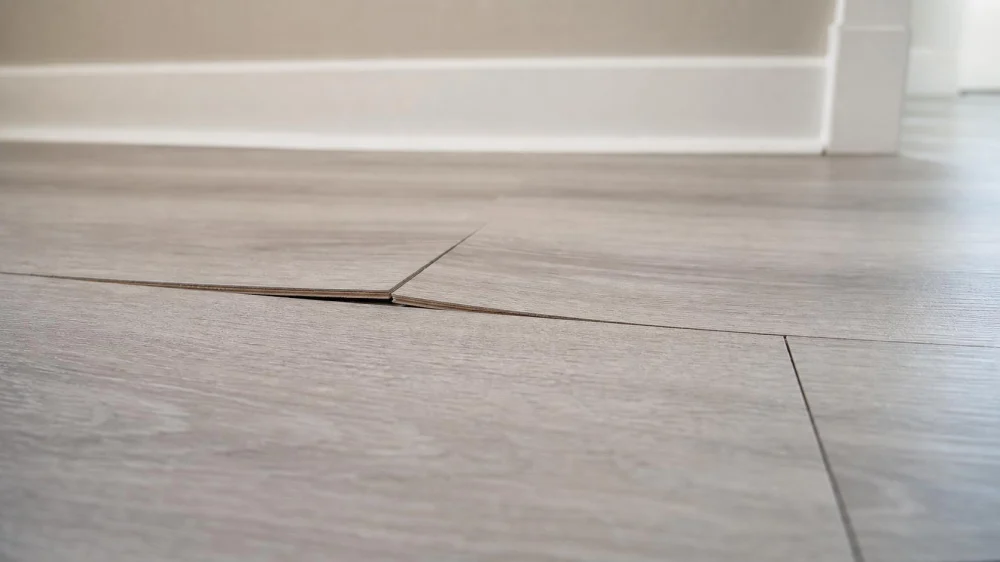
- What water-swollen laminate looks like
- Why laminate changes shape
- Safe first checks after the leak
- Where hidden moisture can remain
- When drying may help and when replacement is likely
- What professional assessment should include
- Urgent signs, limitations, and evidence notes
- Frequently asked questions
- Conclusion and next steps
Quick answer
Laminate flooring swells when water enters joints or damaged edges and reaches the moisture-sensitive core. Raised seams, curled edges, soft spots, and buckling may remain even after the surface looks dry. Stop the leak, photograph the pattern, keep traffic off lifted areas, and have the flooring, underlayment, subfloor, walls, and contamination assessed. Do not sand, weight, glue, or reinstall boards before moisture and damage are defined.
Giants / dry kings restoration of san francisco
San FranciscoSan Francisco CountyCalifornia
685 Geary Blvd, San Francisco, CA 94102, USA
What water-swollen laminate looks like
Laminate flooring typically combines a wear layer, decorative layer, wood-fibre core, and backing. Products vary, and some have improved water resistance, but “water resistant” does not mean every seam and core can remain submerged or wet indefinitely.
Water-related signs include:
- Raised or pillowed seams
- Edges that curl upward
- A peaking ridge where boards meet
- Bubbles or delamination in the surface layer
- Soft, spongy, or crushed-feeling areas
- Boards that buckle or tent away from the subfloor
- Discoloration, staining, or damp odour
- Movement, clicking, or gaps that were not present before
Not every raised seam is caused by a recent leak. Insufficient expansion space, installation pressure, high humidity, substrate movement, and product defects can look similar. The timing and water path matter.
Drip Restoration / valleywide restoration mesa az
932 S Stapley Dr, Mesa, AZ 85204, USA
Why laminate changes shape
The fibre core can absorb liquid at cut ends, joints, chipped edges, transitions, wall gaps, and penetrations. As the core takes on moisture, it can expand in thickness and width. The surface layer may not return to its original shape after drying.
Water can also reach beneath floating planks and become trapped between the laminate, foam or attached pad, vapour-control layer, and subfloor. Limited airflow slows drying. Concrete, plywood, oriented strand board, adhesives, and trim each hold and release moisture differently.
A large continuous floating floor needs proper perimeter and transition space. Swelling plus restricted movement can push boards against walls or fixed cabinets and create buckling far from the original leak.
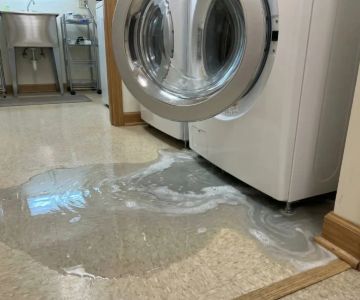
The source matters. Clean supply water, appliance wastewater, outdoor flooding, sewage, and long-standing unknown water carry different contamination and material-salvage implications.
Safe first checks after the leak
- Address life safety. Keep away from wet electrical components, sewage, a sagging ceiling, and unstable flooring.
- Stop the source. Use a dry accessible shutoff only when safe, or call the appropriate plumber, appliance technician, roofer, or emergency service.
- Document first. Photograph the water extent, raised seams, transitions, baseboards, adjacent rooms, source, and damaged contents.
- Mark the boundary. Use removable painter's tape on a dry wall or a simple floor plan, not permanent ink on flooring.
- Remove loose dry contents. Move furniture only when doing so will not drag across swollen boards or expose people to contamination and electricity.
- Blot safe surface water. Use towels or approved wet-extraction equipment only after contamination and electrical risks are addressed.
- Limit traffic. A lifted plank can trip people, and walking may break swollen joints.
Do not use a household vacuum on water, run extension cords across wet flooring, or direct heaters at laminate. Heat can distort materials and does not verify hidden drying.
Where hidden moisture can remain
Inspectors may find moisture beyond the visible raised seams:
- Under planks and attached pads
- In separate foam underlayment
- At wall edges and beneath baseboards
- Under cabinets, appliances, thresholds, and transitions
- In plywood, oriented strand board, or sleepers
- At concrete surfaces and vapour-control layers
- Inside lower drywall, insulation, and wall plates
- In the ceiling or framing below
A pinless moisture meter can help screen patterns but may react to material density, metal, fasteners, concrete, and layered assemblies. Pin measurements, probes, thermal images, humidity data, and inspection openings also need trained interpretation. One low surface reading does not prove every layer is dry.
When drying may help and when replacement is likely
Prompt drying may protect the subfloor, walls, cabinets, and unaffected flooring. It may also prevent further spread. However, a laminate core that has visibly thickened, crumbled, delaminated, or permanently deformed often cannot be restored to its original dimensions by drying.
Localized board replacement may be possible when:
- The water source and contamination are understood.
- The underlayment and subfloor can be dried and verified.
- Damage is limited and compatible replacement planks exist.
- The locking system permits access without excessive breakage.
- Expansion gaps and transitions can be corrected.
Broader replacement may be needed when swelling is widespread, water travelled under a large floating area, contamination requires removal, joints are broken, matching products are unavailable, or hidden substrate damage exists.
Do not sand swollen edges, inject glue, drill holes, place weights, or tap buckled boards flat. These steps can damage the wear layer, trap moisture, hide contamination, and compromise the locking system.
What professional assessment should include
- Identify and repair the water source.
- Determine source category, duration, and likely contamination.
- Map visible damage and moisture in flooring, underlayment, subfloor, walls, cabinets, and adjacent spaces.
- Identify the flooring product, installation method, transitions, and available expansion space.
- Define which materials require removal for inspection, cleaning, drying, or replacement.
- Set drying equipment based on the assembly and verify progress with repeatable measurements.
- Assess subfloor flatness, strength, dryness, and manufacturer requirements before new flooring.
- Document retained and removed materials, readings, photos, and completion criteria.
A restoration professional may manage moisture and contamination, while a flooring installer evaluates product and replacement layout. A plumber, appliance technician, roofer, electrician, cabinet specialist, or structural professional may also be needed depending on the loss.
Urgent signs, limitations, and evidence notes
Use urgent professional help for sewage, water near electricity, a shock sensation, active ceiling leakage, structural movement, rapidly spreading water, strong microbial odour, or widespread buckling that blocks exits. Keep people away from trip and collapse hazards.
This article reflects general laminate-flooring and water-damage practice in the United States. It cannot classify water, identify the exact flooring, determine hidden moisture, or decide salvageability remotely. Product instructions, material samples, and on-site measurements are stronger evidence.
Insurance, landlord, condominium, warranty, restoration, and disposal requirements vary. Notify responsible parties promptly, preserve evidence, and avoid discarding flooring before authorized inspection unless safety or contamination requires removal.
Frequently asked questions
Will swollen laminate flatten after it dries?
Minor movement from temporary humidity may change, but a fibre core that has visibly swollen or delaminated often remains deformed. Drying is still important for the structure beneath; replacement decisions follow assessment.
Can I replace only a few planks?
Possibly, if damage is local, hidden layers are dry and suitable, matching planks are available, and the locking layout permits access. Water spread and contamination can make the required area larger than the visible seams.
Is waterproof laminate safe after a leak?
“Waterproof” claims have product-specific limits and installation conditions. Water may still enter perimeter gaps, damaged joints, walls, cabinets, and subfloor. Check the exact warranty and have hidden areas assessed.
Should I remove the baseboards?
Removing trim can reveal edges and aid drying, but may damage walls, conceal electrical or hazardous materials, and affect evidence. Let the moisture and repair plan determine where controlled removal is needed.
Can a dehumidifier dry water under the floor?
It may support room drying, but trapped water and layered materials may require access, extraction, air movement, and monitoring. Equipment must be sized and placed safely; a dry room-air reading does not verify the subfloor.
Conclusion and next steps
Stop the source, document the swollen pattern, limit traffic, and assess more than the visible surface. Laminate that has permanently expanded may need replacement, but the priority is safe moisture and contamination control in the underlayment, subfloor, walls, and adjacent spaces. Reinstall only after the assembly meets the flooring manufacturer's substrate and moisture requirements.
 Groundworks4.0 (739 reviews)
 United Water Restoration Group of West San Antonio4.0 (5 reviews)
 Invictus Remediation5.0 (9 reviews)
 Montgomery & Sons Inc4.0 (20 reviews)
 South County Restoration4.0 (43 reviews)
 Disaster Team Inc.4.0 (29 reviews)
 How to Prevent Water Damage to Your Home’s Exterior Walls: Effective Protection Tips
 How to Dry Out Water-Damaged Furniture Quickly and Safely
 Water Damage Repair for Attics and Roof Spaces: Essential Tips for Prevention
 DIY Water Damage Repair: A Guide to When to Do It Yourself vs. Calling Pros
 How to Repair Water Damage from Pipe Leaks Inside Walls
 How to Identify and Repair Water Damage in Your Windows and Doors