
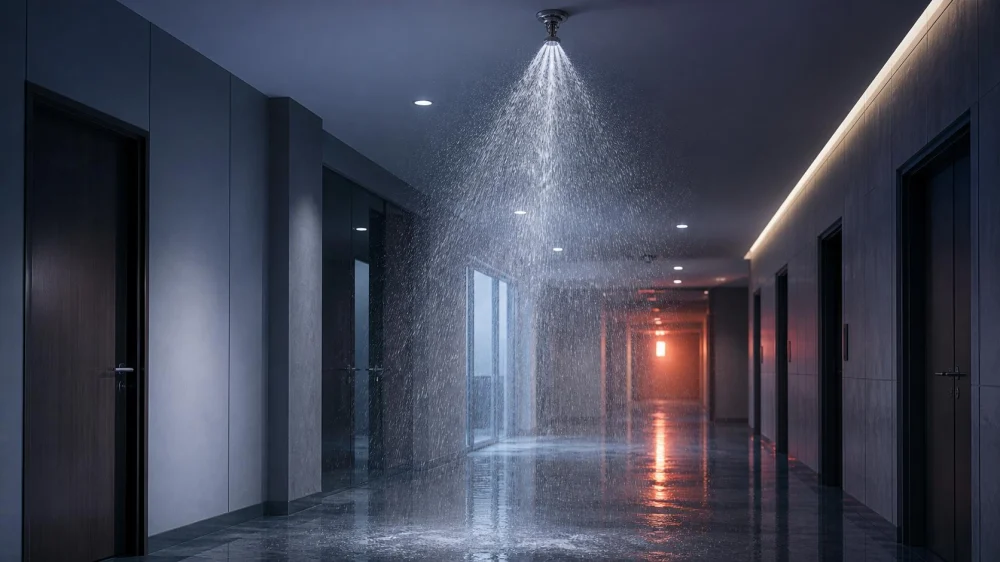
Fire Sprinkler Discharge: Leave, Call 911, and Wait
On this page
- Quick answer
- Treat the event as a fire first
- Do not rush to close the sprinkler valve
- What to do after official clearance
- Document water and fire effects
- Plan water-damage mitigation
- Restore the fire protection system
- Important limitations
- Sprinkler discharge checklist
- Frequently asked questions
- Sources and evidence notes
- Conclusion and next steps
Quick answer
If a fire sprinkler is flowing and you do not have official confirmation that there is no fire, alert others, leave by the safe route, close doors behind you when practical, and call 911 from outside. Do not enter smoke, use an elevator during a fire, or close the sprinkler control valve yourself. Wait for the fire department or incident commander to determine when the fire is controlled and when the system may be shut down.
After responders clear the building, notify the owner or manager, insurer, licensed fire-sprinkler contractor, and water-damage firm as appropriate. The priorities are life safety, preserving fire protection, documenting the event, removing water, and restoring the system promptly.
SERVPRO of Pompano Beach / servpro fort lauderdale south
Pompano BeachBroward CountyFlorida
2101 NW 33rd St #200a, Pompano Beach, FL 33069, USA
Treat the event as a fire first
Water flowing from a sprinkler may indicate a fire even if you cannot see flames. Heat, smoke, toxic gases, falling material, and energized equipment can remain hazards. Activate the building alarm if required and safe, follow the posted emergency plan, and call 911. Give dispatch the address, floor or unit, visible conditions, and whether a sprinkler is flowing.
Do not stop to retrieve belongings. Do not re-enter because the alarm becomes quiet or the water appears to control the flames. Account for household members or coworkers at the designated meeting point and report anyone missing to responders.
Home sprinklers normally activate individually from heat. The U.S. Fire Administration explains that the sprinkler closest to the fire operates; they do not normally all spray at once. A single flowing head still requires an emergency response.

Wizard Restorations Inc / puroclean of san fernando
Rancho CucamongaSan Bernardino CountyCalifornia
10245 8th St, Rancho Cucamonga, CA 91730, USA
Do not rush to close the sprinkler valve
Closing a valve too soon can remove the water controlling a hidden or rekindling fire. NFPA fire-service guidance says automatic sprinklers should not be shut off until the fire is extinguished, and more recent NFPA material states that systems should remain in service until incident command decides otherwise.
Occupants should not search through a smoky building for a riser or control valve. Building staff should follow the site emergency plan and fire-department directions. Even after water is stopped, a trained person may need to monitor the valve and system while overhaul continues.
If a sprinkler was struck or released accidentally and there is clearly no smoke or fire, follow the building’s emergency plan and call the fire department, manager, or fire-protection professional. Do not assume an accidental cause until fire risk has been evaluated, and do not improvise a plug or cap.
What to do after official clearance
Ask the incident commander or building representative which areas are safe to enter and whether utilities have been isolated. Confirm who has authority over the sprinkler valve, alarm panel, fire pump, and restoration of the system. Keep unauthorized people away from wet floors, sagging ceilings, damaged wiring, and equipment.
Contact the property owner or manager and insurer. Ask whether an emergency mitigation vendor is assigned and whether approval is required before moving contents or removing materials. Urgent action to prevent further loss may still be necessary, but document conditions first whenever safety permits.
Document water and fire effects
From safe areas, take wide and close photographs of the activated sprinkler, water path, affected contents, floors, walls, ceilings, doors, smoke residue, and response actions. Do not touch or discard the operated sprinkler head; responders or investigators may need it preserved.
Record the alarm time, 911 call, responder arrival, valve closure authorization, water shutoff time, affected rooms, utility actions, and vendor contacts. Save the fire-department incident number, inspection reports, drying logs, repair invoices, and system-restoration records.
Plan water-damage mitigation
Once entry and utilities are declared safe, remove standing water with appropriate wet-use equipment. Protect unaffected spaces, move salvageable contents to a documented dry location, and begin controlled dehumidification. Water can migrate below flooring, behind baseboards, inside walls, and to lower levels.
The EPA recommends drying water-damaged materials within 24 to 48 hours when possible to limit mold growth. Fire incidents can add smoke, soot, combustion residue, or contaminants, so clean-water assumptions may be inappropriate. A restoration scope should identify affected assemblies, contamination, drying targets, monitoring frequency, and materials that cannot be safely restored.
Do not use ordinary fans where they could spread soot, mold, or contaminants. Do not energize wet appliances or ceiling fixtures. Bring in qualified electrical, structural, environmental, or specialty-cleaning help when those hazards are possible.
Restore the fire protection system
An activated sprinkler is not finished when the water stops. A licensed or otherwise qualified fire-sprinkler contractor should replace the operated or damaged head, inspect affected components, reset valves and alarms, test the system, and document that protection has been restored. Requirements vary by jurisdiction and system type.
Use listed replacement parts that match the system design. Do not paint, tape, hang objects from, cap, or substitute a sprinkler head. Maintain any required fire watch or temporary protection until the authority having jurisdiction and building representative accept the restored system.
Important limitations
Residential, commercial, warehouse, high-rise, dry-pipe, wet-pipe, and special-hazard systems have different controls and procedures. Lease terms, fire codes, insurer rules, and local fire-department practices also differ. This article is for occupants and property contacts; it is not a valve-operation procedure for trained emergency personnel.
Never use water-damage concerns to override life-safety commands. Fire control and evacuation come before property mitigation.
Sprinkler discharge checklist
- Alert others, evacuate safely, and call 911.
- Close doors behind you when practical.
- Do not enter smoke or use elevators during a fire.
- Do not close the sprinkler valve without fire-department direction.
- Wait for official clearance before re-entry.
- Notify the owner, manager, insurer, and qualified contractors.
- Photograph conditions and preserve the operated sprinkler head.
- Begin safe water extraction and measured drying.
- Restore and test the sprinkler and alarm systems promptly.
- Keep incident, drying, repair, and system records together.
Frequently asked questions
Do all sprinklers activate together?
Normally no. Heat activates the sprinkler closest to the fire, according to USFA guidance.
Can I close the main water valve?
Not during a suspected or active fire. Wait for fire-department or incident-command direction; the fire-protection system may need to keep operating.
What if someone hit the sprinkler accidentally?
Follow the emergency plan, verify there is no fire through the proper authority, and call the building and fire-protection contacts. Do not improvise a repair.
Can I re-enter when the water stops?
No. Re-enter only after responders or the responsible authority say the area is safe.
Who repairs the sprinkler?
A qualified fire-sprinkler contractor should replace components, reset and test the system, and provide documentation consistent with local requirements.
How quickly should water cleanup begin?
As soon as responders clear the area and utilities are safe. EPA guidance uses a 24-to-48-hour drying target when possible, but extensive or contaminated damage needs professional assessment.
Sources and evidence notes
The U.S. Fire Administration home sprinkler guidance explains that sprinklers respond quickly and normally operate only where heat is present. USFA fire-response guidance says to alert others, leave, and call 911 when a fire cannot be safely handled.
NFPA 13E committee material states that automatic sprinklers should not be shut off until the fire is extinguished. The EPA water-damage table supplies the 24-to-48-hour response guidance. Local authorities and the current adopted codes control the incident.
Conclusion and next steps
When a sprinkler flows, protect life first: alert, evacuate, call 911, and leave valve decisions to incident command. After clearance, document the loss, begin safe water mitigation, and have qualified professionals restore and test the fire-protection system. Keep the building under any required temporary safeguards until full protection is confirmed.
 ServiceMaster By Lovejoy4.0 (94 reviews)
 RestoPros of West Houston4.0 (35 reviews)
 TipTop5.0 (19 reviews)
 Hammond Cleaning & Restoration4.0 (236 reviews)
 Pro Drywall Plastering and Painting4.0 (18 reviews)
 Americon Restoration Pittsburgh5.0 (38 reviews)
 How to Repair Water-Damaged Wall Panels
 How to Restore Water-Damaged Property After a Severe Storm
 How to Handle Water Damage from Washing Machines: Causes, Repairs & Prevention
 How to Prevent Water Damage in Your Home During a Rainstorm
 How to Restore Water-Damaged Storage Areas Effectively
 How to Prevent Water Damage From Leaky Appliances