
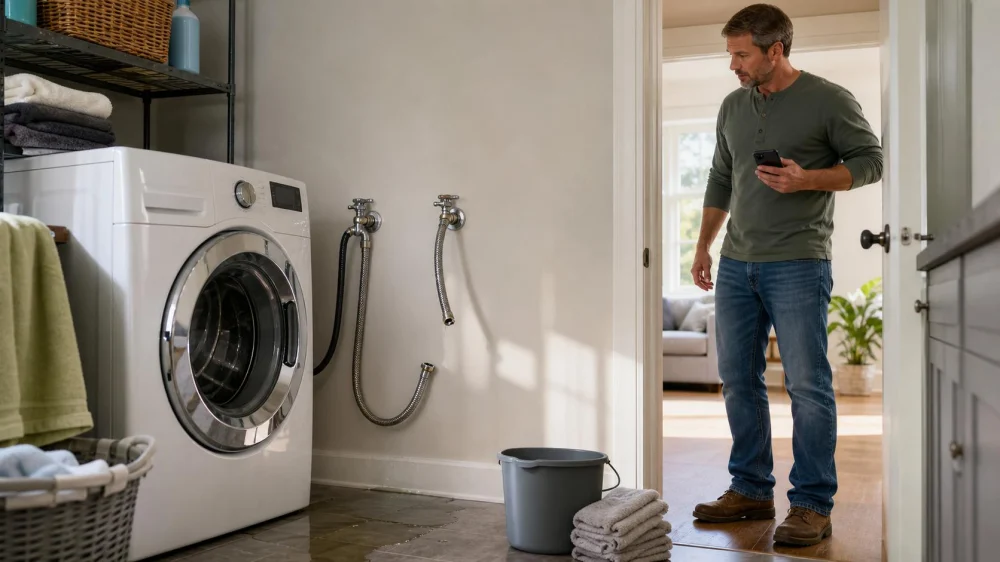
Washing Machine Hose Leak: Shutoff and Damage Checklist
Table of contents
Quick answer
If a washing machine hose leaks, stop the cycle and close the hot and cold supply valves only when you can reach them without stepping in water or touching wet electrical equipment. Keep people away, call emergency services for immediate electrical or structural danger, photograph the damage, and start qualified extraction and drying quickly after the area is confirmed safe.

Wizard Restorations Inc / puroclean of san fernando
Rancho CucamongaSan Bernardino CountyCalifornia
10245 8th St, Rancho Cucamonga, CA 91730, USA
Immediate actions
- Keep clear of electrical hazards. Do not step into standing water to reach the washer, outlet, plug, breaker panel, or supply valves.
- Stop the water only if safe. Close both washer supply valves by turning them clockwise. If they are inaccessible, broken, or surrounded by water, use the building's main water shutoff only if you already know how and can reach it safely.
- Do not pull the plug from a wet area. Electricity and water can cause fatal shock. A qualified electrician or emergency responder may need to isolate power.
- Protect people and pets. Block access to the laundry room and any wet area below it.
- Call appropriate help. Contact a plumber or appliance technician for the leak source, an electrician for wet electrical components, and a water-damage professional when water has spread into assemblies or multiple rooms.
- Notify the property contact. Renters should contact the landlord or building manager promptly. In a multi-unit building, alert management if water may be traveling to another unit.
Electrical and structural risk
Ready.gov advises not to touch electrical equipment if it is wet or while standing in water. Do not assume a tripped breaker makes the area safe, and do not reset it. Wet outlets, cords, power strips, appliances, or wiring need professional evaluation before reuse.
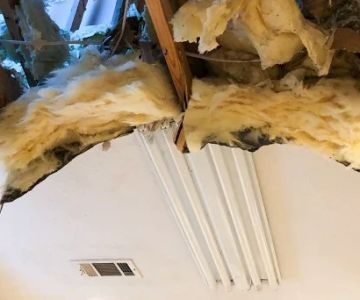
Look from a dry location for a sagging ceiling, bulging wall, soft floor, falling material, or water near a light fixture. Leave the area beneath a wet ceiling. If collapse, fire, arcing, smoke, or another immediate danger appears possible, leave the building and call emergency services.
Giants / dry kings restoration of san francisco
San FranciscoSan Francisco CountyCalifornia
685 Geary Blvd, San Francisco, CA 94102, USA
Room-by-room damage check
Once the area is declared safe, trace where the water traveled without tearing into materials. Use photos and notes rather than assumptions.
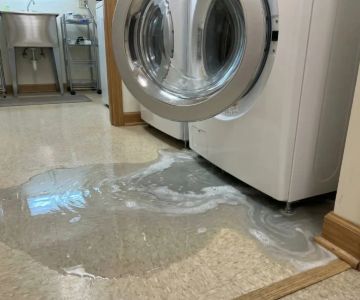
- Laundry floor: standing water, lifted seams, swollen boards, loose tile, or water beneath a pedestal
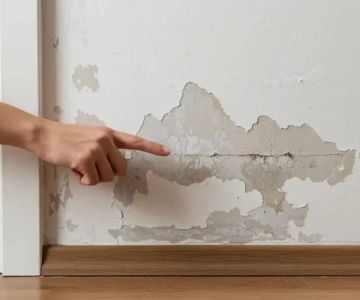
- Walls and baseboards: staining, softness, bubbling paint, damp trim, or moisture at penetrations
- Adjacent rooms: damp carpet edges, closets, cabinets, and shared walls
- Floor below: ceiling stains, dripping fixtures, swollen drywall, or wet insulation
- Contents: wet boxes, textiles, furniture legs, electronics, documents, and stored chemicals
- Washer connections: visible split hose, loose coupling, damaged valve, or leak from inside the appliance—observe only after safe isolation
Water can move under flooring and into wall or floor cavities beyond the visible puddle. Surface dryness does not confirm that hidden layers are dry.
Drying and cleanup plan
The U.S. Environmental Protection Agency emphasizes moisture control and recommends drying water-damaged materials as quickly as possible, ideally within 24 to 48 hours. That window is a goal for prompt action, not proof that every material can be saved or that mold cannot occur.
- Have standing water extracted with equipment appropriate to the area and electrical conditions.
- Move dry, unaffected items away from the loss. Do not carry dripping contents through clean rooms without containment.
- Separate wet materials only when it is safe and within your capability. Heavy appliances and saturated flooring may require professionals.
- Use air movers and dehumidifiers only after electrical safety is established and with a drying plan that considers hidden cavities.
- Track material moisture, room humidity, temperature, equipment placement, and daily progress rather than drying by touch alone.
- Remove or replace materials that cannot be cleaned and dried appropriately. Do not seal, paint, or cover damp material.
If water contacted sewage, chemicals, or an unknown source, treat it as potentially contaminated and obtain professional guidance. People with asthma, significant allergies, immune suppression, or other vulnerability should avoid moldy or heavily water-damaged areas.
Documentation for repair and insurance
- Record the discovery time, when water was shut off, and who responded.
- Photograph the room from the doorway, then affected surfaces and contents.
- Save the failed hose or component if an insurer or technician may need it, unless it presents a hazard.
- Write down appliance model and serial information only when safely accessible.
- Keep estimates, invoices, drying logs, moisture readings, and disposal approvals.
- Ask the insurer what emergency mitigation is expected and what documentation is required before discarding items.
Emergency work should not be delayed when safety or continued damage is at stake, but documenting before major removal—when safe—can make the loss easier to explain.
Preventing another hose leak
- Inspect accessible hoses and valves periodically for bulges, cracks, corrosion, dampness, and loose connections.
- Follow the washer and hose manufacturers' installation and replacement instructions.
- Keep the appliance far enough from the wall to avoid kinking or crushing hoses, while following clearance requirements.
- Know where the washer valves and main water shutoff are before an emergency.
- Consider a drain pan and a listed leak-detection or automatic shutoff system where appropriate.
- Do not run the washer while no one is home, and consider closing the supply valves for extended absences if the manufacturer and plumbing setup permit it.
Frequently asked questions
Can I use a wet vacuum on the water?
Only use equipment designed for liquid extraction, supplied from a safe electrical source, and operated according to its instructions. Do not plug in or operate equipment in a wet electrical environment. When uncertain, wait for professionals.
Is water from a supply hose considered clean?
It may begin as potable supply water, but it can pick up detergent, dirt, debris, or contaminants after contacting the washer and building materials. The source, travel path, elapsed time, and affected materials all influence cleanup decisions.
Can I dry the floor with household fans?
Fans may help in a small, safe, clean-water event, but they do not confirm dryness beneath flooring or inside walls. Do not use them before electrical safety is established or where they could spread contaminants or mold spores.
Who repairs the failed connection?
A plumber typically handles supply valves and building plumbing, while an appliance technician handles internal washer components. An electrician evaluates wet electrical equipment, and a restoration professional addresses extraction and structural drying.
Sources and evidence
- Ready.gov: Floods — electrical safety around standing water and wet equipment.
- U.S. Environmental Protection Agency: How Do I Get Rid of Mold? — moisture control and the 24–48 hour drying goal.
- U.S. Environmental Protection Agency: Water Damage Cleanup and Mold Prevention — material-specific drying considerations.
- Insurance Information Institute: Protecting a Home From Water Damage — washer shutoff and leak-monitoring prevention context.
Conclusion and next steps
Keep out of wet electrical areas, close the water only from a dry and safe position, and get the right trades involved. Document the source and water path, then begin measured drying promptly after safety is confirmed. Before restarting the washer, obtain repair of the failed component and clearance for any wet electrical or structural materials.
 Simply Mold Gone5.0 (38 reviews)
 Preferred Choice Restoration4.0 (349 reviews)
 Ace Flood Response & Reconstruction4.0 (43 reviews)
 615Powerhouse4.0 (75 reviews)
 NY Fire Water Mold5.0 (65 reviews)
 Fiber Dry Carpet & Upholstery Cleaning5.0 (533 reviews)
 How to Deal with Water Damage in Your Home’s Subflooring: Step-by-Step Guide
 How to Protect Your Home from Water Damage in a Flood Zone – Essential Tips
 Water Damage Repair for Garage Floors
 How to Prevent Water Damage from Sprinkler System Leaks
 Why It’s Important to Address Water Damage Immediately: Protect Your Home
 The Most Effective Methods for Water Extraction – Reliable Damage Hub