
- 1-Why-Drainage-Systems-Cause-Water-Damage
- 2-How-Water-Damage-Spreads-Around-Drainage-Areas
- 3-Types-of-Drainage-Related-Damage
- 4-Step-by-Step-Repair-Process
- 5-Real-Life-Drainage-Damage-Cases
- 6-Common-Mistakes-in-Drainage-Repair
- 7-Professional-Restoration-Insights
- 8-Reliable-Damage-Hub-Guidance
1. Why Drainage Systems Cause Water Damage
Drainage systems are designed to control water flow around residential and commercial properties, but when they fail, they often become the primary source of water damage. In many American homes, drainage issues develop slowly over time, making them difficult to detect until structural damage has already occurred.
The purpose of a drainage system is simple: redirect rainwater and groundwater away from the foundation and exterior walls. However, when these systems become clogged, misaligned, or overwhelmed, water begins to accumulate in unwanted areas. This can lead to foundation cracks, basement flooding, soil erosion, and long-term structural weakening.
A homeowner in New Jersey once ignored minor yard pooling near their basement wall. Over several seasons, the drainage pipe became fully blocked with sediment. By the time professionals inspected the property, water had already penetrated the foundation, requiring extensive basement waterproofing and structural repair.

Wizard Restorations Inc / puroclean of san fernando
Rancho CucamongaSan Bernardino CountyCalifornia
10245 8th St, Rancho Cucamonga, CA 91730, USA
2. How Water Damage Spreads Around Drainage Areas
Understanding how water travels around drainage systems is key to effective repair. Water rarely stays in one place—it moves through soil, cracks, and structural gaps.
SERVPRO of Pompano Beach / servpro of santa maria
Pompano BeachBroward CountyFlorida
2101 NW 33rd St #200a, Pompano Beach, FL 33069, USA
2.1 Surface Overflow and Pooling
When gutters, downspouts, or surface drains fail, water begins to pool around the base of the home. This standing water increases hydrostatic pressure against foundation walls.
2.2 Subsurface Soil Saturation
Over time, water seeps into surrounding soil layers, saturating the ground. This reduces soil stability and increases the likelihood of foundation shifting or cracking.
2.3 Capillary Action Into Foundation Walls
Water can move upward through porous concrete and masonry. This capillary effect allows moisture to enter basements even when visible flooding is not present.
3. Types of Drainage-Related Damage
Drainage failures can impact multiple areas of a home simultaneously. Recognizing these damage types helps prioritize repairs effectively.
3.1 Basement Flooding
One of the most visible consequences of drainage failure is basement flooding. This can damage flooring, insulation, electrical systems, and stored belongings.
3.2 Foundation Cracks and Structural Stress
Excess water pressure against foundation walls leads to cracks, shifting, and long-term instability. This is often a gradual but serious issue.
3.3 Exterior Wall Deterioration
Water pooling around exterior walls can cause paint peeling, brick deterioration, and mold growth on siding surfaces.
3.4 Landscape Erosion
Poor drainage can wash away soil and landscaping features, creating uneven ground and exposing underground structures.
4. Step-by-Step Repair Process
Fixing water damage around drainage systems requires a structured approach that addresses both symptoms and root causes.
4.1 Identifying the Source of Drainage Failure
The first step is locating the exact point of failure. This may include clogged pipes, broken downspouts, or improperly graded soil.
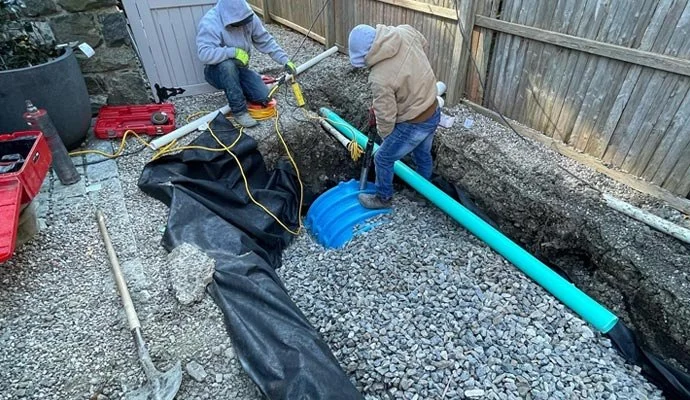
4.2 Removing Blockages and Restoring Flow
Drainage pipes and channels must be cleared of debris, sediment, and root intrusion to restore proper water movement.
4.3 Drying Affected Structural Areas
Basements, walls, and soil-adjacent structures must be thoroughly dried to prevent mold growth and further deterioration.
4.4 Repairing Damaged Foundations and Walls
Cracks and weakened areas are sealed using waterproof materials. In severe cases, structural reinforcement may be necessary.
4.5 Improving Drainage Design
Long-term prevention often involves redesigning slope grading, extending downspouts, or installing improved drainage systems.
5. Real-Life Drainage Damage Cases
Across the United States, drainage-related water damage is one of the most common residential issues.
- Case in Texas: A suburban home experienced repeated basement flooding due to a collapsed underground drainage pipe. Repair required full excavation and system replacement.
- Case in Illinois: Poor yard grading caused continuous water pooling near the foundation, leading to concrete wall cracking and interior moisture damage.
- Case in Washington: Heavy rainfall combined with blocked downspouts resulted in exterior wall saturation and mold growth inside basement insulation.
These cases demonstrate how drainage problems escalate when ignored, often affecting multiple parts of a home simultaneously.
6. Common Mistakes in Drainage Repair
Homeowners often attempt quick fixes that fail to address the underlying issue.
6.1 Only Fixing Surface Symptoms
Removing visible water without addressing underground drainage failure leads to recurring damage.
6.2 Ignoring Soil Grading Problems
Improper yard slope directs water toward the foundation instead of away from it, worsening the issue over time.
6.3 Delaying Professional Inspection
Without proper tools, hidden drainage blockages often go undetected until major structural damage occurs.
7. Professional Restoration Insights
Experts in water damage restoration emphasize that drainage system issues are often the root cause of widespread home water damage.
Professionals highlight that early detection is critical. Small signs like damp basement corners or minor soil erosion near the foundation should never be ignored. These indicators often point to larger drainage failures underground.
Another key insight is that drainage systems must be evaluated as part of the entire property ecosystem, including roofing, landscaping, and foundation structure.
8. Reliable Damage Hub Guidance
For homeowners seeking practical solutions and expert-level guidance, Reliable Damage Hub provides valuable resources on identifying and repairing drainage-related water damage.
The platform helps users understand how drainage systems interact with soil, foundations, and structural components. It also provides insights into long-term prevention strategies that reduce repair costs and protect property value.
By following structured repair methods and professional guidance from Reliable Damage Hub, homeowners can effectively fix water damage around drainage systems and prevent future costly structural issues.
 Stanley Steemer4.0 (775 reviews)
 Flynn & Company Restoration & Construction5.0 (34 reviews)
 24/7 Water Damage Restoration Los Angeles5.0 (31 reviews)
 BELFOR Property Restoration5.0 (4 reviews)
 SERVPRO of Joliet4.0 (162 reviews)
 PuroClean Disaster Response Services4.0 (43 reviews)
 How to Fix Water Damage to Whole Living Spaces
 What You Need to Know About Water Damage in Your Car
 How Water Damage Affects Your Insurance Premiums and How to Manage It
 How to Choose the Best Water Damage Restoration Tools for DIY Projects
 How to Handle Water Damage After a Flood: A Homeowner’s Checklist
 What You Should Know About Water Damage in Your Home’s Electrical System