
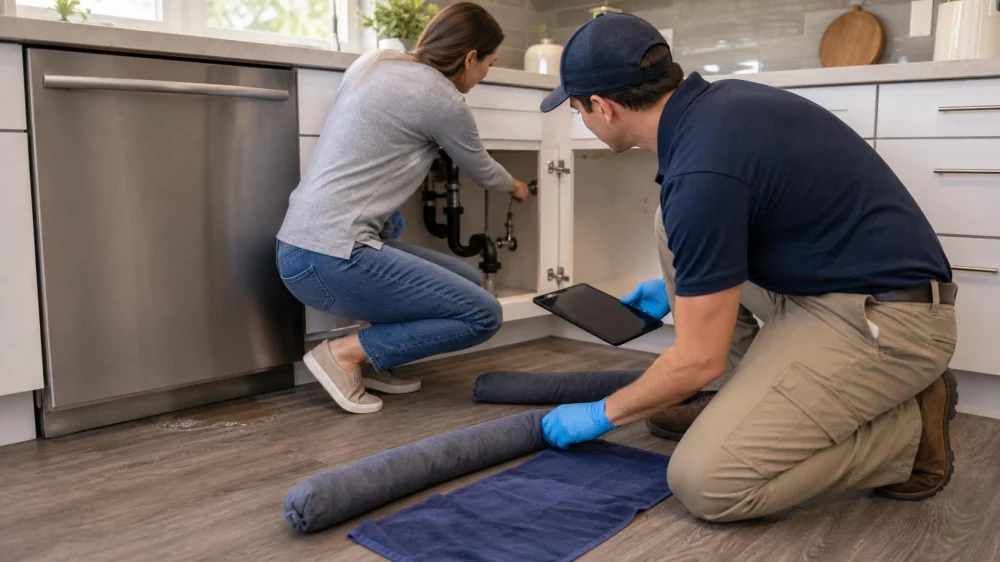
Dishwasher Leak: Shut It Down and Limit Water Damage
On this page
Quick answer
If a dishwasher leaks, stop the cycle, keep people away from wet electrical areas, shut off power only from a dry safe location, and close the dishwasher's water valve or main supply. Photograph the source and affected materials, remove standing water only when safe, and call qualified appliance, plumbing, or restoration help when water spreads under cabinets or flooring.
SERVPRO of Pompano Beach / servpro of santa maria
Pompano BeachBroward CountyFlorida
2101 NW 33rd St #200a, Pompano Beach, FL 33069, USA
First actions
- Keep children and pets out of the kitchen.
- Stop the dishwasher using its normal control if you can remain dry.
- Avoid stepping into water to reach an outlet or switch.
- Shut off the water supply from a dry accessible valve.
- Place towels or a wet vacuum only after electrical hazards are controlled.
- Move dry belongings away without opening built-in cabinetry unnecessarily.
Do not restart the appliance to reproduce the leak. One additional cycle can send more water into hidden assemblies.
Giants / dry kings restoration of san francisco
San FranciscoSan Francisco CountyCalifornia
685 Geary Blvd, San Francisco, CA 94102, USA
Treat electricity carefully
Dishwashers may be hardwired or plugged into a nearby cabinet, and water can reach wiring, receptacles, or other appliances. If the breaker panel is dry and safely accessible, turn off the labeled circuit. If you are uncertain, leave the area and call an electrician or emergency service.
Do not unplug a wet cord, touch a wet panel, or repeatedly reset a tripped breaker. Burning odor, smoke, sparks, shock sensation, or buzzing from wet equipment requires immediate evacuation and emergency help.
Stop the water source
The dishwasher supply valve is often beneath the sink, but layouts vary. Close it gently if it is clearly identified, dry, and operable. Do not force a corroded or stuck valve. Use the home's main water shutoff when flow continues and that control is safe to reach.
A leak can come from the supply hose, drain hose, door gasket, pump, tub, connection, or a sink drain backup. The apparent front puddle does not prove the door is the cause.
Document the leak
- Record the date, time, cycle stage, and estimated duration.
- Photograph standing water, cabinet edges, flooring seams, and ceiling below.
- Note water colour, odor, and any detergent.
- Save the model and serial number, repair records, and supply-line age.
- Keep invoices, moisture readings, and disposal lists.
Documentation should not delay shutting off water or addressing an electrical danger.
Look for hidden water
Water can travel beneath the dishwasher, toe kick, cabinets, underlayment, and finished floor. It may also drip into a basement or ceiling below. Surface dryness does not prove concealed materials are dry.
A restoration professional can use moisture meters and targeted inspection to define the affected area. Swelling, cupping, soft material, staining, or persistent odor suggests further evaluation.
Know cleanup limits
A small amount of clean supply water on a washable surface may be blotted after power is controlled. Wear appropriate protection and improve ventilation if outdoor humidity allows. Do not direct fans into contaminated water or energized equipment.
Dishwasher water may contain food residue, detergent, grease, and microorganisms. Larger, long-standing, or contaminated losses need professional assessment. Porous materials may require removal based on contamination and drying feasibility.
Plan appliance and building repairs
Use a qualified appliance technician or plumber to identify and correct the leak before another cycle. Ask for the failed component, test performed, replacement specification, and post-repair leak test in writing.
Separate appliance repair from drying and building repair estimates. Cabinets and flooring should not be closed or refinished until moisture goals are verified.
Prevention checklist
- Inspect visible hose and valve areas for drips or corrosion.
- Use manufacturer-approved detergent and loading practices.
- Clean filters according to the manual.
- Do not run the dishwasher while the home is unattended.
- Know the appliance valve and main shutoff location.
- Consider a compatible leak alarm or automatic shutoff installed correctly.
Important limitations
This is general emergency information, not electrical, plumbing, remediation, insurance, or appliance repair instruction. Water contamination, building materials, wiring, and local rules vary. Qualified professionals should evaluate concealed moisture and hazardous conditions.
Sources and evidence notes
- U.S. Environmental Protection Agency: moisture control and prompt drying guidance.
- Institute of Inspection, Cleaning and Restoration Certification: professional water-restoration standards and contamination principles.
- Electrical Safety Foundation International: water and electrical hazard guidance.
- Dishwasher manufacturer instructions: model-specific installation, hoses, cleaning, and shutdown directions.
Frequently asked questions
Can I use the dishwasher after the floor dries?
No. Dry appearance does not confirm the appliance fault is fixed or hidden materials are dry. Have it tested first.
Should I pull the dishwasher out?
Not yourself during a leak. Built-in units can have live wiring, sharp edges, and attached hoses. Let qualified workers isolate and move it.
Is dishwasher water considered clean?
It depends on the source and cycle stage. Wash water can contain food and detergent, so professional classification may be needed.
When should I call insurance?
Review the policy and contact the insurer promptly when damage is material. Take reasonable emergency steps to prevent further loss and keep records.
Conclusion
A dishwasher leak requires quick, ordered action: keep clear of wet electricity, stop water, preserve evidence, and assess hidden materials. Do not restart the appliance until the source is repaired and tested. Drying decisions should follow measured moisture and contamination conditions, not just a clean-looking floor.
 Paul Davis Restoration of Northwest Virginia4.0 (157 reviews)
 A1 Water & Mold Removal MA5.0 (73 reviews)
 Stanley Steemer4.0 (670 reviews)
 Tri-Tech Restoration4.0 (38 reviews)
 Kinetic Basement Solutions, Inc. Home of the Sump Pump Geeks4.0 (97 reviews)
 All State Remediation5.0 (3 reviews)
 Water Stain Returns After Paint: Check Moisture First
 Water Damage Restoration for Restaurants: How to Protect Your Business
 Water Damage Inspection Checklist for Homeowners – Prevent and Repair Water Damage Effectively
 Water Damage Repair for Hardwood and Laminate Floors: A Complete Guide
 How to Repair Water-Damaged Electrical Systems Safely
 How to Repair Water-Damaged Drywall