
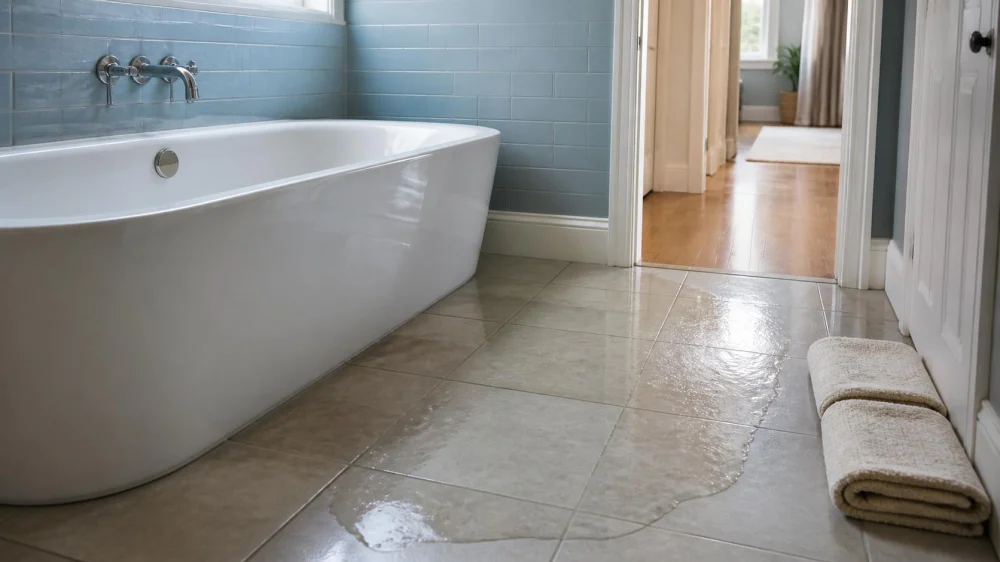
Bathtub Overflow: Stop Water and Limit Hidden Damage
On this page
- Quick answer
- What to do in the first minutes
- Treat electricity as a separate hazard
- Document the path of the water
- Look beyond the bathroom surface
- Start a measured drying plan
- When professional help makes sense
- Prevent another overflow
- Bathtub overflow checklist
- Frequently asked questions
- Sources and evidence notes
- Conclusion and next steps
Quick answer
Stop the faucet, open the drain if it is safe, and keep people away from wet electrical devices or outlets. Use towels or a wet vacuum only after electrical conditions are safe. Photograph the tub, floor, baseboards, adjoining rooms, and any ceiling below before moving damaged items. Then arrange prompt drying and an inspection when water may have entered walls, flooring, cabinets, or the level below.
A bathtub overflow may begin as clean tap water, but that does not make the building materials harmless once soaked. Water can move under finished flooring, through pipe openings, and into ceiling cavities. Quick surface cleanup is useful, but it is not proof that hidden layers are dry.
Drip Restoration / valleywide restoration mesa az
932 S Stapley Dr, Mesa, AZ 85204, USA
What to do in the first minutes
- Turn off the tub faucet and confirm that water has stopped.
- If the stopper can be released without reaching through contaminated water or near an electrical hazard, open the drain.
- Move children and pets away from the wet area.
- Block water from spreading with absorbent towels or a water barrier.
- Move dry, portable belongings away from the water path.
- Notify a landlord, property manager, or responsible building contact when the home is rented or shared.
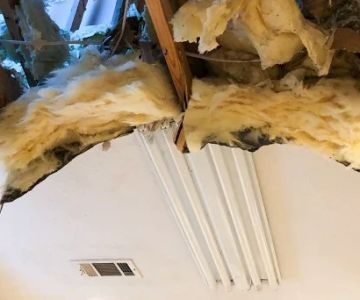
Do not puncture a wet ceiling, pull down swollen drywall, or step onto sagging material. If the ceiling below is bowing, cracking, or dripping near wiring or fixtures, clear the area and call qualified help.
Giants / dry kings restoration of san francisco
San FranciscoSan Francisco CountyCalifornia
685 Geary Blvd, San Francisco, CA 94102, USA
Treat electricity as a separate hazard
Do not touch a wet outlet, power strip, appliance, light fixture, or electrical panel. Do not stand in water while unplugging equipment. Ready.gov advises avoiding wet electrical equipment and switching off power only when it is safe to do so. If the safe condition or correct circuit is uncertain, keep clear and contact an electrician, the utility, or emergency services as appropriate.
A bathroom ground-fault circuit interrupter reduces risk but does not make standing water safe. A tripped breaker or outlet should be investigated after the area is secured; repeatedly resetting it can conceal a fault.
Document the path of the water
Take wide and close photos before discarding or relocating damaged materials. Record the date and approximate start and stop times, how long the tub ran, which rooms were affected, whether water reached a hallway or floor below, and what you did first. Save messages, invoices, moisture readings, and a list of affected belongings.
For an insurance claim, contact the insurer promptly and follow its instructions. Coverage, deductibles, mitigation duties, and approval requirements vary by policy. Documentation supports the timeline; it does not guarantee coverage.
Look beyond the bathroom surface
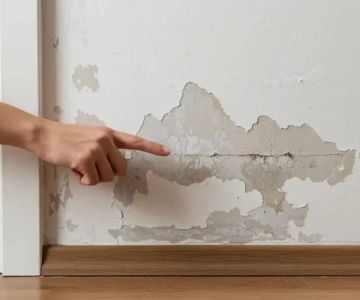
Check the edges of sheet flooring or tile, grout transitions, baseboards, vanity toe-kicks, door casing, adjacent carpet, and the ceiling directly below. Signs that water traveled farther include darkened trim, lifting floor edges, soft drywall, peeling paint, a musty odor, cool damp areas, or new stains.
Moisture meters and thermal cameras can guide an inspection, but readings need correct material settings and interpretation. A cool camera image alone does not prove moisture, and one dry surface reading does not rule out a wet cavity.
Start a measured drying plan
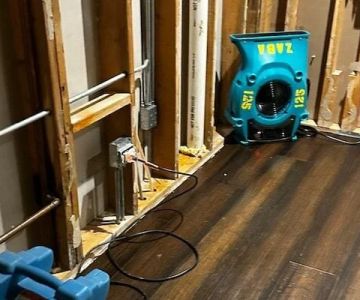
Extract standing water with equipment suitable for wet use after electrical safety is confirmed. Increase ventilation when outdoor conditions permit and use dehumidification appropriate to the space. Do not direct ordinary fans into suspected mold growth, contaminated water, or an unsafe electrical area.
The U.S. Environmental Protection Agency recommends drying wet materials within 24 to 48 hours when possible to reduce the chance of mold growth. That is a response target, not a promise that every material can be saved. Carpet pad, insulation, composite cabinetry, and concealed drywall can remain wet after visible surfaces feel dry.
Track drying by location and time. A restoration professional may establish a dry standard using an unaffected comparison area and repeated moisture readings rather than relying on touch alone.
When professional help makes sense
Seek qualified water-damage help when water reached multiple rooms or a lower level, entered wall or ceiling cavities, soaked insulation or engineered wood, affected electrical components, or cannot be extracted promptly. Also escalate for sagging ceilings, structural movement, persistent odor, visible mold, respiratory concerns, or uncertainty about the water source.
Request a written scope that separates emergency extraction, drying equipment, monitoring, demolition, contents work, and reconstruction. Ask what will be measured, how often, which materials are expected to dry in place, and what evidence will support removal.
Prevent another overflow
Never leave a filling bathtub unattended. Set a timer as a backup, keep the overflow opening unobstructed, and address slow drainage before the next bath. An overflow opening is a limited safeguard, not permission to let the faucet run unattended.
If water rose unusually fast or the overflow did not drain, ask a licensed plumber to inspect the stopper, drain, overflow assembly, and accessible seals. A plumber diagnoses the plumbing cause; a restoration contractor evaluates affected building materials. Some incidents require both.
Bathtub overflow checklist
- Stop the faucet and safely open the drain.
- Keep people away from wet electrical equipment.
- Protect dry rooms from further spread.
- Photograph every affected area and the level below.
- Notify the property contact and insurer when applicable.
- Extract water only with safe equipment.
- Check flooring edges, trim, cabinets, walls, and ceilings.
- Begin monitored drying as soon as practical.
- Call qualified help for hidden, extensive, or hazardous damage.
Frequently asked questions
Is bathtub overflow water considered clean?
Fresh tap water may start as a clean source, but conditions can change after it contacts dirt, materials, or other contaminants. Have uncertain or delayed incidents assessed.
Can towels solve a small overflow?
They may remove visible water, but inspect nearby seams, trim, cabinets, and the ceiling below for hidden migration.
Should I use a household vacuum?
No. Use only equipment designed for wet pickup and only after electrical safety is confirmed.
Should I remove the baseboards myself?
Not automatically. Document first and get guidance when removal could disturb wiring, mold, lead paint, asbestos-containing material, or a claim investigation.
How long does drying take?
It depends on materials, depth, humidity, airflow, and the amount of water. Repeated measurements are more reliable than a fixed number of days.
Who should I call first?
Call emergency services for immediate life or electrical danger; otherwise stop the source, notify the responsible property contact and insurer, and arrange plumbing or restoration help based on the damage.
Sources and evidence notes
The EPA’s Water Damage Cleanup and Mold Prevention table gives material-specific guidance for responding to clean-water damage within 24 to 48 hours. Ready.gov flood safety guidance explains the risk of electrocution around wet electrical equipment and says to turn off electricity only when it is safe.
This article provides a first-response framework, not a structural, electrical, plumbing, insurance, or indoor-air-quality assessment. Follow local requirements and the instructions of qualified professionals.
Conclusion and next steps
Stop the water, isolate electrical hazards, document the full path, and start prompt, measured drying. Do not use a dry-looking floor as the only test. When water reached concealed assemblies, electrical components, several rooms, or a lower level, arrange a qualified inspection and keep the drying and repair records together.
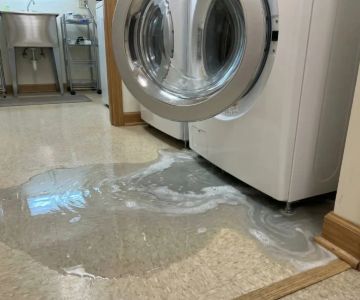
 Basements Unlimited LLC4.0 (45 reviews)
 Perfection Drywall4.0 (90 reviews)
 SERVPRO of South Charlotte4.0 (48 reviews)
 Mid Suffolk Flood & Restoration5.0 (10 reviews)
 Duraclean Cleaning Services & Water Damage Restoration4.0 (56 reviews)
 Kane Waterproofing Inc5.0 (29 reviews)
 How to Fix Water Damage in Attics from Roof Leaks
 How to Handle Water Damage From Basement Floods | Tips for Clean-up and Prevention
 How to Handle Water Damage from a Leaking Pool
 How to Prevent Water Damage from Broken Sprinklers
 How to Handle Water Damage After a Broken Pipe Burst
 How to Fix Water Damage Around Drainage Systems