
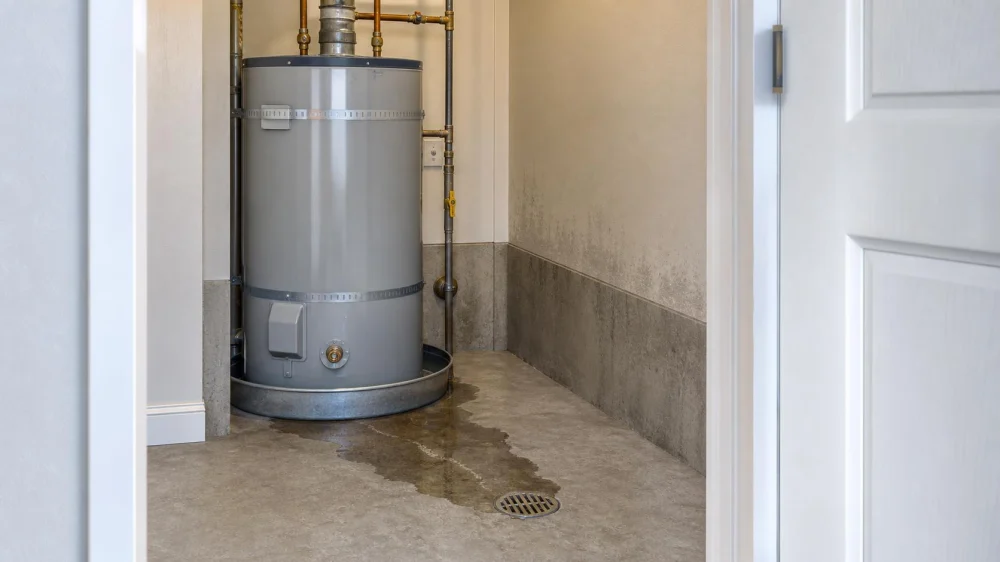
Water Heater Leak: Safe Cleanup and Damage Checks
On this page
Quick answer
For a leaking water heater, keep clear of hot water, electricity, gas odour and a bulging or unstable tank. Shut off water, energy or gas only when the correct controls are clearly identified and reachable from a dry, safe location. Call the utility or emergency services for gas smell, fire, hissing gas or immediate danger. After the leak is controlled, inspect and dry floors, walls and cavities—not just the visible puddle.

Kustom US Restoration / kustom restoration
1215 W Houston Ave Suite A, Gilbert, AZ 85233, USA
Immediate safety priorities
- Gas odour or alarm: leave without operating switches or phones inside; follow utility emergency instructions from a safe location.
- Electrical exposure: do not step into water to unplug equipment or reach a panel.
- Scalding water or steam: keep away and do not touch the tank, valves or piping.
- Bulging, severe corrosion or violent noise: leave the area and seek urgent professional help.
- Ceiling below is sagging: keep people out; wet material and fixtures may fall.
Never cap or plug a temperature-and-pressure relief discharge. Never relight a gas appliance or re-energize an electric heater after flooding until qualified personnel approve it.
Giants / dry kings restoration of san francisco
San FranciscoSan Francisco CountyCalifornia
685 Geary Blvd, San Francisco, CA 94102, USA
Find the likely source from a safe distance
The location of water can guide the service call but does not prove the failed part:
- supply connector, shutoff or nearby plumbing joint;
- temperature-and-pressure relief valve or discharge pipe;
- drain valve near the tank base;
- tank seam or corrosion through the vessel;
- condensation on applicable high-efficiency equipment or cold piping;
- venting or roof leakage mistaken for an appliance leak;
- drain pan, pan outlet or floor drain failure.
Do not place a hand under a leak to test temperature. Photograph the top, sides, base, pan and water path without removing covers.
Safe response checklist
- Restrict access and photograph conditions.
- Call emergency help for gas, fire, scalding, electrical or structural danger.
- Stop the water only using a known accessible shutoff from dry footing.
- Have the energy source isolated by a qualified person when uncertainty exists.
- Move unaffected items from a dry route; do not spread wet or contaminated materials.
- Remove standing water only after electrical and contamination safety are established.
- Arrange moisture mapping and drying when water reaches walls, flooring, insulation or a lower level.
- Document discarded materials according to insurer and local requirements.
Best limited DIY role: restrict access, document and use a clearly identified safe water shutoff. Not suitable for DIY: gas controls, energized components, relief valves, internal tank work, flooded appliances or extensive wet building materials.
Check beyond the visible puddle
Water can travel under finished flooring, along wall plates, into insulation and through ceiling penetrations. A restoration professional may compare moisture readings with dry areas, identify affected layers and monitor drying.
- Look for swollen baseboards, lifted flooring and damp drywall edges.
- Check rooms below for stains, dripping, soft finishes or affected lights.
- Inspect adjacent cabinets and stored contents without entering unsafe areas.
- Assess water category; drain backups or contaminated surroundings change cleanup controls.
- Do not enclose, paint or reinstall flooring until dry conditions are verified.
Repair or replace the water heater?
A plumber should identify whether the leak comes from a serviceable connector, valve, fitting or drain system, or from the tank itself. A leaking tank vessel typically requires replacement rather than a surface patch.
Decisions may consider equipment age and condition, corrosion, correct capacity, energy source, venting, seismic or restraint requirements where applicable, drain pan and discharge provisions, access, local code and manufacturer instructions. Ask for the failed component and water path to be shown in the written scope.
Reduce future damage risk
- Have installation, venting and safety devices inspected at appropriate intervals.
- Keep the area visible and avoid storing moisture-sensitive items against the tank.
- Confirm the drain pan and drain route are suitable and unobstructed where required.
- Consider a water alarm or professionally installed automatic shutoff appropriate to the system.
- Know the main and appliance water shutoffs before an emergency.
- Follow manufacturer maintenance instructions; do not operate a relief valve casually if discharge could cause harm.
Important notes and evidence boundaries
This guide reflects broad U.S. plumbing, fuel-gas, electrical and water-damage safety practice. Appliance types and local code vary. It is not a remote diagnosis or authorization to operate valves, breakers or gas controls.
Water that initially came from a potable line can collect contaminants from floors, drains and stored materials. Cleanup decisions depend on actual source, exposure and affected materials.
Frequently asked questions
Can I keep using a leaking water heater?
No. Continued operation can worsen water, gas, electrical or pressure hazards. Isolate it safely and obtain qualified assessment.
Why is the relief valve dripping?
Possible causes include thermal expansion, excessive pressure, temperature or a valve issue. Do not plug it; a plumber should diagnose the system.
Is water in the drain pan an emergency?
It signals a leak or discharge that needs prompt attention. Urgency rises with active flow, gas or electrical hazards, a failed pan drain or damage below.
Can fans dry the floor?
Fans may help only after electrical and contamination safety are established. They may not reach water beneath flooring or inside walls.
Should a flooded water heater be restarted?
Not without qualified inspection. Flooding can damage controls, insulation, burners and electrical parts even after surfaces look dry.
Next steps
Restrict the area, document the leak and contact emergency or utility help for gas, fire or electrical danger. Have a plumber control and diagnose the appliance, then assess the water path and hidden moisture. Compare repair and restoration scopes using observed damage, drying verification and code-compliant replacement details.
 KO Carpet Steam Cleaning And Water Damage Restoration5.0 (22 reviews)
 Plantenga's Cleaners4.0 (69 reviews)
 Home Pro Mold Services5.0 (66 reviews)
 Keel Restoration0.0 (0 reviews)
 ICON Construction Group5.0 (3 reviews)
 ServiceMaster by Five Star5.0 (41 reviews)
 How to Handle Water Damage Restoration in Your Car Garage
 How to Repair Water Damage After a Flooded Attic
 How to Deal With Water Damage From Roof Ice Dams: Prevention and Repair Tips
 What Happens During Water Damage Restoration: A Detailed Overview
 How to Restore Water-Damaged Whole Residential Areas
 What You Need to Know About Handling Water Damage in Your Attic