Toilet Overflow Water Damage: Safe Steps and Cleanup Limits
Table of contents
Quick answer
Stop flushing, keep people and pets out, and close the toilet’s supply valve only if it is dry, reachable, and safe. Water that contains waste, returns from a drain, spreads beyond the bathroom, reaches porous materials, or contacts electricity needs a cautious professional response. Do not mix cleaners or use powered equipment in a wet area. Photograph the spread, notify the owner or insurer, and arrange plumbing and restoration help promptly.
SERVPRO of Pompano Beach / servpro of santa maria
Pompano BeachBroward CountyFlorida
2101 NW 33rd St #200a, Pompano Beach, FL 33069, USA
Stop the flow only when safe
Do not flush again. If the overflow comes from a continuing tank refill and the shutoff valve can be reached without stepping in water or touching electrical equipment, turn it clockwise gently; do not force a stuck valve. Stop household water use if multiple drains are slow or backing up, because a building drain or sewer problem may be involved. Call an emergency plumber or property manager when the source cannot be isolated safely.
Giants / dry kings restoration of san francisco
San FranciscoSan Francisco CountyCalifornia
685 Geary Blvd, San Francisco, CA 94102, USA
Why the water source matters
A tank malfunction before waste enters the bowl is different from a bowl overflow after use or a drain backup carrying sewage. Once water contacts human waste, returns from a sewer, or has an uncertain path, assume it may contain harmful microorganisms. Chemicals, medications, or cleaners already in the bowl add uncertainty. The visible water line does not show what has entered grout, wall cavities, subflooring, carpet, or rooms below.
Protect people and nearby rooms
- Close the room and keep children, pets, food, and clean belongings away.
- Avoid direct skin contact and do not walk contamination through the home.
- Do not touch outlets, switches, cords, fixtures, or appliances near water.
- Do not run the HVAC system if contamination may have reached ducts or equipment.
- Ventilate only when doing so will not spread contamination to clean rooms.
- Wash exposed skin with soap and clean water, and seek medical advice for significant exposure or illness.
Document the damage
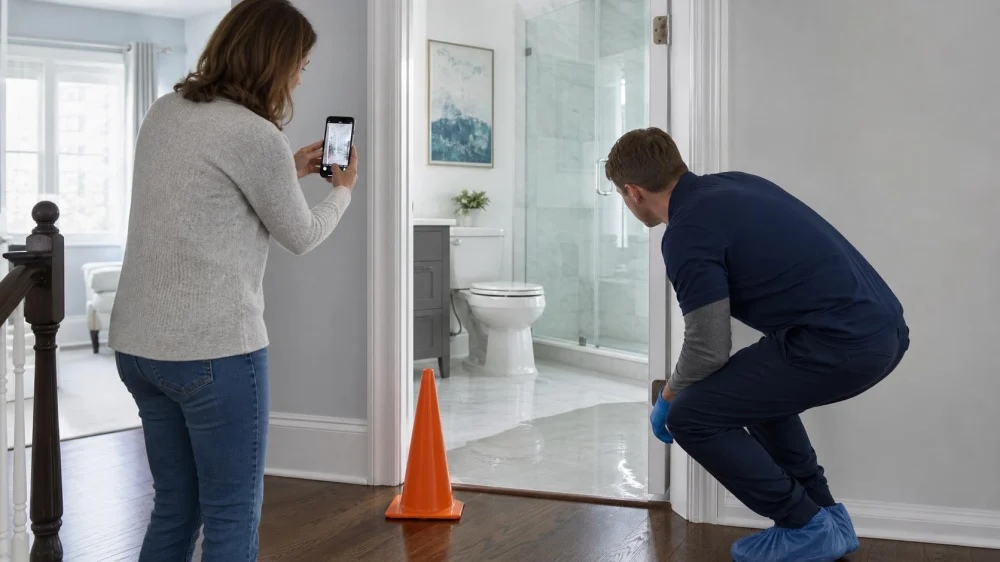
From a safe position, photograph the bathroom, water boundary, adjacent rooms, ceiling below, affected contents, and possible source. Record time, flushing or drain behavior, odor, visible waste without close contact, plumbing history, recent storms, and actions taken. Contact the insurer, landlord, or property manager promptly and preserve damaged items until disposal instructions are clear, unless they create an immediate health or safety hazard.
When professional cleanup is needed
Use qualified plumbing and restoration help when water contains or may contain sewage, covers a large area, passes under walls, reaches carpet or other porous materials, affects a lower floor, remains for an extended time, or contacts HVAC or electrical systems. Professional teams can establish containment, remove unsalvageable materials, clean and disinfect appropriate surfaces, dry concealed assemblies, document moisture, and verify conditions before rebuilding.
Response checklist
Record source and time, stop household water use when backup is suspected, establish an exclusion area, note electrical and HVAC exposure, contact the plumber and restoration firm, notify the insurer or owner, photograph damage, list affected materials, preserve invoices, and request written moisture and cleaning records. Ask how contamination was classified, which materials were removed, what disinfectant label was followed, and how drying completion was verified.
Limits and safety notes
This general U.S. guidance cannot classify water contamination, confirm electrical safety, or define a complete cleanup protocol for a specific building. Do not enter standing water to reach utilities, use a household vacuum, mix bleach with ammonia or any other cleaner, handle sewage without appropriate protection, or conceal wet materials. People with respiratory conditions, weakened immune systems, wounds, pregnancy concerns, or other vulnerabilities should avoid contaminated cleanup and seek medical guidance.
Evidence notes
The Centers for Disease Control and Prevention warns that water contaminated by sewage can cause illness, advises against electrical operation while standing in water, and stresses protective measures for contaminated cleanup. The U.S. Environmental Protection Agency emphasizes documenting damage, correcting the source, drying wet materials quickly—generally within 24–48 hours—and using professional help when cleanup is difficult or dangerous. Product labels and local health guidance control disinfectant use.
Frequently asked questions
Can I use a regular vacuum to remove the water?
No. Household vacuums create electrical and contamination hazards and are not designed for liquid pickup.
Is clear-looking toilet water safe?
Appearance does not establish contamination. Consider what the water contacted and whether it came from a drain backup.
Should I pour drain cleaner into the toilet?
No. It may not solve the blockage and can create chemical exposure for occupants and plumbers.
Can bathroom rugs be washed?
Salvage depends on contamination, material, exposure time, and cleaning capability. Ask the restoration professional or local health authority.
When can the bathroom be used again?
After the source is repaired and affected surfaces and assemblies have been appropriately cleaned, dried, and cleared for use.
Next steps
Stop flushing, isolate the room, shut the supply only from a dry safe location, and call plumbing help when the source is uncertain or a drain backup is possible. Document the spread, notify the owner or insurer, and arrange professional restoration for sewage, porous materials, hidden migration, or electrical and HVAC exposure. Do not mix cleaners or use powered equipment in wet areas.
 First Finishers4.0 (63 reviews)
 Royal Water Damage Restoration Companies, Inc.5.0 (2 reviews)
 Fire-Water-Mold Mitigation Services LLC5.0 (1 reviews)
 All Pro Restoration and Cleaning5.0 (12 reviews)
 Service Water Restoration Pros4.0 (25 reviews)
 Thunder & Lightning Services4.0 (30 reviews)
 How to Protect Your Home’s Electrical System from Water Damage: Essential Tips
 Water Damage Repair for Flooring Transitions: Expert Guide for Homeowners
 Water Damage Repair for Bathroom Flooring and Tile: A Complete Guide
 Water Damage Restoration for Commercial Kitchens - Expert Guide
 How to Fix Water Damage to Interior Frameworks Safely
 How to Fix Water Damage to Building Interiors Safely