
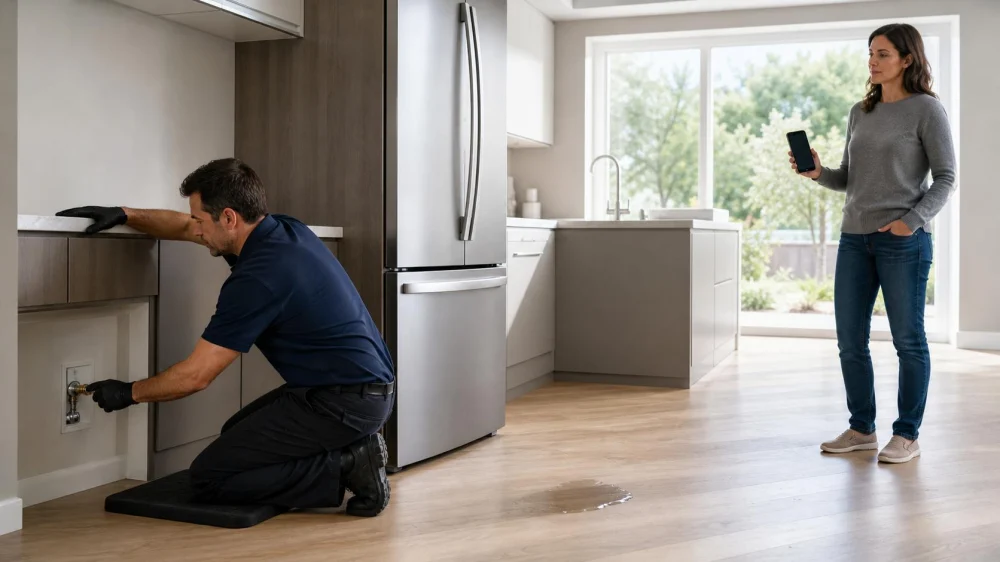
Refrigerator Water Line Leak: Safe Steps and Damage Checks
On this page
- Quick answer
- Stop the water only when access is safe
- Treat water near electricity as a hazard
- Document the leak and affected area
- Check likely hidden water paths
- Remove standing water within safe limits
- Start a measured drying plan
- Evaluate floors, cabinets, and walls
- Separate appliance repair from building repair
- Reduce the chance of another leak
- Safety and cleanup limits
- Refrigerator leak checklist
- Frequently asked questions
- Sources and evidence notes
- Next steps
Quick answer
For a refrigerator water line leak, keep people away from wet electrical areas, close the dedicated refrigerator supply valve or home main valve only if it is safely accessible, and contact emergency help for sparking, smoke, or energized water. Photograph the source and water path, remove clean standing water within your limits, and begin professional drying promptly when floors, cabinets, walls, or insulation are wet.
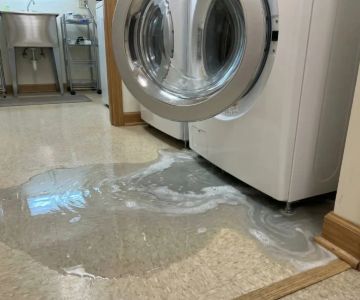
A small visible puddle may represent hours of water moving under a refrigerator, cabinet toe kick, floating floor, or wall. Stopping the source is only the first step; the affected materials and moisture path also need evaluation.
SERVPRO of Pompano Beach / servpro fort lauderdale south
Pompano BeachBroward CountyFlorida
2101 NW 33rd St #200a, Pompano Beach, FL 33069, USA
Stop the water only when access is safe
Keep children and pets away. Do not step into water to reach behind the refrigerator, an outlet, or a metal supply line. If the floor is dry and the shutoff is accessible without moving the appliance, close the dedicated valve slowly. It may be behind the refrigerator, under a nearby sink, in a basement ceiling, or at a wall box.
If the valve is inaccessible, damaged, or does not stop the flow, close the home’s main water valve only if you know its location and can reach it safely. Contact a plumber, building manager, water utility, or emergency restoration service when the flow cannot be controlled.
Do not pull a heavy refrigerator forward across a wet floor. It can tip, damage flooring, crush a line, expose electrical components, or spread water. Appliance movement may require two trained people, proper equipment, and electrical isolation.
Giants / dry kings restoration of san francisco
San FranciscoSan Francisco CountyCalifornia
685 Geary Blvd, San Francisco, CA 94102, USA
Treat water near electricity as a hazard
Refrigerators use a grounded electrical connection and may contain ice makers, dispensers, heaters, fans, motors, and control boards. Water near the receptacle, plug, cord, power strip, floor outlet, extension cord, or damaged wiring is an electrical hazard.
Do not touch the refrigerator, cord, plug, valve, metal line, or wet floor if you see sparking, smoke, scorching, or a fallen energized conductor. Call 911 for fire or immediate danger and contact the electric utility when service equipment is involved.
If the plug is fully dry and accessible from a dry location, the appliance manual or qualified professional may direct disconnection. Do not reach behind the refrigerator or stand in water to unplug it. Do not open a wet electrical panel or repeatedly reset a breaker.
Document the leak and affected area
After immediate hazards and water flow are controlled, take wide and close photos before moving items. Documentation helps the plumber, appliance technician, restoration contractor, insurer, landlord, or property manager understand the sequence.
Record:
- the discovery time and the last time the area was known dry;
- whether the refrigerator dispenser or ice maker was used recently;
- the visible source, valve position, tubing, fitting, or appliance area;
- puddle boundaries and the direction water traveled;
- flooring seams, cabinet bases, wall trim, and adjacent rooms;
- rooms below or behind the appliance;
- electrical outlets, cords, and equipment near the water without approaching them;
- damaged food, belongings, and finishes;
- calls, arrival times, readings, and actions taken.
Check likely hidden water paths
Water follows gravity, seams, fasteners, and low spots. A refrigerator may sit in an alcove where the front edge is not the lowest point. Check from stable, dry surfaces without dismantling construction.
Look for:
- water emerging from beneath toe kicks or baseboards;
- swelling at laminate, engineered wood, or cabinet edges;
- darkened grout, damp carpet, or loose vinyl;
- staining on the wall behind or beside the refrigerator;
- water inside an adjacent sink cabinet;
- drips or stains on the ceiling below;
- wet insulation visible at an accessible basement or crawlspace location;
- a musty odor or high humidity after surface water is gone.
Do not pry up finished flooring, drill holes, remove baseboards, or cut drywall merely to explore. A restoration professional can use moisture meters, thermal imaging interpreted with confirmation, and limited inspection openings when justified.
Remove standing water within safe limits
Small amounts of water from a confirmed potable supply line may be handled with absorbent towels or a wet-rated extraction device when there is no electrical, structural, contamination, or slip hazard. Wear suitable gloves and closed nonslip footwear.
Never use a standard household vacuum on water. Keep extension cords and electrical devices out of wet areas. Do not aim fans into a contaminated source, visible mold, damaged insulation, or questionable wall cavity because air movement can spread particles.
The water may no longer be “clean” after contacting dust, food residue, pet waste, pests, cabinet material, or a dirty floor. If the leak mixed with wastewater, sewage, chemicals, or floodwater, stop and use qualified remediation.
Start a measured drying plan
EPA says water-damaged areas and items should be dried within 24 to 48 hours to help prevent mold growth. That is a response window, not a guarantee that every material can be saved or that drying is complete when the surface feels dry.
For a small, clearly limited clean-water leak, use air conditioning or a dehumidifier according to the product instructions and only on dry, safe power. Open cabinet doors after contents are removed when doing so does not expose electrical parts or unstable material. Keep room air moving gently across exposed surfaces.
Use a humidity meter and, when appropriate, material moisture readings. Compare affected areas with known-dry material of the same type. A professional drying plan documents starting conditions, equipment, daily readings, and a dry standard.
Call a restoration professional promptly when water has moved under fixed cabinets or multilayer flooring, reached wall cavities or insulation, affected a lower level, covered a large area, remained unnoticed, or cannot be dried with safe household methods.
Evaluate floors, cabinets, and walls
Laminate and floating floors
Water can travel beneath planks and underlayment. Swollen edges, peaking, soft spots, or water emerging at seams suggest deeper involvement. Surface fans may not reach trapped moisture.
Hardwood and engineered wood
Cupping or edge lift can develop as moisture changes. Do not sand, refinish, or force-dry with high heat before the moisture condition is assessed; premature finishing can trap a problem or remove material unnecessarily.
Tile and resilient flooring
The surface may look unaffected while water moves through seams, perimeter gaps, or damaged grout into underlayment. Loose tiles, hollow changes, staining, or persistent moisture need evaluation.
Cabinets
Particleboard and fiberboard can swell and lose strength. Plywood may delaminate. Inspect toe kicks, end panels, shelves, wall attachment, and the floor below. Do not load a softened cabinet.
Drywall and insulation
Staining, softness, bubbling paint, sagging, or wet insulation can indicate concealed water. Do not puncture a bulging wall or ceiling. Keep people away and let a qualified professional determine removal and drying.
Separate appliance repair from building repair
A plumber may repair the shutoff, supply line, or household connection. An appliance technician may diagnose an inlet valve, reservoir, filter housing, dispenser, ice maker, or internal tube. A restoration contractor assesses building materials and drying. An electrician evaluates wet electrical components.
Ask each provider to document findings without assuming another trade’s scope. The failed part should be identified before water service returns. Pressure-test or functional-test the repair using the manufacturer’s and plumber’s procedures while the area remains accessible.
Do not replace only the visible connector if the valve, water pressure, routing, abrasion, refrigerator movement, or internal component contributed. Ask whether the tubing and fittings are approved for the appliance and installation.
Reduce the chance of another leak
- Know and label the dedicated refrigerator shutoff.
- Keep the valve accessible rather than burying it behind storage.
- Use manufacturer- and code-appropriate tubing and fittings installed by a qualified person.
- Inspect accessible tubing for kinks, abrasion, corrosion, bulges, or cabinet-edge contact.
- Check connections after the refrigerator is moved for cleaning or service.
- Replace filters using the exact procedure and confirm the housing is seated.
- Watch for slow ice production, dispenser changes, droplets, or cycling sounds.
- Consider a listed leak sensor or professionally installed automatic shutoff in a suitable location.
- Include the refrigerator area in routine floor and cabinet checks.
Safety and cleanup limits
Stop and seek qualified help for water near electricity, active sparking, smoke, ceiling sagging, structural movement, contaminated water, widespread wet materials, suspected asbestos or lead disturbance, visible mold, or health symptoms.
People with asthma, allergies, immune suppression, or other health concerns may need to avoid damp or mold-affected areas and consult a healthcare professional. Cleanup equipment can also create noise, heat, electrical load, and trip hazards.
This article is general U.S. guidance, not an electrical, plumbing, appliance, structural, mold, insurance, or legal assessment. Local codes, manufacturer instructions, property rules, and policy deadlines vary.
Refrigerator leak checklist
- Keep people away from wet electrical areas.
- Close the safe accessible supply or main valve.
- Do not move or unplug the refrigerator through water.
- Photograph the source, path, materials, and rooms below.
- Remove small clean-water puddles only within safe limits.
- Start drying promptly and track humidity or moisture.
- Assess hidden paths under floors, cabinets, and walls.
- Call the right appliance, plumbing, electrical, and restoration trades.
- Verify the repair before reopening water.
- Keep reports and update insurance or property management.
Frequently asked questions
Where is the refrigerator water shutoff?
It may be in a wall box, behind the refrigerator, under a nearby sink, or below the floor. If reaching it requires entering water or moving the appliance, use the safe main valve or call a plumber.
Can I pull the refrigerator out myself?
Not across a wet or damaged floor. The appliance is heavy and connected to power and water. Qualified help and proper moving equipment may be needed.
Is water from the supply line clean?
It begins as potable water, but can pick up contaminants from floors, cabinets, dust, food, pests, or other sources. Cleanup category can change based on what it contacts and how long it sits.
How long does the floor need to dry?
There is no universal time. Material layers, water amount, temperature, humidity, and drying access matter. Use measurements and a material-specific dry goal.
Should I use fans?
Only for a small clean-water event with safe dry power and no visible mold, contamination, or open questionable cavity. Larger or hidden losses need a professional drying plan.
Who repairs the damage?
A plumber or appliance technician stops the source; a restoration or flooring contractor assesses materials; an electrician checks wet electrical components. One company may coordinate several scopes.
Sources and evidence notes
- U.S. Environmental Protection Agency: How Do I Get Rid of Mold? emphasizes fixing the water source and drying affected areas within 24 to 48 hours.
- EPA: Finding Mold and Moisture explains hidden water paths and prompt drying after leaks.
- FEMA Ready.gov: Floods warns against touching wet electrical equipment or equipment while standing in water.
The steps apply conservative electrical and moisture boundaries to a refrigerator supply leak. A site assessment determines the actual extent and safe restoration method.
Next steps
Locate and label the refrigerator shutoff before a leak occurs. If water is already present, control the source from a dry safe location, document the path, and arrange appliance or plumbing repair plus moisture assessment. Do not reopen the valve until the failed component is repaired and affected materials are on a verified drying path.
 Southern Restoration & Construction2.0 (10 reviews)
 Xtract Environmental Services5.0 (75 reviews)
 Brevard Mold Inspection & Removal4.0 (37 reviews)
 Battletown Restorations, LLC4.0 (5 reviews)
 FireWater Restoration Emergency Services5.0 (3 reviews)
 AAA Basement Waterproofing Systems, LLC5.0 (7 reviews)
 Water Damage Repair for Hardwood Stairs Made Simple
 How to Restore Water-Damaged Photographs: A Step-by-Step Guide
 How to Protect Your Home from Water Damage in the Winter Months
 What Are the Key Signs of Water Damage in Your Home?
 What Are the Signs of Water Damage That Homeowners Often Miss?
 How to Dry Out Water-Damaged Rugs Quickly: Expert Guide