
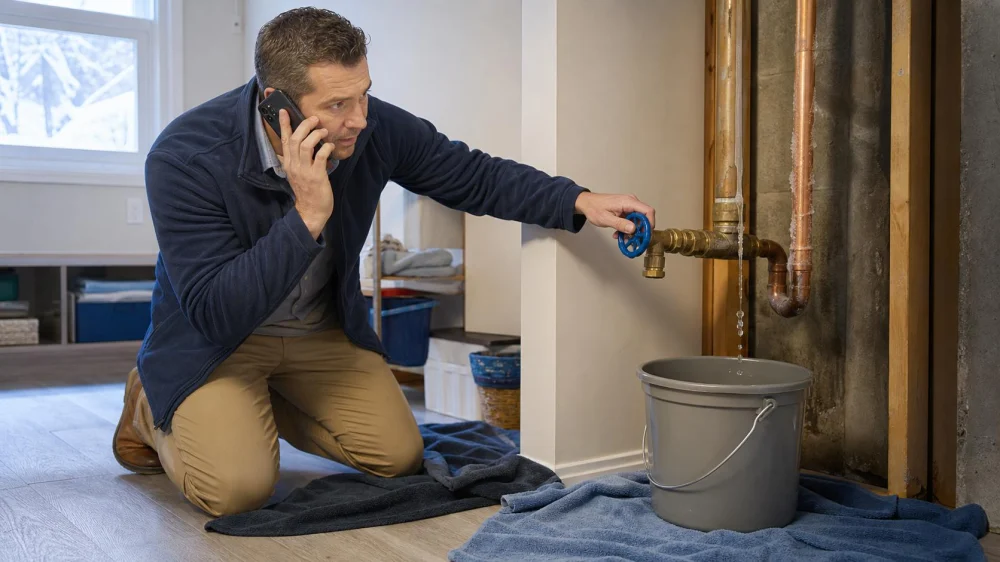
Frozen Pipe Starts Leaking: Shut Off Water and Limit Damage Safely
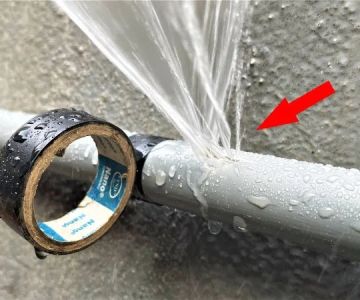
Quick answer: If a frozen pipe has split or begun leaking, shut off the main water supply if the valve is safely accessible, keep away from wet electrical equipment, call a licensed plumber, and contain only the water you can reach without danger. Document the damage and begin qualified drying promptly. Do not use a torch or open flame to thaw a pipe, and do not restore water until the damaged line has been repaired and checked.
1. Close the Main Water Valve If You Can Reach It Safely
Turn the main shutoff in the closing direction without forcing a stuck or damaged valve. If a working local shutoff clearly serves only the leaking branch, it may limit disruption, but use the main valve when the source is uncertain. Call the water utility or an emergency plumber if you cannot find or operate the valve.
Everyone in the household should know the valve location before winter. Keep the path clear and attach a visible tag. Some homes have utility-owned valves or special tools; do not enter a meter pit or operate equipment the utility restricts.
Giants / dry kings restoration of san francisco
San FranciscoSan Francisco CountyCalifornia
685 Geary Blvd, San Francisco, CA 94102, USA
2. Do Not Enter Water Near Electrical Equipment
Stay out of wet areas containing outlets, extension cords, appliances, a furnace, water heater, service panel, or exposed wiring. Do not touch an electrical panel while standing on a damp surface. Ask the utility, fire department, or a licensed electrician how to isolate power safely.
Never use a household vacuum to collect water. Avoid portable heaters and electrical tools in a wet room unless professionals have established a safe power source and placement. If you smell gas, hear hissing, see sparks, or notice smoke, leave and call emergency services or the utility from outside.

Wizard Restorations Inc / puroclean of san fernando
Rancho CucamongaSan Bernardino CountyCalifornia
10245 8th St, Rancho Cucamonga, CA 91730, USA
3. Open a Faucet Only After the Supply Is Off
Once the water is shut off and the area is electrically safe, a plumber may direct you to open a faucet to relieve pressure and drain part of the system. Use a fixture on the affected branch when known. Keep buckets ready, because trapped water may continue leaking.
Do not cut the pipe, drill ice, or remove fittings. A frozen section may conceal a split that releases water as it thaws. Check other faucets for weak flow because more than one pipe can freeze during the same cold event.
4. Call a Licensed Plumber and Describe the Exact Conditions
Report where water appears, whether the main is off, which fixtures lost flow, recent outdoor temperatures, and whether walls, ceilings, or electrical equipment are wet. Send photos if requested, but do not open walls or enter a hazardous area to take them.
Ask whether the plumber will inspect the full frozen run, nearby fittings, and other vulnerable lines rather than repairing only the visible split. Confirm emergency rates and request a written repair record. A temporary patch is not a substitute for replacing damaged pipe as recommended.
5. Catch Drips Without Taking Unnecessary Risks
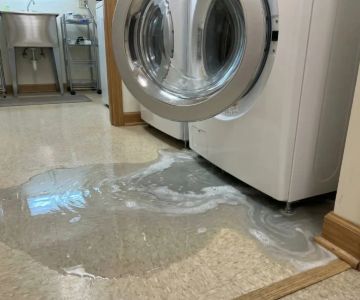
Use buckets and towels only in a dry, electrically safe, structurally sound area. Move undamaged portable belongings away from the leak. Protect furniture with plastic sheeting when doing so does not spread water or block access for responders.
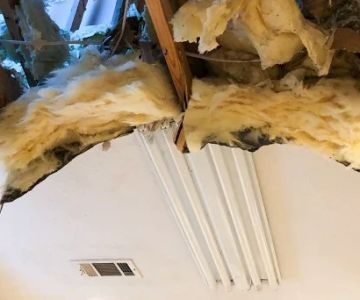
Do not climb on wet stairs, stand on unstable furniture, puncture a sagging ceiling, or pull down soaked materials. A ceiling holding water can collapse without warning. Close doors to keep children and pets out while leaving a safe route for plumbers and restoration workers.
6. Record the Loss and Contact Your Insurer
Photograph the pipe location, water path, rooms, damaged finishes, and affected belongings from safe positions. Record when the leak was discovered, when water was shut off, outdoor weather, calls made, and emergency steps taken. Save plumber, restoration, hotel, and supply receipts.
Ask the insurer about emergency mitigation, covered causes, deductibles, approved vendors, and disposal documentation. Prevent additional damage as required and safe; do not wait for an adjuster while water continues to spread. Avoid making coverage assumptions until the policy is reviewed.
7. Look Beyond the Visible Drip for Moisture Migration
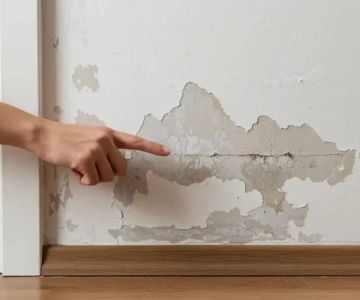
Water can travel inside a wall, under flooring, through insulation, and along framing before appearing elsewhere. Check adjacent rooms and the level below for stains, damp trim, soft flooring, bubbling paint, and musty odors. Do not rely on a dry-looking surface.
A restoration professional can use moisture measurements to map affected materials and establish drying goals. Ask for readings and photos. Extensive wet drywall, insulation, wood flooring, cabinetry, or electrical assemblies may need targeted opening or removal by qualified workers.
8. Start Safe Drying Promptly
Remove standing clean water only after electrical hazards are controlled and contamination risk is understood. Ventilation, dehumidification, air movement, and material removal must fit the building conditions. Improper fan placement can spread contamination or moisture.
Cold-weather drying also requires safe heat. Never use grills, charcoal, unvented combustion devices, or generators indoors; carbon monoxide can kill. Generators belong outdoors and away from openings. Arrange professional drying for a large loss, hidden moisture, or wet HVAC and electrical systems.
9. Turn Water Back On Slowly Only After Repairs and Checks
Have the plumber confirm the damaged pipe is repaired, valves and connections are secure, and other frozen areas have been evaluated. Restore water gradually while someone watches the repair and other vulnerable locations. Know how to shut it off again immediately.
Open fixtures as directed to purge air and verify normal flow. Inspect throughout the next several hours for drips and pressure changes. Do not close walls or replace finishes until plumbing integrity and material dryness have been documented.
10. Insulate, Air-Seal, Heat, and Monitor Vulnerable Lines
The Red Cross identifies pipes in exterior walls and unheated garages, basements, crawl spaces, attics, and cabinets as especially vulnerable. Have appropriate pipe insulation, air sealing, and heat protection installed. Use only listed heat cable according to its instructions, and have questionable electrical work evaluated.
During severe cold, keep garage doors closed, let warmer room air reach plumbing under cabinets while protecting children from stored chemicals, and follow local guidance about allowing a small cold-water trickle. Maintain heat when away; the Red Cross advises no lower than 55°F. Review its frozen-pipe guidance before the next freeze.
 Revive4.0 (106 reviews)
 Golden Coast Construction & Restoration4.0 (30 reviews)
 Rees Restoration4.0 (573 reviews)
 SERVPRO of Hockessin / Elsmere4.0 (68 reviews)
 AGH Commercial Inc.4.0 (43 reviews)
 Pacific Carpet Cleaning & Restoration, Inc.4.0 (10 reviews)
 Water Damage Repair for Office Ceilings: Essential Steps for Restoration
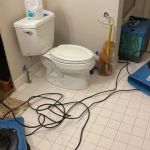 How to Handle Water Damage From Broken Toilets | Reliable Damage Hub
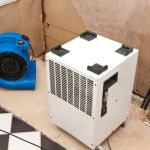 How to Dry Out Your Home After Water Damage: A Complete Guide
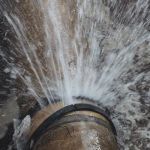 How to Deal with Water Damage After an Underground Pipe Break
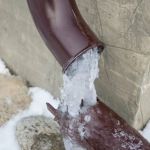 How to Minimize Water Damage in Your Home During Winter - Expert Tips and Advice
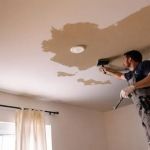 What to Do If Your Ceiling Is Sagging from Water Damage