
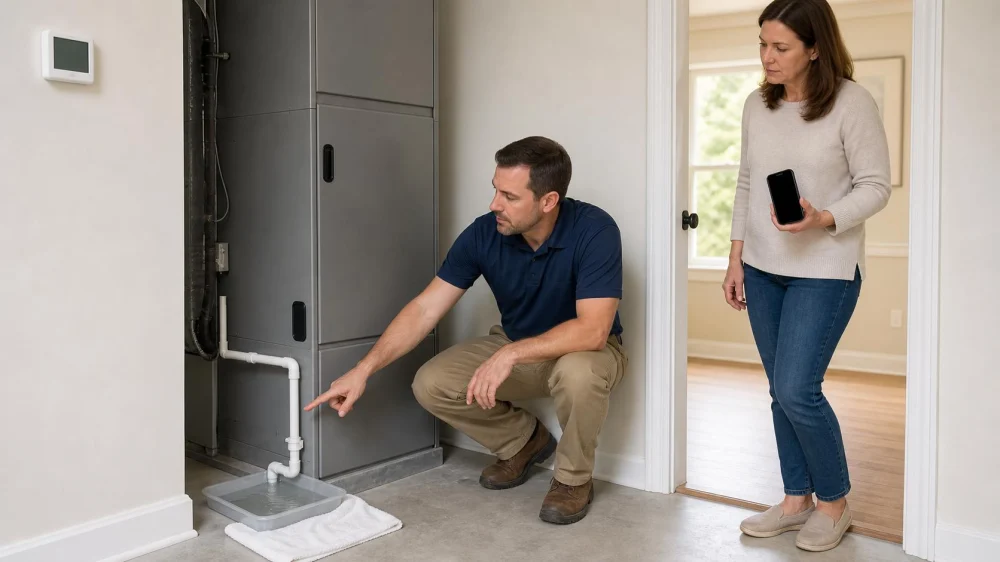
AC Condensate Overflow: Shut Down and Limit Water Damage
On this page
- Quick answer
- First response to condensate water
- Confirm the likely source without opening equipment
- Treat electrical hazards first
- Contain water without spreading it
- Check which materials became wet
- What the HVAC technician should evaluate
- When water restoration may be needed
- Build a useful damage record
- What not to pour, cut, or restart
- Frequently asked questions
- Conclusion and next steps
Quick answer
If water is coming from the indoor AC unit, turn cooling off at the thermostat, keep away from wet electrical components, and contain water only where safe. Photograph the source area, ceiling or floor path, and affected materials. Do not pour chemicals into the drain or reopen the unit. Call an HVAC technician to stop the cause, and use a water-damage professional when insulation, drywall, flooring, cabinets, or concealed spaces are wet.
This guide addresses ordinary AC condensate leakage, not floodwater, sewage, fire suppression water, or a refrigerant release. Unknown or contaminated water needs a more cautious response.

Wizard Restorations Inc / puroclean of san fernando
Rancho CucamongaSan Bernardino CountyCalifornia
10245 8th St, Rancho Cucamonga, CA 91730, USA
First response to condensate water
- Keep children and pets out of the wet area.
- Turn cooling off at the thermostat so the system stops producing new condensate.
- Do not touch the air handler, outlet, disconnect, wiring, or breaker through water.
- Place containers or towels only where the ceiling and floor are stable and electrically safe.
- Move dry belongings away without carrying wet items through unaffected rooms.
- Call HVAC service and describe active flow, equipment location, and visible damage.
Leave and seek emergency help for smoke, sparks, a sagging ceiling, structural movement, or water contacting an electrical panel.

Kustom US Restoration / kustom restoration
1215 W Houston Ave Suite A, Gilbert, AZ 85233, USA
Confirm the likely source without opening equipment
Condensate forms when humid indoor air passes over a cold coil. The water should enter a drain pan and leave through a drain or pump. An overflow can result from a clogged line, damaged pan, failed pump, improper slope, disconnected fitting, frozen coil, or installation issue.
From outside closed panels, note water around the air handler, drain pipe, pump, secondary pan, ceiling register, or nearby plumbing. The closest puddle is not always the original source, so avoid declaring a cause before inspection.
Treat electrical hazards first
Air handlers, pumps, switches, outlets, and wiring can be energized. Do not stand in water to operate a switch or breaker. If safe isolation requires approaching wet equipment, wait for a qualified technician or emergency responder.
Do not use a household vacuum, fan, extension cord, or dehumidifier in a wet area until the electrical risk and equipment condition are assessed. A wet appliance should be inspected before reuse.
Contain water without spreading it
For a small clean-water leak on a stable nonporous surface, use absorbent towels and a bucket while wearing appropriate protection. Bag wet towels separately. Place a waterproof tray under a visible drip only if the ceiling is not bulging and the location is safe.
Do not puncture a ceiling bubble. Water-soaked drywall can collapse, and the water may contact wiring or contaminated building materials. Isolate the area below and call a restoration professional.
Check which materials became wet
- Drywall: can soften, sag, delaminate, or hide moisture in a cavity.
- Insulation: may hold water and slow drying behind finishes.
- Carpet and pad: can spread water beyond the visible edge.
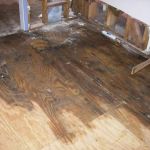
- Wood flooring: may cup, swell, stain, or trap moisture below.
- Laminate: can swell at joints and in the core.
- Cabinets: may wick water into toe kicks, backs, and composite panels.
- Stored contents: may transfer moisture or staining to dry materials.
A dry surface does not prove the assembly underneath is dry.
What the HVAC technician should evaluate
Ask the technician to inspect the coil condition, primary and secondary drain pans, drain line, trap and vent arrangement, condensate pump, float or overflow controls, filter and airflow, refrigerant-line insulation, equipment level, and evidence of freezing.
Request the cause, repair, safe restart instructions, and any maintenance recommendation in writing. Cleaning a drain without correcting a cracked pan, freezing coil, failed switch, or poor installation may not prevent recurrence.
When water restoration may be needed
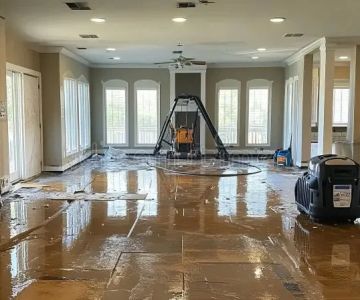
Call a water-damage professional when water entered ceilings, walls, insulation, carpet pad, wood flooring, cabinets, multiple rooms, or a lower level; when the leak ran for an unknown time; or when odor or discoloration develops. Fast assessment can define the wet boundary and drying plan.
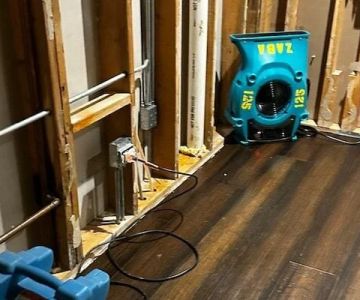
Restoration may involve moisture mapping, controlled removal, air movement, dehumidification, and monitoring. Equipment placement should account for electrical load, containment, material type, and any contamination—not simply maximum airflow.
Build a useful damage record
- date and time the water was discovered;
- thermostat mode and whether the AC was running;
- wide and close photographs before moving items;
- rooms, ceilings, walls, floors, cabinets, and contents affected;
- estimated duration if known;
- weather, indoor humidity, and recent HVAC work;
- calls, technician findings, invoices, and drying readings.
Keep damaged parts or dispose of them only after following contractor, property, and insurance instructions.
What not to pour, cut, or restart
- Do not pour bleach, acid, drain cleaner, or mixed chemicals into the condensate system.
- Do not open the air handler or reach into a drain pan.
- Do not chip ice or heat a frozen coil.
- Do not puncture ceilings or cut walls without checking hazards and containment.
- Do not run fans across unknown or contaminated water.
- Do not restart cooling until the HVAC cause and electrical safety are addressed.
Frequently asked questions
Is AC condensate considered clean water?
It may begin as condensation but can contact dust, microbial growth, drain residue, insulation, or other materials. Treat unknown standing water cautiously.
Can I clear the drain with a shop vacuum?
Only follow a system-specific safe procedure. Incorrect suction, electrical use, or connection can damage equipment or expose contaminants.
Why did the float switch not stop the system?
The system may not have one in that location, or the switch, wiring, placement, or drain condition may need inspection. Ask the technician to test controls.
When can the AC run again?
After the HVAC and electrical issues are corrected and the technician confirms a safe restart. Building materials may still need separate drying.
Conclusion and next steps
Stop cooling, avoid wet electrical areas, contain only safe accessible water, and photograph the full damage path. HVAC service should correct the condensate source and verify controls before restart. When porous or concealed materials are wet, add professional moisture mapping and drying rather than relying on a dry-looking surface.
 Vanguard Plumbing Services4.0 (465 reviews)
 Scott & King Water Damage Restoration & Repair5.0 (2 reviews)
 SERVPRO of Harlingen/San Benito4.0 (54 reviews)
 J National4.0 (111 reviews)
 Pro, LLC4.0 (18 reviews)
 All Dry Services5.0 (40 reviews)
 The Best Materials for Water Damage Prevention in Your Home
 How to Handle Water Damage From Sewer Backups
 How to Prevent Water Damage in Your Home: Common Causes and Solutions
 Water Damage Restoration for Offices: Protect Your Business and Property
 How to Handle Basement Flooding: Step-by-Step Guide
 How to Restore Water-Damaged Flooring After Flooding: A Comprehensive Guide