
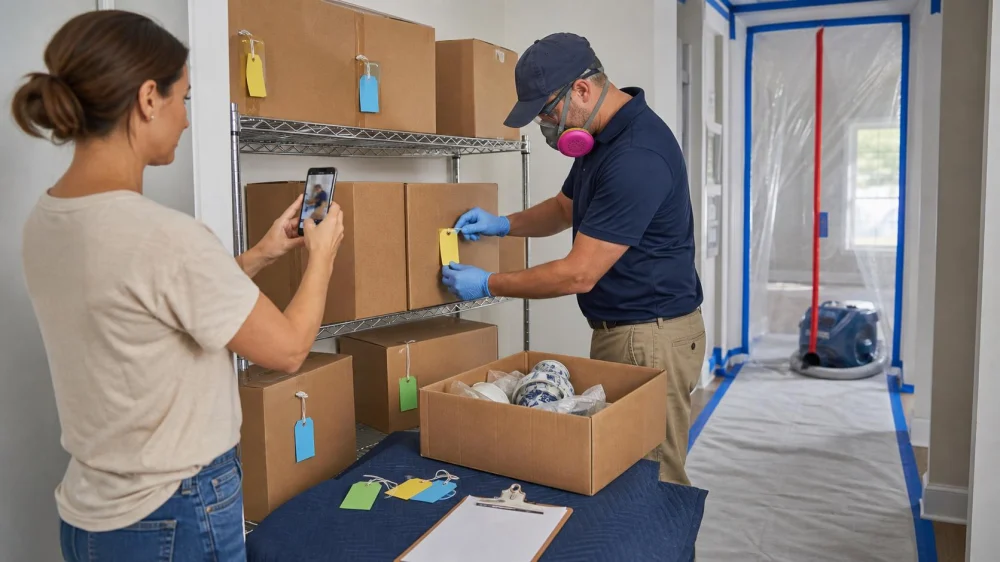
Water Damage Pack-Out Inventory: Track Every Moved Item
Table of contents
Quick answer
Give each moved item or item group a unique inventory ID, original room, description, quantity, condition, photo set, box or pallet ID, action status, and storage location. Photograph items before movement when safe, then again at packing and handoff. Keep clean and affected contents separated. Do not enter unsafe areas, handle contaminated contents, or discard claim-related property without following health, local, insurer, and adjuster instructions.
Drip Restoration / valleywide restoration mesa az
932 S Stapley Dr, Mesa, AZ 85204, USA
Set safety and pack-out scope
A pack-out moves belongings so the building can be dried and repaired or the contents can be evaluated, cleaned, stored, or replaced. It is not simply a household move. Water source, electrical hazards, structural conditions, contamination, mould, sharp debris, and item weight determine who can enter and handle property.
- Ask the restoration company which zones homeowners may enter.
- Identify who decides clean, affected, salvageable, non-salvageable, or pending status.
- Confirm insurer or adjuster documentation requirements before movement.
- Agree on packing, transport, storage, cleaning, and return responsibilities.
- Keep medications, identity documents, valuables, firearms, and hazardous materials under the appropriate controlled process.
Do not ask family or volunteers to handle sewage-affected, chemically contaminated, moldy, structurally trapped, unusually heavy, or electrically exposed items.

Wizard Restorations Inc / puroclean of san fernando
Rancho CucamongaSan Bernardino CountyCalifornia
10245 8th St, Rancho Cucamonga, CA 91730, USA
Work room by room
Start each room with a wide doorway photo and a slow video if safe and permitted. Capture the overall arrangement before anyone rearranges contents. Assign a short room code such as “kitchen” or “north bedroom” and use the same wording everywhere.
- Create the room entry in the inventory.
- Photograph each wall and major furniture grouping.
- Identify clean items that must be protected from the work zone.
- Let professionals evaluate affected items before packing.
- Close the room count before moving to the next space.
Do not use one generic “miscellaneous” line for an entire room. Group only ordinary, similar low-value items when the insurer, restorer, and owner agree that individual entries are unnecessary.
Build a useful item record
Each record should let a person identify the property without opening every box.
- Unique item or group ID.
- Original room and exact location.
- Plain description, colour, material, and quantity.
- Brand, model, serial number, size, or distinguishing mark when visible.
- Observed condition before movement, without guessing cause.
- Photo and video filenames.
- Box, crate, pallet, or oversized-item ID.
- Current status and person or company responsible.
- Storage facility, shelf, vault, or controlled location.
Record purchase date, receipt, or replacement information only when known. Mark unknown rather than inventing a value.
Use a consistent photo sequence
For each significant item, take a location view, full-item view, damage view, identifying detail, and packed-container view. Keep original timestamps and do not edit out context. Photograph serial plates only when dry, accessible, and safe.
The National Flood Insurance Program advises taking clear photos and videos before cleaning, fixing, or discarding flood-damaged items, including serial numbers for appliances and electronics. Policy and loss type matter, so follow the assigned insurer's specific instructions even when the water came from a plumbing leak rather than a flood.
If safety requires immediate disposal, photograph the item and identifying details from a safe position when possible, record who authorized disposal, and follow public-health and local requirements. Health protection takes priority over preserving physical evidence.
Track status and handoff
Use controlled status terms: pending evaluation, moved to clean staging, packed for cleaning, sent to specialist, stored, returned, approved for disposal, or claim decision pending. Avoid treating a restorer's cleaning recommendation as the insurer's coverage decision.
At every transfer, record date, time, item or box IDs, from whom, to whom, destination, and condition of seals. Both parties should receive the same manifest. Photograph pallet or vehicle groupings without exposing private addresses or security details.
Keep estimates, cleaning reports, disposal authorization, storage invoices, and claim communication linked to the same inventory IDs.
Control storage and return
Ask how the storage facility protects contents, tracks access, separates clean and affected items, controls environment when required, and handles high-value or sensitive property. Confirm who may approve retrieval and how urgent access works.
Before return, reconcile the outbound and inbound manifests. Check box seals and visible condition before opening. Return items by room and record shortages, damage, or incorrect contents immediately. Do not bring cleaned contents back before the building is dry, repaired, and released for occupancy by the responsible professionals.
Pack-out checklist
- Confirm safe zones, handlers, insurer rules, and pack-out scope.
- Photograph each room before contents move.
- Assign unique item and container IDs.
- Record description, quantity, condition, and identifying details.
- Link every item to photos, box, status, and storage location.
- Keep clean, affected, hazardous, and high-value contents separated.
- Use signed or shared manifests at every handoff.
- Reconcile the full inventory before return and claim closeout.
Limitations
This guide offers an organization framework, not insurance, legal, appraisal, hazardous-material, conservation, or restoration advice. Coverage, proof, disposal, valuation, salvage, retention, and storage rules vary by policy, insurer, event, jurisdiction, and item type. Professional handling is required for contaminated, fragile, high-value, regulated, structurally trapped, or technically complex contents.
Frequently asked questions
Can several similar items share one inventory line?
Only when the owner, restorer, and insurer's process allows a clear group entry. Significant, high-value, damaged, serialized, or individually treated items should have separate records.
Should I throw away soaked belongings immediately?
Follow health and local disposal requirements first, then insurer or adjuster instructions. Document before disposal when safe. Do not keep a health hazard solely for a claim.
Who decides whether an item can be restored?
A qualified contents specialist evaluates restoration, the owner decides within practical limits, and the insurer separately determines coverage under the policy. Keep those decisions distinct in the log.
How should I track boxes?
Give every box a unique ID, original room, broad contents description, item IDs inside, status, seal condition, and storage location. Photograph the open packing stage and closed box.
What if an item is missing on return?
Stop the room reconciliation, compare manifests and handoffs, photograph the current box contents, and notify the restoration and storage contacts promptly in writing.
Evidence and sources
- National Flood Insurance Program: Document Flood Damage — photos, videos, serial numbers, receipts, and documentation before cleanup or disposal.
- NFIP Claims Checklist for Policyholders — separating damaged and undamaged property, retaining documentation, and logging conversations.
- FEMA: How to Document Damages After Severe Weather Events — safety-first documentation and insurer coordination.
Next steps
Ask the restorer and insurer for their required inventory template before anything moves. Create room codes, test the photo-and-ID workflow on one safe item group, and name one owner representative to approve manifests. Back up the live inventory outside the affected property and reconcile it at every transfer.
 Fischer Remodeling4.0 (135 reviews)
 Main Cleaning Solutions5.0 (803 reviews)
 DryTech Restoration LLC4.0 (304 reviews)
 Padron Cleaning & Restoration4.0 (278 reviews)
 Roto-Rooter Plumbing & Water Cleanup5.0 (349 reviews)
 Fairway Flood and Restoration0.0 (0 reviews)
 How to Spot Hidden Water Damage in Your Home’s Foundation
 How to Fix Water Damage to Interior Systems | Complete Repair Guide
 How to Prevent Water Damage from Clogged Drains and Toilets
 Water Damage Restoration for Office Buildings: Essential Steps and Prevention Tips
 How to Restore Water-Damaged Ceiling Tiles in Your Home or Office
 Understanding Category 3 Water Damage and Its Hazards