
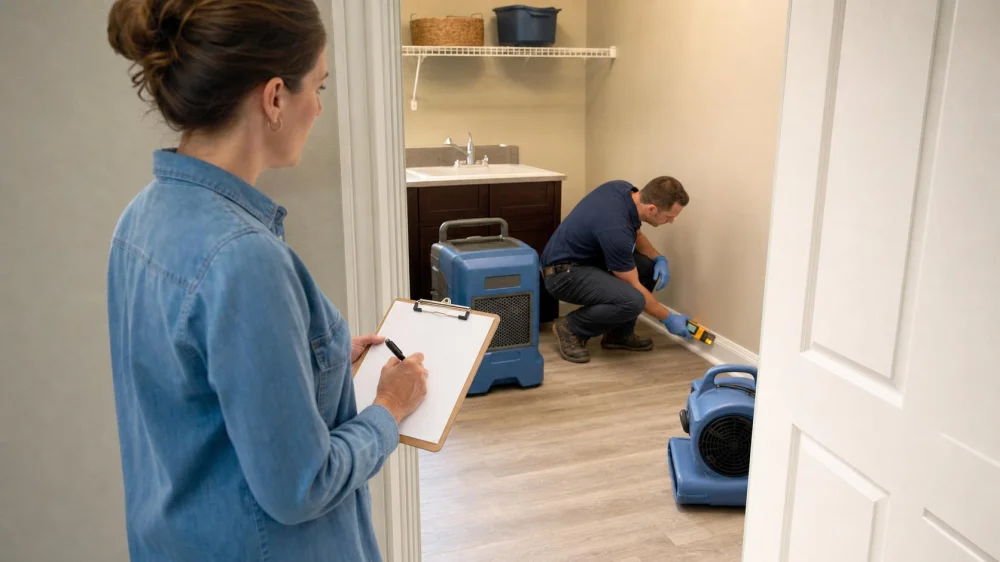
Water Damage Odor Log: What to Record for Restorers
Table of contents
Quick answer
Record the room, exact area, date, time, odor description, intensity in plain terms, weather, HVAC and drying-equipment status, and whether the smell changes at a door, wall, floor, cabinet, or vent. Add photos of stains or damp materials. Do not lean close, enter a contaminated area, remove finishes, or call an odor “mold” without investigation. Notes guide restorers; moisture measurements identify the problem.
SERVPRO of Pompano Beach / servpro of santa maria
Pompano BeachBroward CountyFlorida
2101 NW 33rd St #200a, Pompano Beach, FL 33069, USA
Check safety before tracking odor
An odor log is appropriate only when the area is safe to occupy briefly. Stay out and call professionals when water may contain sewage or chemicals, electrical equipment is wet, a ceiling is sagging, structural materials are unstable, or the air causes breathing difficulty, dizziness, severe irritation, or other concerning symptoms.
Do not sniff closely, kneel over carpet, open wall cavities, lift wet flooring, or disturb visible growth. Keep children, pets, and people with health vulnerabilities away from the affected zone. If symptoms occur, leave the area and consult a health professional.
The U.S. Environmental Protection Agency explains that a moldy or musty odor can suggest hidden growth and should be investigated, but smell alone does not identify the organism or source. Moisture control remains the central issue.

Wizard Restorations Inc / puroclean of san fernando
Rancho CucamongaSan Bernardino CountyCalifornia
10245 8th St, Rancho Cucamonga, CA 91730, USA
Describe location without diagnosing
Start with a room map. Use a doorway as the observation point and describe the location in a way another person can find.
- Room, floor level, and nearby fixture or wall.
- Distance and direction from a door, window, cabinet, or appliance.
- Whether the odor is stronger at floor, mid-wall, ceiling, closet, or return-air area.
- One spot, a path, several rooms, or the entire level.
- Open or closed doors and windows at the time.
Use neutral words such as musty, earthy, sour, sewage-like, chemical, burnt, damp-cardboard, or unknown. Do not write “toxic mold,” “black mold,” or “sewer gas” unless a qualified investigation has established that finding.
Track timing and conditions
Odors can change as materials warm, humidity shifts, equipment cycles, or air moves. Record a few consistent observation times rather than repeatedly entering the space.
- Write the date and time.
- Note recent rain, plumbing use, appliance cycle, or known leak activity.
- Record whether the HVAC fan, bathroom fan, dehumidifier, or air mover is running.
- Describe intensity as faint, noticeable at the doorway, strong across the room, or immediately uncomfortable.
- Note whether the odor appears after a door opens, equipment stops, or the room warms.
Do not switch professional drying equipment off to test a theory. Ask the restoration contractor before changing airflow, temperature, containment, or dehumidification.
Pair odor notes with visible evidence
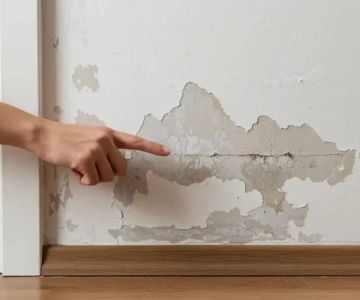
From a safe position, photograph water stains, peeling finish, swollen baseboard, damp contents, condensation, or a changed floor seam. Use a wide photo for room context and a closer photo without touching the material.
Include the known leak timeline, water source if confirmed, rooms below or beside the affected area, and previous repairs. A restorer can compare this information with moisture-meter readings, thermal patterns, humidity data, and controlled inspection.
Do not drill a test hole, pull wallpaper, remove baseboard, cut carpet, or insert a household moisture meter into electrical or hidden areas. Disturbance can release particles, damage evidence, or spread contamination.
Log changes during professional drying
After equipment is installed, ask the restorer what conditions to report and how often. A useful log notes whether the odor is decreasing, stable, moving, or returning after an apparent improvement. Record equipment alarms or shutdowns without changing settings.
- Equipment present and whether it appears to be running.
- Door or containment position specified by the contractor.
- New water, condensation, staining, or material movement.
- Odor outside containment or in a previously unaffected room.
- Any occupant symptom reported after entering the area.
EPA guidance says cleanup is not complete until the moisture source is fixed and visible mold and moldy odors are absent. A restorer should combine sensory observations with documented drying and visual inspection.
Report the pattern clearly
Lead with change and location: “At 8 a.m., the musty odor was faint at the laundry-room doorway. At 6 p.m., it was strong beside the shared wall after the air mover stopped, and a new baseboard stain appeared.” Attach the relevant photos and the equipment status.
Ask the restoration company to confirm the next inspection, moisture source, affected materials, containment plan, drying goals, and completion criteria. If the odour persists after work is declared complete, request reassessment rather than masking it with fragrance or ozone-generating equipment.
Odor-log checklist
- Room, exact location, date, and time.
- Neutral odor description and practical intensity.
- Weather, leak, plumbing, appliance, and HVAC conditions.
- Drying equipment and containment status.
- Visible stains, swelling, moisture, or material changes.
- Wide and close photos taken from a safe position.
- New room spread, recurrence, or change after equipment cycles.
- Professional response, measurements, and next inspection time.
Limitations
Human smell is subjective and changes with time, health, products, ventilation, and familiarity. An odor log cannot identify mold species, contamination category, chemical exposure, sewage gas, electrical overheating, or a hidden moisture source. It does not replace moisture mapping, building inspection, indoor environmental assessment, medical advice, or professional remediation.
Frequently asked questions
Does a musty smell prove there is mold?
No. EPA says a moldy odor suggests possible growth and warrants investigation, but odor does not identify the source or type. Moisture and materials must be evaluated.
Should I buy a home mold test because of odor?
Do not use a quick test as a substitute for finding and fixing moisture. Ask a qualified professional whether sampling would answer a specific question for the project.
Can I use air freshener during drying?
A fragrance can mask changes and complicate the log. Ask the restoration contractor before introducing sprays, candles, cleaners, or air-treatment devices.
Should I turn off an air mover if odor gets stronger?
Do not change professional equipment or containment on your own. Leave the area if it is uncomfortable and call the restoration company immediately.
When is the odor problem considered resolved?
The water source must be fixed, affected materials addressed, drying verified, and visible mold or moldy odor absent. Completion is a professional judgment based on more than smell alone.
Evidence and sources
- U.S. EPA: What Does Mold Smell Like? — why musty odor should prompt investigation and why moisture control matters.
- U.S. EPA: A Brief Guide to Mold, Moisture and Your Home — cleanup, hidden-mold, moisture, and completion guidance.
- U.S. EPA: The Key to Mold Control Is Moisture Control — when extensive or non-clean-water damage needs professional help.
Next steps
Create the first entry from a safe doorway, attach room-context photos, and send it to the restoration contact with the leak timeline. Ask when moisture readings will be repeated and what changes require an immediate call. Continue only at the agreed intervals and stop logging if conditions or health symptoms make entry unsafe.
 Fischer Remodeling4.0 (135 reviews)
 Main Cleaning Solutions5.0 (803 reviews)
 DryTech Restoration LLC4.0 (304 reviews)
 Padron Cleaning & Restoration4.0 (278 reviews)
 Roto-Rooter Plumbing & Water Cleanup5.0 (349 reviews)
 Fairway Flood and Restoration0.0 (0 reviews)
 How to Spot Hidden Water Damage in Your Home’s Foundation
 How to Fix Water Damage to Interior Systems | Complete Repair Guide
 How to Prevent Water Damage from Clogged Drains and Toilets
 Water Damage Restoration for Office Buildings: Essential Steps and Prevention Tips
 How to Restore Water-Damaged Ceiling Tiles in Your Home or Office
 Understanding Category 3 Water Damage and Its Hazards