
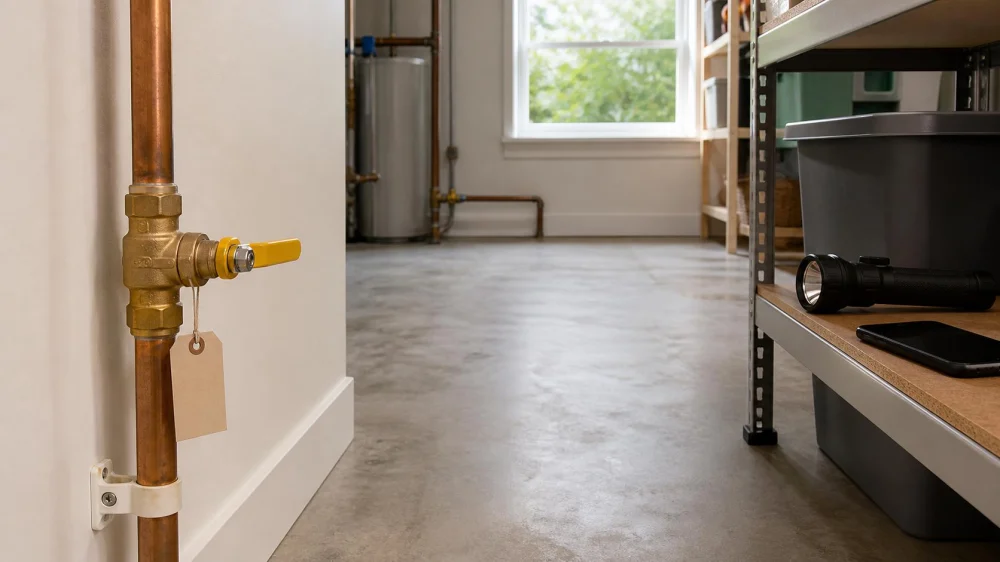
Main Water Shutoff Plan: Find, Test, and Label It Before a Leak
On this page
Quick answer
Find the valve that controls water entering your home, confirm its identity with the property owner, utility, plumber, or building manager, and keep a clear path to it. Label it plainly, photograph its location, and show responsible household members how the approved valve operates. If it is corroded, leaking, stuck, partly buried, or difficult to reach, do not force it—arrange professional service before an emergency.
Closing water can limit damage from many supply-line leaks, but it does not eliminate water already in the building, drainage backups, roof water, groundwater, appliance reservoirs, or every fire-protection risk.
SERVPRO of Pompano Beach / servpro of santa maria
Pompano BeachBroward CountyFlorida
2101 NW 33rd St #200a, Pompano Beach, FL 33069, USA
Find the correct shutoff
The main shutoff may be near the point where the service line enters the building, in a basement, crawlspace, utility room, garage, exterior wall box, or underground meter area. Locations vary by climate, construction, and utility practice.
- Do not enter a confined, flooded, or electrically hazardous space.
- Do not operate a utility-owned street or meter valve without authorization.
- In apartments and condos, ask which valve serves only your unit.
- Distinguish domestic water controls from gas, irrigation, hydronic, and fire-sprinkler valves.
Verify it without forcing it
Ask a plumber or authorized property representative to demonstrate the valve, especially in an older home or shared building. A controlled test may involve watching a faucet while the valve is operated, then checking for leakage and restored flow. Follow professional instructions and protect water-dependent equipment.
Quarter-turn and multi-turn valves operate differently. Do not apply a wrench, extension, lubricant, or excessive force unless a qualified professional directs the work.
Drip Restoration / valleywide restoration mesa az
932 S Stapley Dr, Mesa, AZ 85204, USA
Build a household plan
- Place a durable, clear tag at the approved valve.
- Save wide and close photos showing the route to it.
- Keep the area lit and free of storage.
- Identify who can shut water off and who will call for help.
- Post plumber, property manager, utility, and insurance contacts.
- Review the plan after moving items, renovating, or changing household members.
Keep any special valve key only where authorized users can find it quickly, away from children.
Map other water controls
Individual fixture and appliance valves can stop a localized leak without shutting down the entire home. Identify accessible controls for toilets, sinks, washing machines, dishwashers, refrigerators, water heaters, exterior faucets, and irrigation where applicable. Do not test a corroded or questionable valve during casual inspection.
Some automatic leak-detection systems can close water remotely, but they require correct installation, power, maintenance, and a manual backup plan.
Use the plan during a leak
Protect people first. Avoid standing water near electrical equipment, sagging ceilings, sewage, and structural hazards. If it is safe and the leak is on the domestic supply, close the verified main or local valve. Then call the appropriate plumber, building manager, utility, restoration company, insurer, or emergency service.
Photograph conditions only from a safe position. Move belongings out of danger when safe, and begin professional water removal and moisture assessment promptly.
Important limitations
This is general U.S. preparedness information, not plumbing, utility, fire-protection, insurance, or emergency advice. Valve ownership, location, operation, and code requirements vary. Never close a fire-sprinkler, gas, municipal, or shared-building valve unless specifically authorized and trained to do so.
Evidence notes
The plan applies loss-control principles: identify the correct control before an emergency, maintain access, prevent mistaken operation, assign roles, and escalate damaged equipment to qualified service. Fast isolation can reduce additional supply water but does not replace structural drying or source repair.
FAQ
Should I turn the main valve regularly?
Ask a plumber about an appropriate inspection or exercise schedule for that valve type and condition.
What if the valve will not move?
Do not force it. Arrange repair or replacement by a qualified plumber.
Can I close the valve at the street?
Not unless the utility or local rules authorize you and provide the proper procedure.
Does shutting off water stop a sewage backup?
No. Isolate the area and contact appropriate professionals.
Should renters find the shutoff?
Yes, with landlord or building-manager guidance and clear limits on what they may operate.
Next steps
Locate the domestic main with an authorized professional, clear and photograph the access path, label the valve, map local shutoffs, and rehearse who will close water and make calls during a leak.
 ServiceMaster Recovery by Close4.0 (30 reviews)
 SERVPRO of Mason City4.0 (142 reviews)
 Roto-Rooter Plumbing & Water Cleanup4.0 (588 reviews)
 Drypro5.0 (16 reviews)
 PuroClean of North Portland5.0 (2 reviews)
 SERVPRO of West Brevard4.0 (77 reviews)
 How to Repair Water-Damaged Window Frames: A Step-by-Step Guide
 How to Choose the Best Water Damage Restoration Company Near You
 Water Damage Restoration for Apartments and Condos: Key Insights and Process
 How to Restore Water-Damaged Photos and Important Papers Safely
 How to Spot and Fix Water Damage in Your Walls
 How to Restore Water-Damaged Kitchen Cabinets