
How to Prepare for a Water Damage Moisture Inspection
On this page
- Quick answer
- Understand what the inspection can show
- Prepare before the inspector arrives
- Provide safe, useful access
- Ask focused questions
- Review the findings and drying plan
- Inspection preparation checklist
- Limitations and safety notes
- Frequently asked questions
- Sources and evidence notes
- Write a short loss timeline
Quick answer
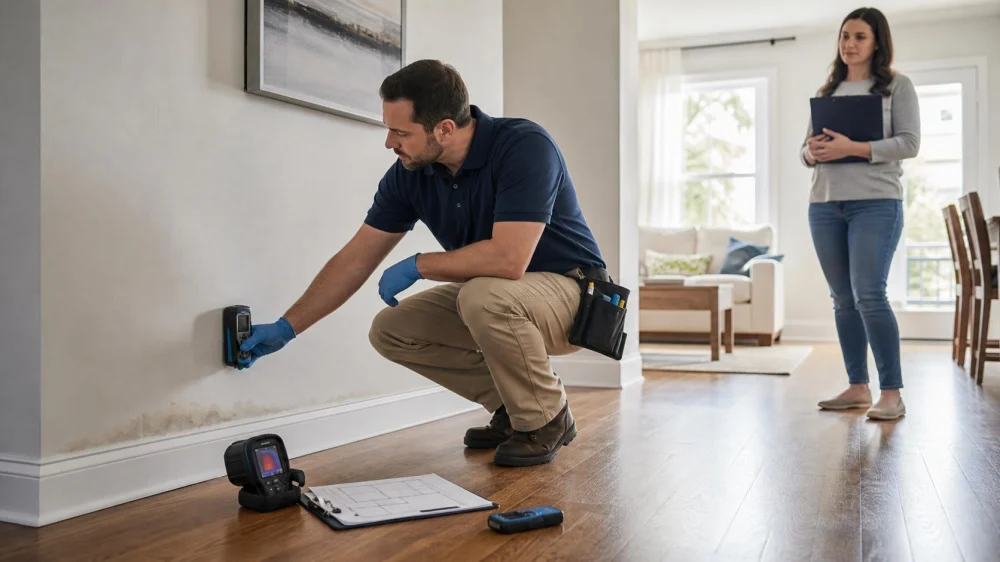
Before a moisture inspection, stop the water source if it is safe, preserve evidence, write down when and where water was first noticed, and clear only safe access to nearby rooms, cabinets, walls, and floors. Do not remove materials, repaint stains, run unapproved drying equipment, or move heavy wet contents solely to make the area look tidy. Ask what instruments and reference areas will be used, what remains inaccessible, and how the findings affect the drying plan.
A useful inspection maps conditions; it does not rely on one visible stain or one meter reading.

Wizard Restorations Inc / puroclean of san fernando
Rancho CucamongaSan Bernardino CountyCalifornia
10245 8th St, Rancho Cucamonga, CA 91730, USA
Understand what the inspection can show
A trained restoration professional may combine visual observations, moisture meters, humidity and temperature readings, thermal imaging, and knowledge of building assemblies. The goal can include locating affected materials, establishing dry reference values, planning equipment, and tracking progress.
Different materials respond differently. Wood, drywall, concrete, insulation, carpet systems, and cabinets may require different measurement methods. Ask the inspector to explain whether a reading is qualitative, comparative, or a direct moisture-content measurement.
SERVPRO of Pompano Beach / servpro of santa maria
Pompano BeachBroward CountyFlorida
2101 NW 33rd St #200a, Pompano Beach, FL 33069, USA
Prepare before the inspector arrives
Create a timeline with the suspected source, discovery time, shutoff time, weather, prior leaks, actions taken, and changing odors or stains. Gather relevant photographs, plumbing or appliance repair notes, floor plans, insurance contact details, and information about previous renovations.
Do not discard damaged items until the insurer or responsible party explains documentation requirements, unless an authority directs removal for safety. Keep receipts for emergency work. Tell the inspector if the water may contain sewage, chemicals, or outdoor flood contamination.
Provide safe, useful access
Unlock safe affected rooms and identify utility shutoffs, crawlspace or attic entries, mechanical rooms, and the level below the leak. Clear small loose objects from inspection edges, but do not lift wet carpet, open electrical equipment, disturb suspect mold, or remove building materials yourself.
Keep children and pets away. Explain accessibility, security, parking, condominium, tenant, or building-management requirements in advance. If furniture blocks an area, ask who should move it and how contents will be documented.
Ask focused questions
- Which rooms and materials were checked?
- What dry or unaffected comparison areas were used?
- Which spaces remain inaccessible or uncertain?
- What is the suspected water source and has it been corrected?
- Does the water source change cleaning or removal decisions?
- What measurements will be repeated during drying?
- What are the next safety or repair priorities?
- Who will provide the written scope, map, or report?
Ask for plain-language explanations. A colored thermal image can show temperature differences, but it does not by itself prove moisture or identify a cause.
Review the findings and drying plan
Compare the verbal summary with the written record. Look for inspected areas, observed damage, measurement types, inaccessible locations, proposed material removal, cleaning approach, equipment plan, monitoring schedule, and completion criteria.
Clarify who will repair the source and who performs restoration. Ask how changes will be approved and documented. If findings affect a claim, send required information through the insurer's stated process without assuming that an inspection guarantees coverage.
Inspection preparation checklist
- Stop or isolate the source only when safe.
- Confirm the property is safe to enter.
- Record a concise event timeline.
- Preserve photos, receipts, and repair information.
- Identify contamination and prior damage concerns.
- Clear safe access without disturbing materials.
- List inaccessible spaces and questions.
- Request written findings and next steps.
Limitations and safety notes
- Moisture inspection is not automatically a structural, electrical, mold, plumbing, or environmental assessment.
- Hidden cavities may require permission and controlled openings to evaluate.
- Thermal imaging is a screening tool and needs verification.
- Do not enter standing water near electricity or unstable areas.
- Sewage, floodwater, strong odors, or health symptoms require prompt professional guidance.
Frequently asked questions
Should I dry the area before the inspection?
Take safe emergency steps, but coordinate equipment and documentation with qualified professionals. Do not delay necessary drying merely to preserve an unchanged scene.
Must every wall be opened?
No. The need depends on measurements, materials, contamination, access, and the drying strategy. Controlled openings may still be necessary.
Can a moisture meter find the leak source?
It helps map moisture but may not identify the source alone. Plumbing, roofing, appliance, or building-envelope evaluation may be needed.
How long does an inspection take?
It varies with property size, access, affected materials, contamination, and documentation needs. Ask what the quoted visit includes.
When is the area considered dry?
The professional should define material-specific goals using appropriate reference conditions and repeated measurements, not appearance alone.
Sources and evidence notes
This framework reflects common professional practice: combine history, visual inspection, appropriate instruments, unaffected references, moisture mapping, documented limitations, and repeated monitoring. Site conditions, water source, building materials, insurer requirements, and qualified specialists determine the final scope.
Write a short loss timeline
Before the appointment, record five facts: when water was discovered, the suspected source, when it stopped, the rooms affected, and every emergency action taken. Send access and contamination concerns to the inspector so the right time, equipment, and safety plan can be arranged.
 Water Damage Restoration5.0 (25 reviews)
 Excel Cleaning & Restoration5.0 (2 reviews)
 LYON RESTORATION, INC.4.0 (12 reviews)
 SERVPRO of Tupelo and SERVPRO of Amory / Aberdeen & West Point4.0 (204 reviews)
 Mold Remediation Experts-SeaTac4.0 (5 reviews)
 Mold Remediation Professionals5.0 (1 reviews)
 How to Fix Water Damage Around Interior Door Frames Effectively
 Water Damage Repair for Attics and Roof Spaces
 How to Prevent Water Damage From Roof Ice Dams: Tips for Protecting Your Home
 What to Do After a Toilet Overflow Causes Water Damage: Home Recovery Guide
 The Risks of Ignoring Water Damage in Your Home’s Flooring
 How to Repair Water-Damaged Ceilings: Step-by-Step Guide