
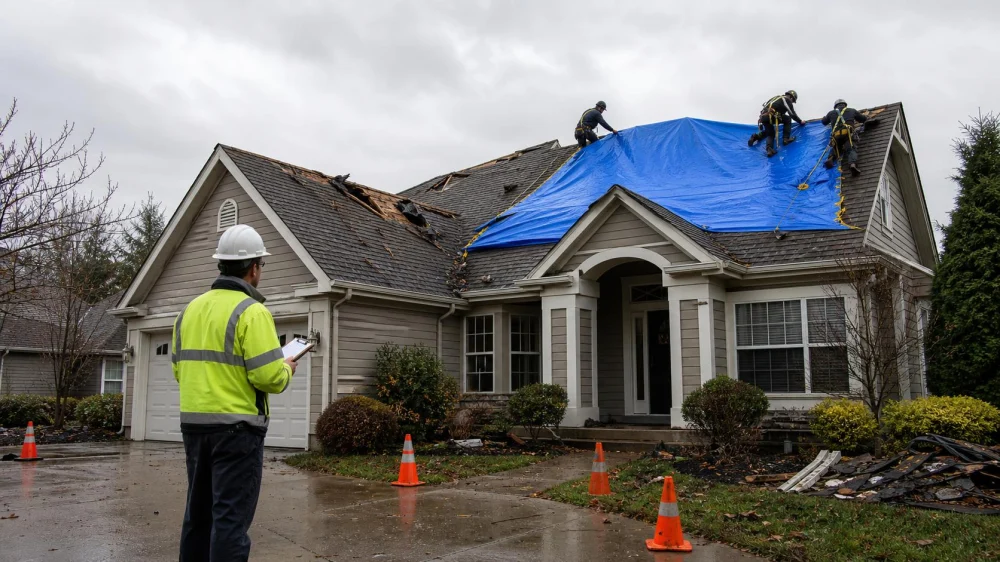
Emergency Roof Tarp After a Storm: Define a Temporary Plan
On this page
Quick answer
After storm roof damage, keep everyone off the roof, isolate falling-debris areas, photograph conditions from the ground, and contact the insurer and a qualified roofer. A tarp is temporary weather protection, not a roof repair. Require a written plan for access, attachment, drainage, wind, penetrations, interior water, inspection, maintenance, and removal. Do not climb, nail through unknown areas, or place plastic where it redirects water into the building.

Wizard Restorations Inc / puroclean of san fernando
Rancho CucamongaSan Bernardino CountyCalifornia
10245 8th St, Rancho Cucamonga, CA 91730, USA
Why it matters
Temporary covering can reduce further rain entry, but poor installation can injure workers, tear in wind, trap moisture, damage intact roofing, hide hazards, or send water to a new location.
This United States guide is general. Weather, structure, roof slope, electrical hazards, insurance duties, emergency permits, contractor licensing, and product instructions vary. Life safety and qualified assessment come first.
SERVPRO of Pompano Beach / servpro fort lauderdale south
Pompano BeachBroward CountyFlorida
2101 NW 33rd St #200a, Pompano Beach, FL 33069, USA
Practical checklist
- Keep people, vehicles, and pets away from loose roofing and overhead hazards.
- Photograph roof, exterior, attic, and room damage only from safe accessible positions.
- Report the loss and ask the insurer how emergency mitigation should be documented.
- Verify contractor identity, insurance, scope, price, and emergency authorization.
- Ask how the covering will shed water and resist expected wind without unsafe loading.
- Record existing damage and every attachment or removed material.
- Set inspection, weather-check, repair, and removal dates.
Step-by-step plan
- Call emergency services for collapse, downed lines, fire, gas, or immediate danger and do not enter an unsafe building.
- Reduce interior loss where safe by moving dry contents and using stable containers away from electrical equipment.
- Create a ground-level evidence record before temporary work, without delaying urgent protection.
- Ask the contractor to assess deck condition, slope, access, anchor zones, drainage, chimney and vent clearance, and forecast.
- Approve a written temporary scope that distinguishes emergency mitigation from permanent repair.
- Monitor only from the ground after wind or rain and report lifting, pooling, flapping, interior water, or loose material.
- Coordinate permanent repair promptly and document removal, concealed conditions, drying, and final roof work.
Keep dated photos, weather, claim and contractor contacts, authorization, tarp product and attachment method, invoices, inspection notes, water readings, removed material, and permanent-repair records.
Limits and warning signs
A dry room after tarping does not prove the assembly is dry or structurally sound. Water can travel beneath roofing and inside walls. Tarps have limited wind, UV, fire, and service life and may affect warranties or claims if installed poorly.
Use emergency help for collapse signs, sagging ceilings, downed lines, fire, gas, or rapid flooding. Qualified structural, electrical, roofing, water-mitigation, and environmental professionals may all be needed.
Frequently asked questions
Should I tarp the roof myself?
Roof access after a storm is hazardous. Use a qualified, properly equipped contractor and stay on the ground.
Will insurance pay for a tarp?
Coverage varies. Report promptly, ask the insurer, document necessity and cost, and keep receipts.
How long can a tarp stay?
Treat it as short-term. Product, weather, attachment, damage, and inspections determine service; schedule permanent work promptly.
Can a tarp trap moisture?
Yes. Poorly planned covering can limit drying or redirect water, so the building and roof assembly need monitoring.
Sources and evidence
The article reflects common emergency-mitigation practice: protect life, prevent further damage when safe, document before and after, use qualified roof access, define temporary scope, inspect after weather, and proceed to permanent repair.
Conclusion and next steps
Block the hazard zone, report the loss, and arrange qualified roof and water-damage assessment. Approve a documented temporary covering plan with inspection and removal dates, then track interior drying and permanent repairs together.
 Full Circle Restoration - South Atlanta3.0 (2 reviews)
 BKP - Mold Removal & Mold Remediation Services Co, NJ5.0 (27 reviews)
 ServiceMaster Restoration by EMT - Clark County4.0 (12 reviews)
 Paul Davis Restoration & Remodeling of Greater Tri Cities3.0 (43 reviews)
 RM & Sons Painting4.0 (28 reviews)
 The Honey Do Service, Inc Owensboro4.0 (96 reviews)
 How to Prevent Water Damage from Broken Water Heaters
 How to Repair Water Damage Around Outdoor Entry Points
 What Are the Key Signs of Water Damage in Your Home? Early Detection Tips
 Practical Steps to Fix Water Damage Caused by Heavy Snow Melt
 How to Fix Water Damage from Dishwasher Leaks: Step-by-Step Guide
 How to Manage Water Damage in Multi-Family Units