
Dishwasher Leak Water Damage: Safe First Steps
On this page
- Quick answer
- Stop water and power only when safe
- Identify the likely source without disassembly
- Document the water path and damage
- Check likely hidden wet areas
- Know the cleanup boundary
- Coordinate appliance repair and structural drying
- Urgent signs, limitations, and evidence notes
- Frequently asked questions
- Conclusion and next steps
Quick answer
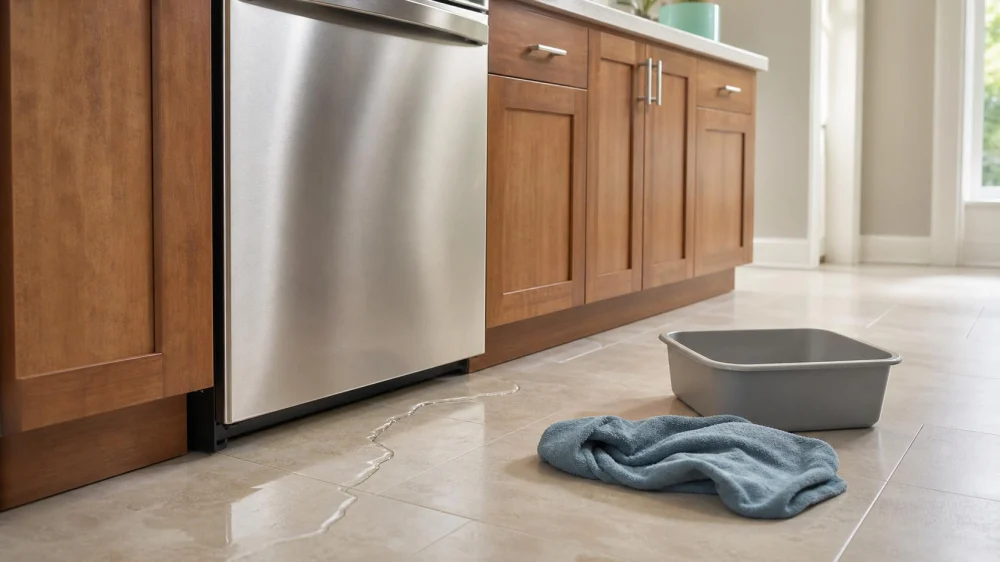
Stop the dishwasher and keep people away from wet electrical areas. If you can reach a dry, known shutoff or breaker safely, isolate water and power; otherwise call for help. Photograph the leak path, remove standing water only when contamination and electricity are not concerns, and check cabinets, toe-kicks, flooring, and the room below. Appliance repair stops the leak, while water-damage professionals address hidden moisture and drying.
Drip Restoration / valleywide restoration mesa az
932 S Stapley Dr, Mesa, AZ 85204, USA
Stop water and power only when safe
- Stop the cycle. Use the normal control only if the panel and floor around you are dry and safe.
- Keep people and pets out. Wet smooth flooring is slippery, and water may have reached wiring or outlets.
- Do not step into water to unplug the appliance. A plug under the sink or behind the unit may be wet or inaccessible.
- Turn off the confirmed circuit from a dry location only when you know which breaker supplies the dishwasher and can operate the panel safely. If the panel or path is wet, contact emergency or electrical help.
- Close the dishwasher water shutoff only when it is dry, accessible, identified, and moves normally. Do not force a corroded or leaking valve.
- Protect the area below. Warn occupants and move belongings away from drips without standing under a bulging ceiling.
Leave the area and call emergency services for smoke, sparking, a burning odour, shock sensation, rapidly spreading water near electricity, or a ceiling at risk of collapse.

Wizard Restorations Inc / puroclean of san fernando
Rancho CucamongaSan Bernardino CountyCalifornia
10245 8th St, Rancho Cucamonga, CA 91730, USA
Identify the likely source without disassembly
Observe when and where water appears. Do not pull out a hardwired dishwasher, open electrical panels, remove the door, or run repeated test cycles.
- At the front door: A damaged seal, debris, loading issue, spray problem, excessive suds, or door alignment may be involved.
- Under the sink: The supply valve, supply line, drain hose, high loop, air gap, disposal connection, or sink plumbing may leak during different parts of a cycle.
- Below the centre or rear: A pump, hose, clamp, tub, inlet, or connection may require appliance access.
- Only while draining: The drain hose, air gap, disposal inlet, or household drain may be restricted or leaking.
- Continuously, even when off: The pressurized water supply or inlet assembly may be involved and needs prompt isolation.
The apparent front edge may not be the source. Water follows cabinet bases, seams, pipes, and floor slope before emerging.
Document the water path and damage
Once life safety and water control are addressed, take wide and close photos before moving items:
- Dishwasher, adjacent sink cabinet, shutoff, hoses, and visible drip point
- Water extent on the floor and beneath movable mats
- Toe-kick, cabinet sides, baseboards, wall, and flooring seams
- Ceiling, light fixtures, walls, and contents in the room below
- Appliance model and serial label only when safely accessible
- Damaged belongings and packaging or installation records
Record when the cycle started, when water was noticed, which phase was running, estimated duration, actions taken, and service contacts. Do not delay urgent water removal merely to obtain perfect photographs.
Check likely hidden wet areas
Dishwashers sit in a tight cabinet opening, so visible water may be only part of the problem. Moisture can reach:
- The floor and underlayment beneath the appliance
- Particleboard or plywood cabinet sides and toe-kicks
- Wallboard behind adjacent cabinets
- Flooring seams and the subfloor below
- Insulation or ceiling finishes in a lower level
- Electrical junctions, receptacles, and wiring routes
Look for swelling, darkening, soft material, lifted flooring, loose trim, staining, damp odour, and new sounds underfoot. Do not remove fixed cabinets, cut drywall, or pull flooring without a moisture plan, contamination assessment, and permission where insurance or rental responsibility is involved.
A non-invasive moisture meter can support screening when used by someone who understands the material and tool. Readings are comparative clues, not proof that an assembly is dry.
Know the cleanup boundary
A small, recent leak from a known clean supply line on a dry electrical-safe floor may allow limited blotting or wet-vacuum work using equipment rated and connected safely. Wear appropriate gloves and follow equipment instructions.
Stop and use professional help when:
- Water may contain dishwasher wastewater, food residue, sewage, or chemicals
- Electricity or hidden wiring may be affected
- Water entered walls, cabinets, subfloor, insulation, or the level below
- The leak duration or source is unknown
- Porous materials are swollen, soft, delaminated, or odorous
- There is visible microbial growth or a high-risk occupant
- The area is too large to dry promptly with safe household methods
Do not use an ordinary household vacuum on water, direct fans into a contaminated area, mix cleaning chemicals, or assume surface dryness means the cavity is dry.
Coordinate appliance repair and structural drying
An appliance technician or plumber can locate and repair the water source. The right trade depends on whether the problem is inside the dishwasher, at the supply connection, in the drain hose, or in household plumbing.
A water-damage professional can map moisture, define affected materials, manage contamination, set up controlled drying, and verify progress. An electrician should evaluate wet electrical components before power is restored. Cabinet, flooring, or building repairs should wait until the cause is fixed and materials are assessed.
Ask each provider to document:
- Observed source and repair performed
- Affected materials and moisture readings with locations
- Containment, cleaning, and drying equipment
- Monitoring dates and criteria used to stop drying
- Materials removed, retained, or recommended for replacement
- Electrical clearance and appliance test status
Do not run a dishwasher test until the relevant professionals say water, electrical, drain, and appliance conditions are ready.
Urgent signs, limitations, and evidence notes
Treat electricity, smoke, a burning odour, a shock sensation, sewage, major ceiling sagging, structural movement, or rapidly expanding water as urgent. Leave unsafe areas and follow emergency guidance.
This article reflects general appliance-leak and water-damage practice in the United States. It cannot classify contamination, verify electrical safety, determine hidden moisture, or decide material salvageability remotely. Appliance instructions and on-site professional assessment are stronger evidence.
Insurance, landlord notice, condominium responsibility, permits, licensing, and restoration standards vary by policy, state, municipality, property type, source, and loss size. Notify the appropriate parties promptly and avoid discarding material they need to inspect unless safety requires removal.
Frequently asked questions
Can I use the dishwasher again after wiping up the water?
No, not until the source is identified and repaired and affected electrical and building areas are cleared. A dry surface does not prove the hidden floor or connections are safe.
Why is the floor wet only in front of the dishwasher?
Water can travel from the rear, sides, door, or under-sink connections and emerge at the lowest visible edge. Observation during the failed cycle and professional access may be needed.
Should I pull the dishwasher out?
Not without knowing the power, water, mounting, flooring, and hose conditions. Pulling can tear a line, damage cabinets, disturb wiring, or release trapped water. Use a qualified technician.
Does a small leak require restoration service?
It depends on source, duration, contamination, materials, and hidden spread. Water beneath fixed cabinets, finished flooring, or the level below often merits professional moisture assessment even when the puddle is small.
Can I aim a fan under the dishwasher?
Not before electricity and contamination are assessed. Uncontrolled airflow may spread contaminants and may not reach wet subfloor or cabinet cavities. Use a drying plan matched to measured conditions.
Conclusion and next steps
Stop the cycle, isolate water and power only from dry safe locations, document the path, and keep people away from electrical and ceiling hazards. Do not pull out or retest the dishwasher. Coordinate source repair with moisture assessment and controlled drying so the appliance, cabinets, floor, subfloor, walls, and room below are all addressed before normal use resumes.
 Groundworks4.0 (739 reviews)
 United Water Restoration Group of West San Antonio4.0 (5 reviews)
 Invictus Remediation5.0 (9 reviews)
 Montgomery & Sons Inc4.0 (20 reviews)
 South County Restoration4.0 (43 reviews)
 Disaster Team Inc.4.0 (29 reviews)
 How to Prevent Water Damage to Your Home’s Exterior Walls: Effective Protection Tips
 How to Dry Out Water-Damaged Furniture Quickly and Safely
 Water Damage Repair for Attics and Roof Spaces: Essential Tips for Prevention
 DIY Water Damage Repair: A Guide to When to Do It Yourself vs. Calling Pros
 How to Repair Water Damage from Pipe Leaks Inside Walls
 How to Identify and Repair Water Damage in Your Windows and Doors