
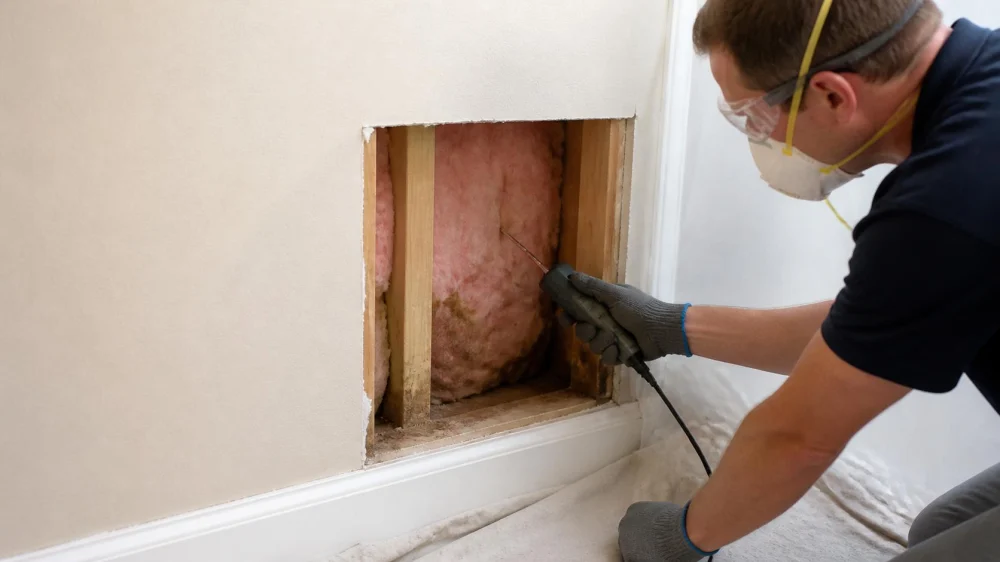
Wet Insulation After a Leak: Why Surface Dryness Misleads
On this page
Quick answer
Dry paint or drywall does not prove the insulation behind it is dry. Insulation can hold moisture against framing, reduce drying airflow, and conceal the full path of a leak. Stop the water source, avoid opening cavities with unknown electrical or contamination risks, and have affected materials assessed. Drying or replacement depends on the water source, insulation type, exposure, and verified moisture conditions.
This guide is for United States homeowners deciding what to do after a roof, plumbing, appliance, or building-envelope leak. It does not authorize demolition, asbestos disturbance, energized electrical work, entry into an unsafe attic or crawlspace, or do-it-yourself handling of sewage or other contaminated water.
Drip Restoration / valleywide restoration mesa az
932 S Stapley Dr, Mesa, AZ 85204, USA
Why insulation can stay wet
Insulation is material placed in walls, ceilings, floors, attics, and crawlspaces to slow heat flow. Depending on its form, it may contain air pockets, fibers, foam cells, paper or foil facings, binders, and surrounding voids. Water can enter the insulation, collect behind a vapor retarder, run along framing, or settle at the bottom of a cavity.
A painted surface may feel dry while concealed material remains damp because:
- surface evaporation happens faster than drying deep inside a wall or ceiling;
- paint, wallpaper, vapor retarders, cabinets, and dense finishes restrict drying;
- wet insulation contacts hidden sides of drywall or wood that cannot be touched;
- gravity carries water below the visible stain;
- cool cavities and limited airflow slow evaporation; and
- the leak may be intermittent, adding moisture during rain, plumbing use, or equipment cycles.
Hidden wet insulation matters because it may lose thermal performance while damp, keep wood and paper-faced materials wet, add weight to ceiling assemblies, and complicate odor or microbial-growth control. The correct response is not based on appearance alone.
SERVPRO of Pompano Beach / servpro of santa maria
Pompano BeachBroward CountyFlorida
2101 NW 33rd St #200a, Pompano Beach, FL 33069, USA
How insulation type affects the decision
Fiberglass batts and rolls may trap water between fibers, facings, drywall, and framing. A compressed, dirty, contaminated, or physically damaged batt may not return to its intended condition even if parts appear dry. Faced batts can slow drying from one direction.
Loose-fill fiberglass or cellulose can settle, mat, migrate, or conceal uneven wet pockets. Cellulose is made from treated paper fiber and can hold moisture differently from fiberglass. Removing only the visibly dark portion may miss damp material beyond it.
Mineral wool has different water and vapor behavior, but the surrounding framing, sheathing, fasteners, and finishes can still remain wet. Material identity does not eliminate the need to assess the complete assembly.
Spray foam and rigid foam may resist bulk water absorption differently from fibrous products, yet water can travel along edges, gaps, and interfaces or become trapped against wood. Closed-looking foam can also limit access for inspection. Evaluation may require someone familiar with the specific foam and building assembly.
Older or unidentified insulation requires extra caution. Vermiculite-like material and other legacy building products should not be disturbed until hazardous-material risks are evaluated. Do not rely on photographs alone to declare a material safe to handle.
A safe response checklist
- Stop or isolate the source. Shut off a known plumbing fixture or appliance supply only if it is safe and you know the correct control. Use the appropriate trade for roof, plumbing, HVAC, or envelope repairs.
- Keep clear of electricity. Do not touch wet outlets, lights, wiring, equipment, or metal building parts. A qualified person should determine whether power isolation is needed.
- Avoid weakened areas. Do not stand under sagging ceilings or walk on wet drywall. In an attic, stay off areas without proper walkways and do not step between framing members.
- Identify the water source category. Clean supply water, rainwater, appliance discharge, drain water, floodwater, and sewage present different contamination questions. When uncertain, treat the material conservatively and ask a restoration professional.
- Document before finishes change. Photograph stains, swelling, drip paths, damaged contents, and the suspected source. Record dates, weather, equipment use, and shutoff actions.
- Do not open the cavity blindly. Walls and ceilings can contain wiring, plumbing, structural elements, hazardous materials, pests, and contaminated dust. Inspection openings should be planned and controlled.
- Map the affected area. A restoration professional can compare moisture across similar materials and investigate beyond the visible boundary. One surface reading is not enough.
- Set a drying or removal plan. The plan should state which materials remain, which are removed, how hidden surfaces are reached, and how progress will be verified.
Household fans are not a universal first step. Moving air across contaminated material or suspected microbial growth can spread particles. Air movement also will not dry a closed cavity if wet insulation blocks the path. Obtain guidance when the water source or cavity condition is uncertain.
Drying versus removal
Whether insulation can remain depends on more than whether it eventually feels dry. Decision factors include:
- the type and cleanliness of the water;
- how long the material was wet and whether moisture recurred;
- insulation type, facing, density, settling, and physical condition;
- access to both the insulation and adjacent framing or sheathing;
- odor, visible contamination, and occupant sensitivity;
- whether drying can be measured throughout the affected assembly; and
- manufacturer instructions, local code, and project requirements.
Drying in place may be considered when the water source is controlled, contamination risk is low, the material has retained its form, airflow can reach affected surfaces, and progress can be measured. This is not ideal when insulation is matted, compressed, dirty, inaccessible, or shielding wet structural material.
Removal may be appropriate when contamination cannot be cleaned reliably, the material is damaged or settled, access is needed to dry framing, moisture cannot be verified, or product guidance calls for replacement. Removal should use suitable containment and protective procedures rather than uncontrolled tearing and bagging.
New insulation and closed finishes should not be installed until the source repair is complete and retained materials meet project drying criteria. Covering damp framing can restart odors, staining, deterioration, and finish failure.
When professional help matters
Request a qualified water-damage assessment when insulation is inside a closed wall or ceiling, the affected area is larger than a small accessible spot, water reached multiple levels, the leak lasted an unknown period, or odors and staining continue. Ask how moisture will be measured in insulation and adjacent materials, not only on the painted surface.
Use urgent help when a ceiling sags, insulation is falling, water is near electricity, the structure appears unstable, or the water contains sewage, flood contamination, fuel, chemicals, or other hazards. Keep occupants and pets away from the area.
A restoration contractor may handle moisture mapping, containment, material removal, and drying. A roofer, plumber, HVAC technician, or building-envelope specialist may still be needed to correct the source. An electrician may be needed for wet wiring, and a qualified hazardous-material professional may be needed before disturbing older materials.
When comparing scopes, look for a clear source-control step, affected-material map, contamination assumptions, drying goals, monitoring method, documentation, and rebuild boundary. Be cautious if the plan is based only on a visual inspection or promises that a closed cavity will dry without explaining airflow and verification.
Evidence and limitations
This article follows common building-drying and restoration practice: correct the source, assess the water and material, expose or remove what cannot be dried safely, monitor retained assemblies, and close them only after verification. Exact targets depend on the material and an appropriate dry reference, not a universal number.
Consumer infrared cameras and pinless meters can help find patterns but have limitations. Temperature differences are not moisture measurements, and meters can react to metal, density, salts, depth, and material changes. Professional judgment combines instruments, inspection, source history, and material-specific readings.
Frequently asked questions
Can insulation dry without removing drywall?
Sometimes, but only when the water source, contamination, insulation type, cavity design, airflow, and measurement access support it. A dry exterior face does not establish that the cavity is dry. Ask how hidden conditions will be verified.
Does wet fiberglass insulation always need replacement?
Not in every situation. Cleanliness, duration, deformation, facing, access, and adjacent materials affect the decision. Wet, matted, contaminated, or unverifiable insulation is less suitable for in-place drying.
Can I use an infrared camera to find wet insulation?
An infrared camera shows surface-temperature patterns that may guide investigation. Those patterns can also come from air leaks, missing insulation, sunlight, ducts, or thermal bridges. Confirm suspected moisture with suitable inspection and measurement.
How long does insulation take to dry?
There is no reliable universal time. Material type, thickness, water amount, temperature, humidity, airflow, vapor layers, and access all matter. Progress should be measured rather than assumed from elapsed days.
Is a musty smell proof of mold in the insulation?
No. Odor is a reason to investigate moisture and materials, but it does not identify the organism or exact source. Avoid disturbing the cavity and obtain professional assessment when odor persists.
Should insulation be replaced before the wall is rebuilt?
Replacement comes after the leak is repaired and retained framing and sheathing are dry enough for the project. Install the correct insulation and vapor-control details for the assembly, climate, and local requirements.
Next steps
Control the leak, document the affected area, and do not let a dry-looking wall end the investigation. Keep away from sagging ceilings, wet electricity, contaminated water, and unidentified older insulation. Have the insulation and adjacent framing assessed, choose drying or removal based on material and exposure, and verify conditions before the cavity is closed and finishes are repaired.
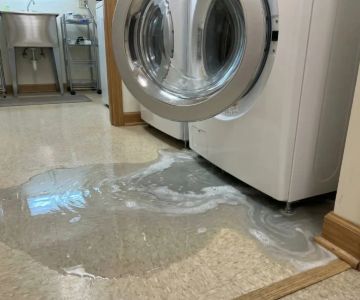
 ServiceMaster South of the James, "Servicing more than 500 homes annually2.0 (4 reviews)
 A To Z Leak Detection4.0 (10 reviews)
 Diamond Drywall LLC5.0 (222 reviews)
 Able Construction LLC4.0 (15 reviews)
 Peerless Cleaning Services4.0 (43 reviews)
 All Dimensions Floor Care5.0 (6 reviews)
 How to Restore Water-Damaged Photographs: A Step-by-Step Guide
 How to Prevent Water Damage in Your Home: Expert Tips for Protection
 How to Prevent Water Damage from Heavy Snowmelt
 How to Restore Water-Damaged Entire Living Spaces Step by Step
 Water Damage Repair for Soggy Carpets: Tips and Tricks
 How to Restore Water-Damaged Sheetrock Without Replacement