
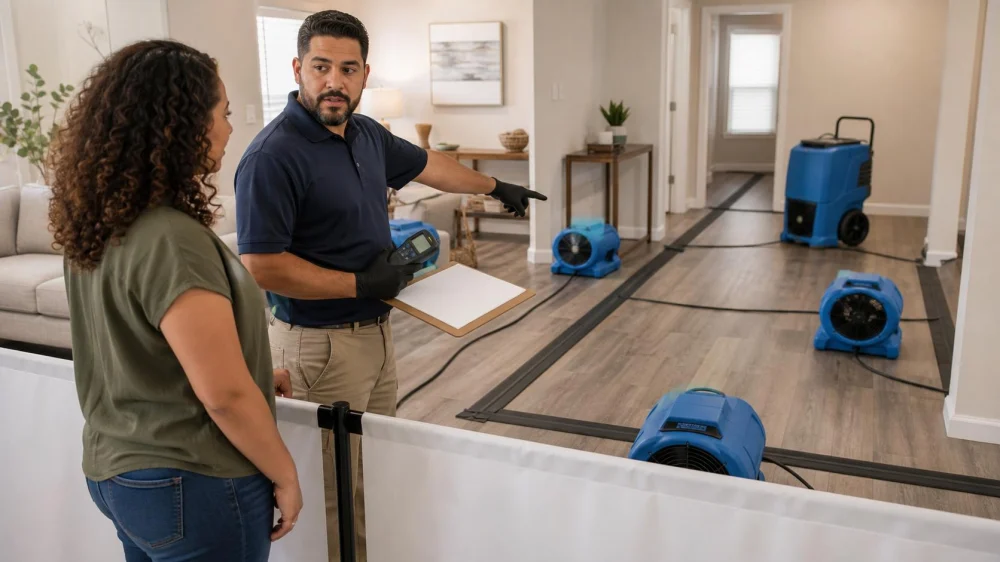
Water Damage Drying Equipment: Do Not Move or Unplug It
On this page
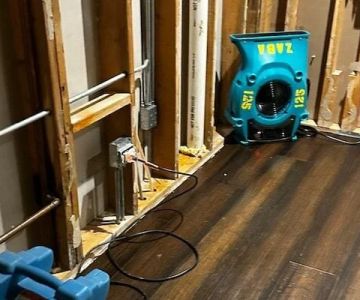
Water damage restoration often uses air movers, dehumidifiers, air scrubbers, extraction equipment, or other devices to control moisture and support drying. Their number, location, settings, and operating schedule are based on the affected materials, environment, contamination category, electrical capacity, and restoration plan.
Moving a machine to reduce noise or unplugging it for another appliance can interrupt that plan and may create electrical, trip, or contamination hazards. Ask the restoration company what each device does, who monitors it, and which changes require approval. For immediate danger, leave the area and contact emergency services rather than trying to protect the equipment.
Drip Restoration / valleywide restoration mesa az
932 S Stapley Dr, Mesa, AZ 85204, USA
Understand the drying plan
Ask for a written description of the affected areas, equipment, target conditions, monitoring schedule, and expected decision points. Drying time is not determined by a fixed number of days alone. Restorers use measurements and material response to decide whether equipment should continue, move, or be removed.
Confirm who owns or rents the equipment, daily or total charges, after-hours contact information, and what happens if power is lost. Ask how the plan relates to demolition, repairs, insurance authorization, and occupant access. Do not sign a completion statement you do not understand.
SERVPRO of Pompano Beach / servpro of santa maria
Pompano BeachBroward CountyFlorida
2101 NW 33rd St #200a, Pompano Beach, FL 33069, USA
Identify the equipment
Walk through the released safe areas with the project manager. Record each device's type, identifier, room, position, cord route, and normal indicator status. Take photos without touching controls. Ask which equipment should run continuously and whether any unit cycles automatically.
An air mover directs air across surfaces; a dehumidifier removes moisture from air; an air scrubber filters airborne particles under a specific containment plan. Other devices may drain water through tubing or track conditions remotely. Do not assume similar-looking machines are interchangeable.
Keep equipment in position
Restorers place air movers to create a planned airflow pattern and may position dehumidifiers according to room volume and drainage. Turning, covering, stacking, or moving a device can leave a wet area untreated or blow contaminants beyond a controlled zone.
If a unit blocks a necessary route, door, bed, or access need, contact the project manager. Do not squeeze past it or drag it by the cord. The crew can evaluate a safe alternative and document the change without compromising drying.
Protect power and cords
Use only the circuits, outlets, distribution equipment, and cord arrangement set up by qualified workers. Restoration equipment can draw significant power. Do not use household extension cords, power strips, adapters, or shared outlets unless specifically approved for the plan.
Keep cords visible and protected from doors, sharp edges, standing water, heaters, and traffic. Never handle a wet plug or energized equipment while standing in water. For sparking, smoke, burning odor, hot plugs, repeated breaker trips, or water reaching electrical parts, keep clear, call emergency help when needed, and notify the restoration company.
Manage doors, windows, and HVAC
Open windows can introduce humid outdoor air, while closed doors can isolate airflow. HVAC operation can either support or interfere with the drying or containment strategy. Follow the project manager's instructions for windows, interior doors, exterior doors, fans, thermostat settings, and exhaust systems.
Do not turn on heating, air conditioning, fireplaces, or portable heaters to speed drying without approval. Added heat or uncontrolled airflow can affect materials, equipment, contamination, and indoor conditions. Keep a written note of the required positions and settings for household members.
Keep people and pets safe
Establish barriers around equipment, cords, open wall cavities, wet materials, and containment. Keep children, pets, and visitors out of work zones. Noise and unfamiliar airflow can distress animals, and fur or toys can enter equipment openings.
Ask whether the property is safe to occupy and whether particular rooms, bathrooms, exits, or sleeping areas are restricted. People with respiratory, sensory, mobility, or medical needs may require additional planning or temporary relocation. Seek advice from appropriate professionals rather than assuming equipment operation makes every space safe.
Monitor noise, heat, and water
Drying equipment produces noise, airflow, and heat. Ask what is normal for each unit. Keep intake and exhaust openings clear and never drape clothing, bedding, paper, or plastic over a machine. Do not store belongings against it.
Some dehumidifiers drain through a hose, container, pump, sink, or approved outlet. Check only the visible route as instructed. Report a kinked or disconnected hose, full container, new puddle, unusual vibration, or a sudden change in sound. Do not open the device or repair its drain yourself.
Report alarms or shutdowns
If a device displays an alarm, stops, loses power, moves, or is accidentally unplugged, note the time and contact the restoration company. Do not repeatedly reset it, change settings, or move the plug to another outlet. A technician may need to inspect the circuit, machine, and drying conditions.
For a building fire alarm, carbon monoxide alarm, smoke, electrical event, or immediate health danger, leave and follow emergency instructions first. Restoration equipment is replaceable; personal safety is not. Tell emergency responders what equipment and water damage are present.
Document daily access
Keep a daily log of restoration visits, equipment changes, moisture monitoring, room access, outages, and questions. Record names, dates, times, readings provided by the professional, and the next scheduled visit. Do not create your own technical measurements with an unfamiliar meter and treat them as equivalent.
If the crew needs access while you are away, agree on keys, alarms, parking, pets, entry notifications, and lockup. Protect valuables and private papers. Confirm how the company documents entry and who to call if a scheduled visit does not occur.
Wait for professional removal
Surfaces can feel dry while moisture remains inside assemblies. Do not decide that equipment is no longer needed based on touch, smell, or a quieter room. The restoration provider should compare documented conditions with the drying goal and explain its removal decision.
Before equipment leaves, record identifiers, removal date, final reported readings, remaining damaged materials, repair plan, and any continuing ventilation or access instructions. Review charges and obtain a receipt or closeout report. Keep the file with insurance and repair documents.
Drying equipment checklist
- Get the equipment, monitoring, access, and charge plan in writing.
- Photograph each device and its approved position.
- Do not move, cover, unplug, or change controls.
- Keep cords dry, visible, protected, and on approved circuits.
- Follow instructions for doors, windows, HVAC, and containment.
- Keep children, pets, and visitors outside work zones.
- Report unusual noise, heat, alarms, hoses, or water.
- Put immediate life and fire safety ahead of equipment.
- Log visits, outages, measurements, and access.
- Wait for documented professional removal decisions.
Drying equipment works as a coordinated system, not a collection of household fans. Preserve the approved positions and power, control access, and report changes immediately. When restorers can monitor the same setup they designed, they have better information for deciding when the structure is ready for the next repair step.
 Radar Restoration LLC4.0 (34 reviews)
 SERVPRO of Middletown4.0 (33 reviews)
 Ridgeline Integrated Solutions5.0 (12 reviews)
 Renew Restoration and Cleaning Service4.0 (27 reviews)
 Restoration Roofing Specialists5.0 (25 reviews)
 Sunbelt Contractors4.0 (7 reviews)
 Water Damage Restoration for Hotels and Hospitality Spaces
 Water Damage Repair for Bathroom Flooring and Tile in the USA
 How to Clean Water-Damaged Carpeting and Area Rugs
 How to Manage Water Damage from Mold Growth
 How to Dry Out Water-Damaged Rugs Quickly
 How to Repair Water Damage Around Interior Installations