
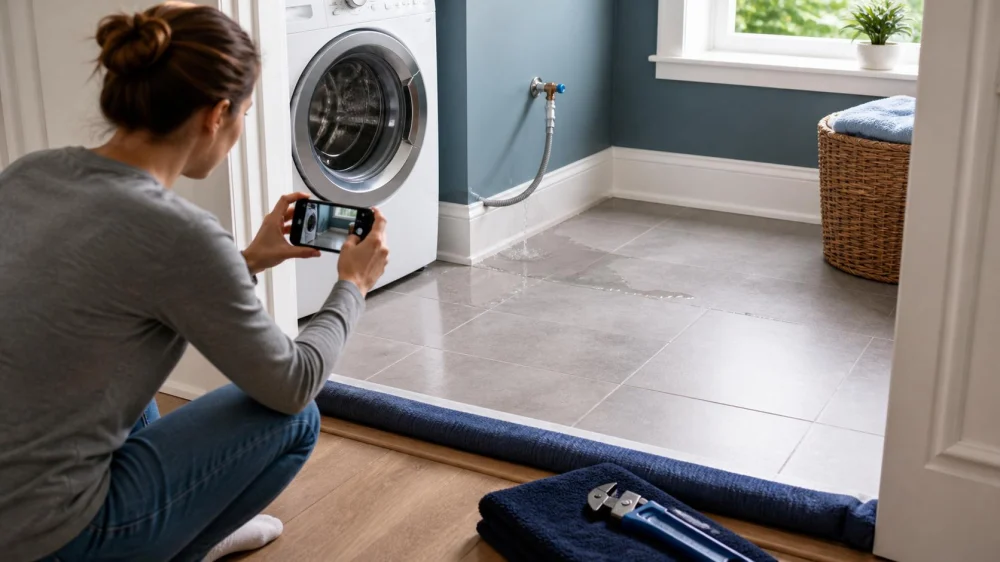
Washing Machine Hose Leak: Stop Water and Check Beyond the Laundry Room
On this page
Quick answer
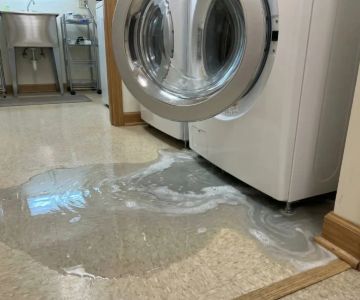
When a washing machine supply hose or connection leaks, stop the washer, close its hot and cold supply valves if you can reach them without entering water or touching wet electrical equipment, and use the main water shutoff if the local valves cannot be operated safely. Keep people away from wet outlets, cords, appliances, and panels. Photograph the source and water path, notify the responsible property or insurer, and start qualified extraction and drying quickly.
A small puddle beside the machine may hide water under flooring, behind baseboards, inside the wall, or in the ceiling below. Repairing the hose is only one part of the response; the building materials also need an evidence-based drying check.

Wizard Restorations Inc / puroclean of san fernando
Rancho CucamongaSan Bernardino CountyCalifornia
10245 8th St, Rancho Cucamonga, CA 91730, USA
First response
- Keep children and pets out of the laundry area and any room below it.
- Do not step into standing water to reach a plug, valve, breaker, or appliance.
- If safe and dry access exists, close both washer supply valves. Otherwise use the known main shutoff or call emergency maintenance or a plumber.
- Do not pull the washer away from the wall while it is connected, unstable, or surrounded by water.
- Call emergency services for fire, arcing, smoke, injury, structural movement, or another immediate danger.
- For a rental, condominium, or shared building, notify management promptly because water may cross units.
Do not run the washer to “test” the leak. Do not energize wet equipment, use an ordinary household vacuum on water, or place fans where they could contact water or contaminated material.
Giants / dry kings restoration of san francisco
San FranciscoSan Francisco CountyCalifornia
685 Geary Blvd, San Francisco, CA 94102, USA
Trace the spread
From dry, safe areas, photograph the valves, connections, hose, machine position, floor edges, nearby cabinets, walls, and ceiling below. Record when the washer last ran, when the leak was found, how long water may have flowed, which valve stopped it, and whether the water appears to have contacted detergent, drain water, sewage, or other contamination.
Check adjacent rooms and the level below for damp carpet edges, lifted flooring, staining, bubbling paint, dripping fixtures, musty odor, or softened materials. Do not open a bulging ceiling, remove wet drywall near wiring, or lift glued flooring yourself. A restoration professional may use moisture meters and controlled access points to map concealed wetness.
Plan drying
The U.S. Environmental Protection Agency advises acting quickly and drying water-damaged areas and materials within 24–48 hours to reduce the chance of mold growth. That is a response window, not a promise that every assembly will dry in place. Material type, water cleanliness, insulation, floor layers, room humidity, and time wet all affect the plan.
Ask the restoration provider to document the source classification, initial moisture map, affected materials, equipment locations, daily readings, removal decisions, and dry standard. Drying equipment should be connected to appropriate power and left in the documented position unless the provider changes the setup. Report heat, burning odor, tripped breakers, unusual noise, or new leakage instead of moving equipment.
Repair and prevention
A plumber or qualified appliance technician should identify whether the failure involved the hose body, coupling, valve, inlet, drain, internal component, installation, or excess movement. Ask for the failed part and cause in writing where practical. Replace components with products suitable for the appliance, pressure, temperature, and manufacturer instructions; a new hose does not correct a damaged valve or cross-threaded connection.
After repair, require a controlled leak test while connections remain visible, then confirm that the restoration team has addressed hidden wet materials. For prevention, keep the washer level, avoid crushing hoses, follow manufacturer replacement and inspection guidance, know the shutoff location, and close valves during an extended absence only if the appliance and plumbing instructions support that practice.
Checklist
- Water stopped without entering an electrical hazard
- Washer left off and untested
- Source, time, and water path photographed
- Adjacent rooms and level below checked safely
- Property manager or insurer notified as required
- Plumbing or appliance cause documented
- Moisture map and drying readings requested
- Repair test and restoration closeout separated
Limitations
A remote description cannot establish water cleanliness, electrical safety, structural condition, or the depth of hidden wetting. Drying methods differ by material and climate. Extensive damage, contaminated water, wet electrical systems, or vulnerable occupants may require specialized professionals and temporary relocation.
FAQ
Should I unplug the washer?
Only if the plug and route are completely dry and doing so is safe. If water is near electrical equipment, keep away and call qualified help.
Can towels handle the cleanup?
They may limit a very small surface puddle, but they cannot verify subfloor, wall, or ceiling dryness.
Do I need to replace both hoses?
Ask the technician to inspect the complete hot and cold supply setup and follow manufacturer guidance rather than replacing one part by assumption.
Can I use fans immediately?
Only after electrical and contamination risks are assessed and the equipment is suitable for the location. Air movement can be inappropriate for contaminated water.
When is the job finished?
When the source repair passes testing, affected materials meet the documented dry standard, removed finishes are restored, and records are complete.
Evidence notes
The EPA’s guide to mold and moisture emphasizes fixing the water source and drying wet areas and materials within 24–48 hours. Its material guidance distinguishes between hard surfaces and absorbent materials, supporting a material-specific plan instead of relying on visible surface dryness. Local electrical, plumbing, appliance, building, insurance, and lease requirements also apply.
Conclusion
A washing machine leak needs two verified outcomes: the water source is repaired and the building is dry. Stop water without crossing an electrical hazard, document the full path, map concealed moisture, and close out repair and drying with written evidence.
 Bactronix Corp.5.0 (1720 reviews)
 Certified Professional Restoration4.0 (100 reviews)
 Chem-Dry of Oklahoma4.0 (356 reviews)
 American Water Damage of Denver4.0 (209 reviews)
 North Texas Restoration5.0 (24 reviews)
 GT Home Services5.0 (5 reviews)
 What to Do if Your Home’s Water Damage Is Covered by Insurance
 The Role of a Water Damage Restoration Professional in Your Home Repairs
 How to Identify Water Damage in Your Ceiling and Fix It
 Water Damage Restoration Cost: What to Expect and How to Save Money
 How to Handle Water Damage After a Storm: A Step-by-Step Guide
 Water Damage Repair for Basement Ceilings: Causes, Solutions, and Prevention