
Sump Pump Overflow: Stay Out of Water and Call for Help
On this page
Quick answer
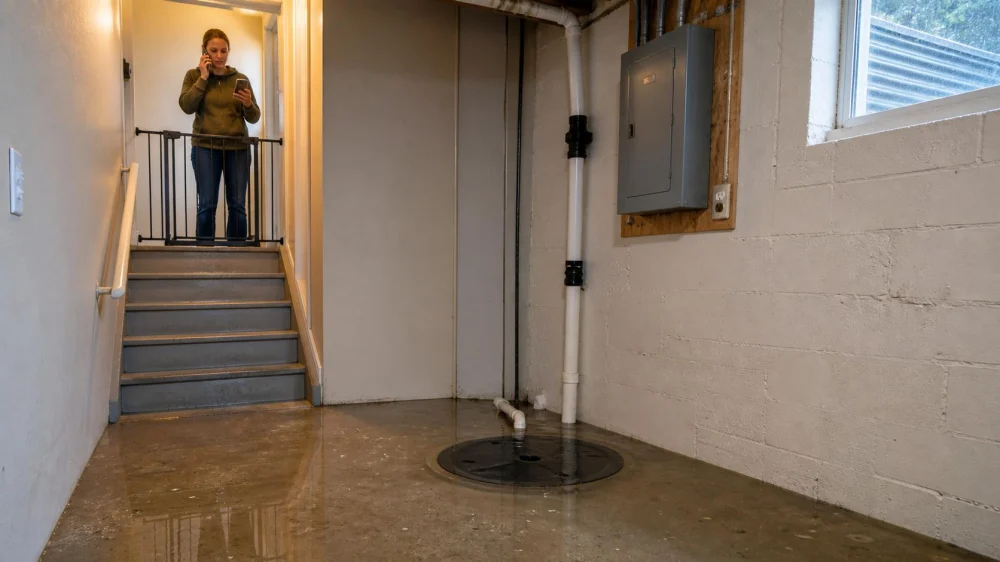
If a sump pit is overflowing, do not enter standing water or touch the pump, cord, outlet, extension cord, or electrical panel. Keep everyone out, call emergency or electrical help when electricity may be involved, and contact a qualified sump-pump or water-damage professional. From a dry location, note the water level, power status, rainfall, pump sounds, and whether discharge water is returning toward the foundation.
Do not use a household extension cord, portable pump, or generator in a wet basement. Backup pumping must be set up with suitable electrical and discharge protection.

Wizard Restorations Inc / puroclean of san fernando
Rancho CucamongaSan Bernardino CountyCalifornia
10245 8th St, Rancho Cucamonga, CA 91730, USA
Treat electricity first
Floodwater can energize floors, metal, appliances, and building components. Never walk through water to unplug a pump, reset a breaker, move a cord, or reach the service panel. A breaker that has tripped may indicate a fault and should not be reset repeatedly.
If you see sparks, smoke, damaged wiring, or water near electrical equipment, leave the building or area as appropriate and call emergency services or the utility. Only qualified personnel should determine when power can be isolated or restored.
SERVPRO of Pompano Beach / servpro fort lauderdale south
Pompano BeachBroward CountyFlorida
2101 NW 33rd St #200a, Pompano Beach, FL 33069, USA
Observe without entering
- Look from the top of the stairs or another dry barrier.
- Estimate water depth using fixed room features, not by stepping in.
- Listen for silence, continuous running, humming, grinding, or cycling.
- Note whether the home has utility power.
- Observe the outdoor discharge point from safe dry ground.
- Check for heavy rain, snowmelt, frozen outlets, or surface runoff.
- Record sewage odor, fuel, chemicals, or other contamination clues.
Do not reach into the pit, move the float, remove the lid, or clear the outlet during the emergency.
Limit additional water
When safe, stop optional water uses that drain into a sump or nearby area. Keep gutters and surface water directed according to the property’s approved drainage plan, but do not go outside during lightning, flooding, or falling-tree hazards. Avoid digging channels that direct water onto neighboring property or undermine the foundation.
A professional may use a properly protected temporary pump and approved discharge route. Water should not be pumped into a sanitary sewer, street, or neighboring lot unless local rules allow it.
Document the event
- Photograph and video from dry, safe locations.
- Record discovery time, rainfall, outage timing, and water-level change.
- List rooms, materials, appliances, and belongings affected.
- Record pump age, model, last test, and service history if known.
- Note battery backup or water-powered backup indicators without touching them.
- Save professional invoices, moisture maps, disposal lists, and insurer messages.
Do not discard the failed pump or control components until the service provider and insurer release them.
Cleanup and drying
Basement water may contain soil, sewage, microorganisms, fuel, pesticides, or other contaminants. A restoration professional should determine protective equipment, material removal, cleaning, and drying scope. Porous flooring, drywall, insulation, stored paper, and wood assemblies can hold moisture after visible water is gone.
Ask for initial and final moisture records. Do not run ordinary fans or vacuum water with a household machine until electrical and contamination hazards are assessed.
Plan before the next storm
After repairs, ask why the system failed: power loss, pump failure, stuck float, blocked or frozen discharge, check-valve problem, undersized capacity, pit condition, or excessive inflow. Have the primary pump, alarm, backup system, dedicated power, discharge routing, and exterior grading assessed.
Create a test and maintenance schedule based on manufacturer instructions. Keep emergency contacts and the sump location accessible, but never store valuables directly on a basement floor.
Frequently asked questions
Can I reset the pump breaker?
Not from or near standing water, and not repeatedly. A qualified person should assess a trip or electrical fault.
Can I plug the pump into an extension cord?
Do not improvise wet-area power. Use a code-compliant setup evaluated by qualified professionals.
Why is the pump running but water rising?
Capacity, blockage, frozen discharge, pump damage, check valve, or inflow may be involved. Call service.
Is basement water contaminated?
It may be. Source and contact with materials matter; avoid exposure until assessed.
Will a battery backup prevent every overflow?
No. Capacity, maintenance, battery condition, discharge, and event duration all affect performance.
Sources and evidence notes
This guide follows flood electrical safety, contamination control, moisture documentation, and drainage-system assessment principles. Exact pumping, discharge, electrical, cleanup, and insurance requirements vary by jurisdiction and actual water source.
Use qualified electrical, plumbing, pump, restoration, and insurance professionals for the property.
Conclusion and next steps
Stay out of standing water and treat the basement as electrically unsafe until qualified help says otherwise. Observe from dry ground, call the right services, and preserve a clear record. After extraction and drying, require a documented failure diagnosis and test the repaired primary, alarm, backup, power, and discharge system before the next storm.
 Radar Restoration LLC4.0 (34 reviews)
 SERVPRO of Middletown4.0 (33 reviews)
 Ridgeline Integrated Solutions5.0 (12 reviews)
 Renew Restoration and Cleaning Service4.0 (27 reviews)
 Restoration Roofing Specialists5.0 (25 reviews)
 Sunbelt Contractors4.0 (7 reviews)
 Water Damage Restoration for Hotels and Hospitality Spaces
 Water Damage Repair for Bathroom Flooring and Tile in the USA
 How to Clean Water-Damaged Carpeting and Area Rugs
 How to Manage Water Damage from Mold Growth
 How to Dry Out Water-Damaged Rugs Quickly
 How to Repair Water Damage Around Interior Installations