
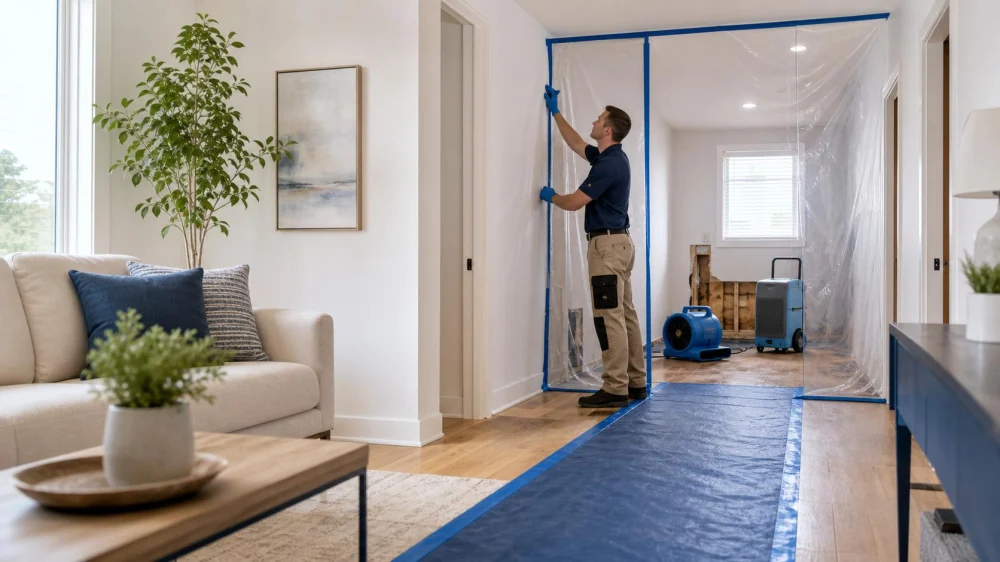
How to Protect Undamaged Rooms During Water Damage Restoration
On this page
Quick answer
Before restoration begins, ask the contractor to identify affected, transition, and clean zones. Keep doors to undamaged rooms closed when that fits the drying plan, establish one protected equipment route, remove loose valuables, and prevent dust or contaminated materials from crossing clean areas. Do not improvise plastic barriers or change fan and dehumidifier positions without the restoration professional's approval because containment and airflow must work together.
The goal is not to seal the entire home. It is to preserve safe living and storage areas while allowing trained workers to dry and remove damaged materials efficiently.

Kustom US Restoration / kustom restoration
1215 W Houston Ave Suite A, Gilbert, AZ 85233, USA
Confirm the building is safe to enter
Water can affect electricity, ceilings, floors, indoor air, and structural materials. Ask the appropriate professional whether the property is safe to enter and which rooms are restricted. Follow utility, fire, building, or public-health instructions when they apply.
Do not enter standing water near energized equipment, touch a sagging ceiling, or walk on softened flooring. Water from sewage, flooding, or an unknown source requires stricter controls than a small clean-water release.
Giants / dry kings restoration of san francisco
San FranciscoSan Francisco CountyCalifornia
685 Geary Blvd, San Francisco, CA 94102, USA
Define clean and affected zones
Walk the safe areas with the restoration lead and mark three types of space: affected work areas, a transition area for workers and equipment, and clean rooms that should remain protected. Ask which bathroom, entrance, storage area, and electrical outlets the crew will use.
Keep pets, children, and visitors outside the work zone. Use signs or closed doors instead of floor obstacles. If occupants must remain in the home, confirm which living spaces, exits, and ventilation systems are appropriate to use.
Coordinate airflow and containment
Drying equipment moves air and moisture, while demolition can create dust. The contractor may use barriers, negative air, filtration, closed doors, or other controls based on the water category and work.
Ask how the heating and cooling system will be handled, particularly when returns or supplies connect affected and clean rooms. Do not cover vents, switch off equipment, open windows, or move barriers unless the restoration lead approves the change. Unplanned changes can slow drying or spread particles.
Protect access routes
Choose the shortest practical path between the work area and exterior. Clear furniture, rugs, cords, fragile décor, and trip hazards. Contractors may use temporary floor protection appropriate to the surface; ask how it will be secured and checked so moisture is not trapped beneath it.
Keep an exit route open. Identify parking and loading locations, protect stairs and corners where equipment turns, and decide where removed materials will leave the building. Photograph the route and nearby finishes before work starts.
Move and protect belongings
Relocate clean, portable items away from transition areas. Use labeled containers and record their destination. Do not carry wet or potentially contaminated possessions through clean rooms without instructions from the restoration team.
Leave large furniture, electronics, artwork, documents, medicines, and valuable or sentimental objects to the appropriate specialist when moving could cause harm. Avoid wrapping damp items tightly in plastic because trapped moisture can worsen damage.
Use a daily protection check
- Confirm barriers, doors, and signs remain in the agreed positions.
- Keep children, pets, and unauthorized people out.
- Check the protected route for loose edges and trip hazards.
- Report new odors, stains, condensation, or unusual equipment sounds.
- Keep vents and equipment clear.
- Record any newly affected room or belonging.
- Ask before cleaning dust near the work zone.
- Confirm windows and exterior doors are secured after the crew leaves.
Limitations and safety notes
- This guide does not determine water contamination category, structural safety, or mold risk.
- Personal protective equipment and containment depend on the source, materials, and work method.
- Do not use household fans where sewage, floodwater, mold, or suspect hazardous materials may be present.
- Older materials may require testing before disturbance.
- If symptoms occur, leave the area and seek appropriate medical advice.
Frequently asked questions
Can I stay in an undamaged bedroom?
Ask the restoration lead and relevant authorities. The answer depends on safe utilities, air pathways, exits, contamination, noise, and access to essential facilities.
Should every interior door stay closed?
No universal rule applies. Some doors may need to remain positioned for the designed drying and pressure plan.
Can I use plastic sheeting myself?
Coordinate it first. An incorrectly placed barrier can restrict drying, create a hazard, or interfere with pressure control.
Should I run my HVAC system?
Only as directed for the specific loss. Shared ducts can affect how moisture and particles move.
How often should clean rooms be checked?
Check them at least daily during active work and promptly report new moisture, odor, dust, or equipment problems.
Sources and evidence notes
The approach reflects restoration risk controls: restrict unsafe access, separate work and clean zones, coordinate containment with engineered drying, protect travel routes, and monitor for changing conditions. The restoration contractor's written scope and current guidance from insurers and local authorities should determine the site-specific plan.
Agree on the protection plan
Before equipment or demolition begins, walk the safe route with the restoration lead. Mark the clean rooms, work zone, equipment path, exits, and storage location. Photograph existing finishes and record who must approve changes to doors, barriers, ventilation, or drying equipment.
 MVP Coatings4.0 (12 reviews)
 Water Damage Restoration PDQ of Pearland3.0 (5 reviews)
 Tony's Handyman Services4.0 (26 reviews)
 Old Town Flooring and Renovations LLC5.0 (12 reviews)
 Steam Master Cleaning Boerne5.0 (92 reviews)
 1-800 Water Damage of Cleveland West5.0 (27 reviews)
 Water Damage Restoration for Multi-Family Homes: A Comprehensive Guide
 How to Repair Water Damage for Tile and Grout: A Complete Guide
 How to Restore Water-Damaged All Interior Components
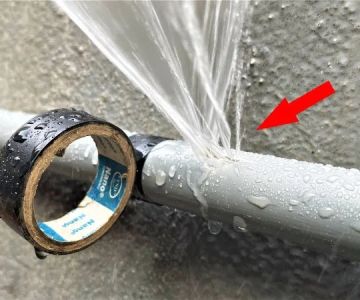
 How to Deal with Water Damage from a Burst Pipe: Expert Tips for Homeowners
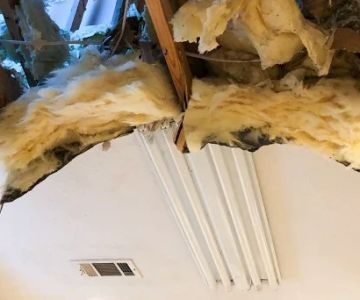
 The Risks of Water Damage in Your Home’s Insulation and How to Handle It
 How to Restore Water-Damaged Entire Living Spaces Step by Step